
Pelochrista womonana
Pelochrista womonana
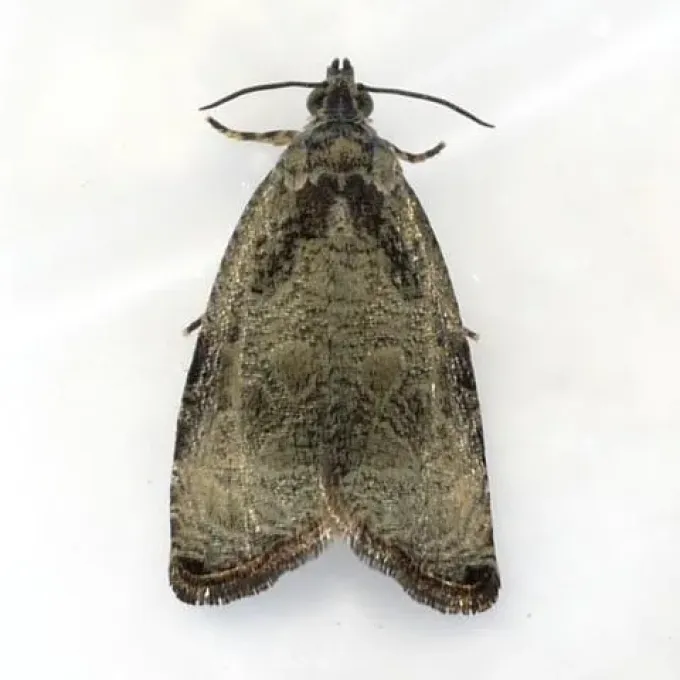
Description
How to identify
Pelochrista womonana is a species of moth belonging to the Tortricidae family, known for its impact on various plant species within agroecosystems.
Adult moths are characterized by a specific wing pattern that provides excellent camouflage, allowing them to remain hidden on host plants during the daylight hours.
The larval stage, which is the primary cause of damage, undergoes several instars, during which the larvae increase in size and nutritional requirements.
Identification often requires careful inspection of the morphological characteristics of the genitalia in adult specimens, as they can be visually similar to other related species.
The biological development of this insect is closely linked to environmental factors, particularly temperature, which dictates the duration of each lifecycle stage.
What it damages
Larvae cause significant damage by boring into the stems or inflorescences of host plants, which disrupts the vascular system and physiological development of the plant.
The destruction of reproductive organs, such as flowers and seeds, leads to a direct reduction in yields, making this pest a serious concern for farmers.
Secondary infections by pathogens often follow the larval feeding, as the entry points provide easy access for bacteria and fungi to invade the weakened tissue.
Severe infestations can result in stunted growth, stem breakage, and the total loss of marketable quality for crops like sunflowers or related Asteraceae species.
Economic losses are cumulative, increasing significantly if control measures are not taken before the larvae move deep into the plant tissue.
When it appears
The flight activity of Pelochrista womonana adults typically aligns with the arrival of warm weather, which triggers the emergence of the overwintering generation.
Developmental stages are synchronized with the phenology of host plants, ensuring that larvae have access to nutrient-rich food during their peak growth periods.
Multiple generations may occur within a single growing season, depending on the climatic conditions and the availability of suitable host plants in the area.
The species survives winter primarily in the larval stage, either in the soil or protected within plant residues left on the field after the harvest.
Agricultural practices such as tillage during the off-season can disrupt the lifecycle by destroying the overwintering sites of the larvae.
Signs of infestation
The most common sign of an infestation is the presence of small holes in the stems or flower heads, often accompanied by frass (larval excrement) accumulation.
Wilting of leaves or deformation of the inflorescence is a clear indicator that the larvae are active inside the internal tissues of the plant.
Silken webbing found within or around the inflorescences often indicates the presence of larvae creating protective shelters while they feed on the plant tissue.
Discoloration or premature yellowing of parts of the plant often points to disrupted nutrient flow caused by the boring larvae.
Active adults flying in the field during the evening are an early warning sign that egg-laying is occurring, requiring immediate monitoring of the crop.
Control measures
Integrated Pest Management (IPM) strategies are essential, involving a combination of cultural, biological, and chemical methods to suppress the pest population.
Crop rotation is a fundamental cultural practice that helps break the pest lifecycle by removing the specific host plants required for development.
Biological control agents, including parasitic wasps, can be encouraged in the field to naturally reduce the number of larvae and eggs throughout the season.
Chemical applications should be strictly timed with the emergence of young larvae, as once they bore into the plant tissue, they become protected from most contact insecticides.
- Practice crop rotation.
- Implement deep autumn plowing to destroy overwintering sites.
- Monitor adult flight using pheromone traps.
- Apply insecticides during the critical larval hatch window.
Taxonomy
- Latin name
- Pelochrista womonana
- Order
- Lepidoptera (butterflies)
- Family
- Tortricidae
- EPPO code
- PLCXWO
Discussion
No discussions yet — be the first.