
Common spadefoot
Pelobates fuscus
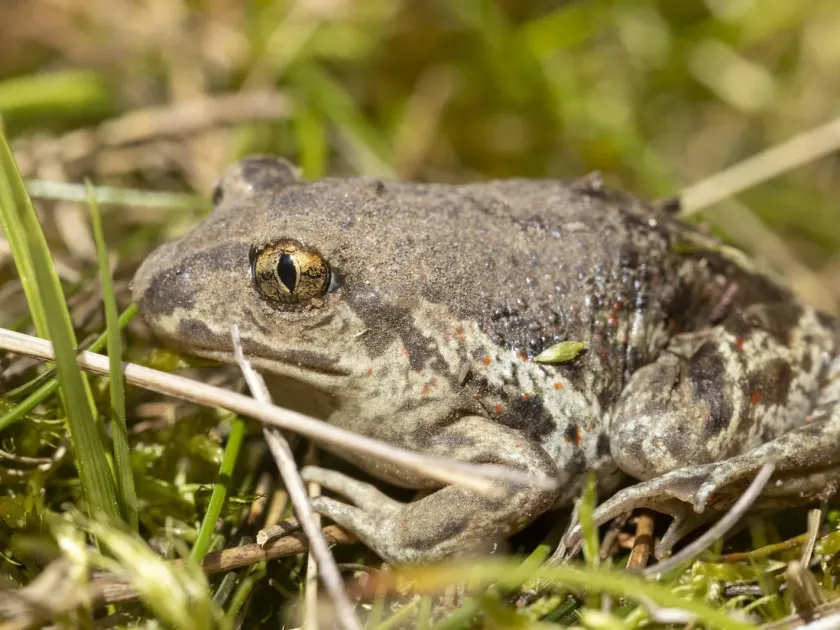
Description
How to identify
The common spadefoot (Pelobates fuscus) is a small, nocturnal amphibian species that belongs to the order Anura and the family Pelobatidae.
The species is physically characterized by its smooth skin, vertical pupils, and a prominent, spade-like tubercle on each hind foot used for digging.
They typically grow to lengths of 5 to 8 centimeters and have a cryptic coloration pattern, usually grey or brownish with dark spots for camouflage.
The common spadefoot is primarily subterranean, spending the vast majority of its daylight hours buried deep within loose soil.
It is distinct from common toads due to its skin texture and specific defensive mechanism, which includes a distinct odor resembling garlic when threatened.
What it damages
Contrary to being a garden pest, the common spadefoot is an insectivorous predator that feeds exclusively on small invertebrates and insects.
It does not consume plants, tubers, roots, or leaves, and therefore causes zero direct agricultural damage to crops or horticultural produce.
Instead of damaging crops, it provides a valuable ecosystem service by consuming larvae, beetles, and slugs that are genuine threats to garden crops.
There is no economic threshold for this species because it does not reduce crop yields or threaten plant health in any significant way.
Agricultural professionals categorize them as beneficial organisms rather than pests, as they contribute to natural biological control of insect populations.
When it appears
The spadefoot becomes active in early spring after emerging from its deep-soil winter hibernation once soil temperatures rise consistently.
Throughout the summer, they remain nocturnal, hunting for prey during the night and remaining buried beneath the soil surface during the heat of the day.
Spring is also the breeding season, during which individuals migrate to nearby bodies of water to spawn before returning to their foraging grounds.
Their surface activity is often highest during wet or humid weather conditions, which favor their movement through the upper layers of garden soil.
As temperatures drop in autumn, the spadefoot retreats underground to hibernate, often burying themselves up to one meter deep to escape the frost.
Control measures
Control of the common spadefoot is generally unnecessary and counter-productive for any gardener or farmer aiming to maintain a healthy ecosystem.
If you prefer not to have them near specific areas, focus on mechanical deterrents rather than chemical applications that could harm the soil biology.
Clearing away piles of debris, leaves, or rotting wood can reduce the number of daytime hiding spots available near your vegetable beds.
Maintaining proper soil drainage and reducing surface moisture can make the environment less conducive to their presence during the night.
Never use pesticides or insecticides to eliminate them, as this disrupts the natural ecological balance and kills the beneficial insects they consume.
Taxonomy
- Latin name
- Pelobates fuscus
- Family
- Pelobatidae
- EPPO code
- PELBFU
Discussion
No discussions yet — be the first.