
Common spadefoot
Pelobates
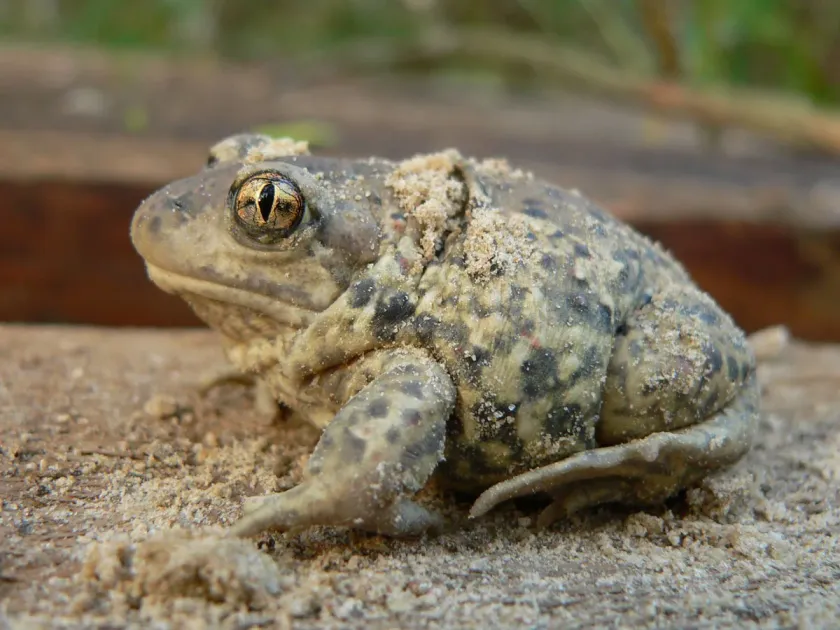
Description
How to identify
The common spadefoot (Pelobates fuscus) belongs to the family Pelobatidae, known for their burrowing habits and nocturnal lifestyle.
They are characterized by their smooth, moist skin and vertical pupils, which are adaptations for a life spent primarily underground during daylight hours.
The name comes from a hard, sharp, spade-like tubercle on their hind feet, which allows them to dig backwards into the soil with remarkable speed.
These amphibians have a mottled brown or gray appearance that serves as excellent camouflage against soil and decaying organic matter.
When threatened, they can secrete a distinctively smelling substance that reminds some of garlic, which serves as a primary defensive mechanism.
What it damages
It is critical to note that Pelobates fuscus is not a plant-feeding pest, as it consumes no vegetation, fruits, or roots of agricultural crops.
Its diet consists strictly of insects, slugs, and other small invertebrates, often acting as a beneficial predator that manages pest populations in the garden.
However, because they burrow extensively, they can cause minor physical disturbance to the root zones of very small, newly planted seedlings.
Such damage is usually incidental rather than intentional and rarely affects the overall yield of a well-established vegetable garden.
Given their role as predators of harmful insects, their presence is generally considered an asset to sustainable and organic gardening practices.
When it appears
The activity cycle of the common spadefoot begins in spring once soil temperatures reach appropriate levels for them to emerge from hibernation.
They are strictly nocturnal, meaning they remain deep in the soil throughout the day and only emerge at night to hunt for food.
During the spring breeding season, individuals may move toward nearby ponds to spawn, making them less likely to be found in garden beds during that time.
As the weather cools in late autumn, they retreat deep into the ground, often burying themselves up to 1.5 meters deep to avoid freezing temperatures.
The period of potential interaction with the spadefoot on your property is therefore limited to the warm summer months of the growing season.
Control measures
Since the common spadefoot is not a pest, active eradication is neither recommended nor ecologically sound for most agricultural or gardening environments.
To discourage their presence in specific zones, maintain compact soil or use thick mulching techniques that make deep burrowing more difficult for them.
If they are problematic, manage the availability of standing water nearby, as these amphibians require ponds to complete their reproductive life cycle.
Consider the long-term benefits of having them in your ecosystem, as they naturally reduce the necessity for chemical insecticides in the garden.
If disturbance to young seedlings is the primary concern, physical barriers such as small mesh fences around vulnerable beds are a highly effective solution.
Taxonomy
- Latin name
- Pelobates
- Family
- Pelobatidae
- EPPO code
- PELBSP
Discussion
No discussions yet — be the first.