
Great white pelican
Pelecanus onocrotalus
Description
How to identify
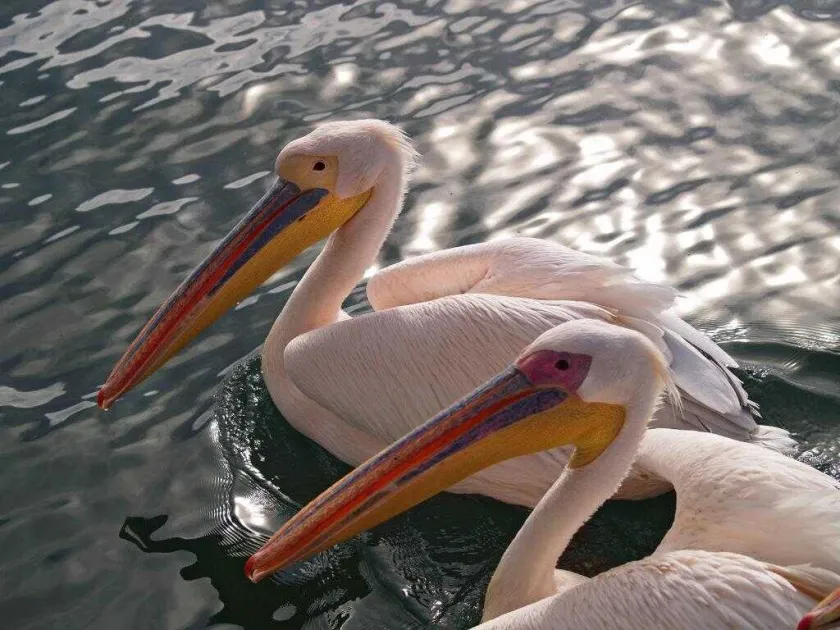
The great white pelican (Pelecanus onocrotalus) is a large bird belonging to the Pelecanidae family. It is characterized by its plumage, often with a subtle pinkish tinge, and a massive bill featuring a large gular pouch used for scooping up fish.
Adult pelicans can reach weights of 15 kilograms with a wingspan exceeding three meters. Their morphology is perfectly adapted for life near water, where they dominate as apex avian predators in many wetland ecosystems.
These birds are known for their cooperative hunting strategy. By forming groups, they corral fish into shallow waters, allowing them to capture prey with high efficiency while minimizing energy expenditure.
Great white pelicans are migratory species, often travelling long distances between breeding grounds and wintering sites, which leads them to interact with human-made aquatic environments.
While ecologically significant, their presence in industrial-scale fish farms often places them in direct competition with human interests, leading to the classification of their activities as detrimental to commercial fishery.
What it damages
The economic impact of the great white pelican on aquaculture is primarily due to the mass consumption of high-value fish species. In intensive pond systems, a flock of pelicans can deplete large quantities of stock in a very short period.
Besides consumption, their feeding behavior results in significant damage to nets, floating cages, and pond liners. This infrastructure damage increases operational costs and vulnerability to secondary aquatic pests.
Pelicans act as vectors for various parasitic and infectious diseases that affect farmed fish. Frequent movement between different water bodies facilitates the spread of pathogens that threaten aquaculture output.
The constant pressure from bird predation causes stress in fish populations. High-stress environments lead to decreased feed intake and slowed growth rates, effectively lowering the overall productivity of the farm.
Seasonal pulses of damage occur during migration periods, when large flocks settle on aquaculture facilities. The cumulative losses during these windows of opportunity can be devastating for smaller fish producers.
Control measures
Effective management begins with the deployment of bioacoustic bird scarers. These systems emit distress calls that mimic danger, encouraging the birds to avoid the area near the ponds.
Physical exclusion remains the most effective deterrent. Installing high-strength overhead netting or cable grid systems across the pond surface provides a total barrier against avian intrusion.
Advanced laser-based deterrents are increasingly used for night-time and low-light protection. These non-lethal tools create a visual stimulus that pelicans perceive as a physical threat, prompting an immediate departure.
Site hygiene and environmental modification play a crucial role. Removing potential resting spots, such as high-density reeds or islands, makes the facility less attractive for pelican colony stopovers.
An integrated approach, combining active monitoring and periodic rotation of scaring devices, is essential to prevent habituation and ensure the long-term protection of the fish stock from predatory birds.
Taxonomy
- Latin name
- Pelecanus onocrotalus
- Family
- Pelecanidae
- EPPO code
- PELKON
Discussion
No discussions yet — be the first.