
American white pelican
Pelecanus erythrorhynchos
Description
How to identify
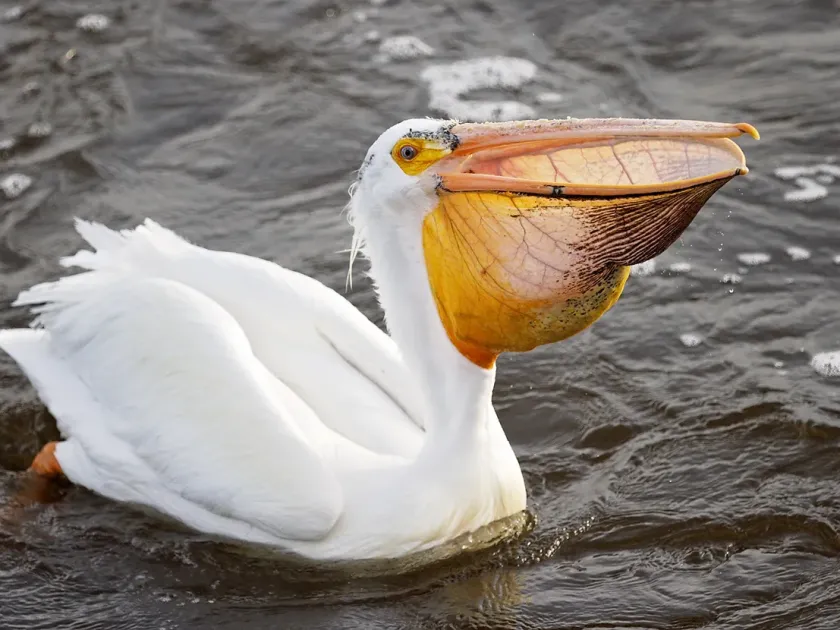
The American white pelican (Pelecanus erythrorhynchos) is a large aquatic bird in the family Pelecanidae. It is characterized by its bright white plumage, black flight feathers, and a massive bill with a large throat pouch.
During the breeding season, adults develop a distinctive fibrous plate on the upper mandible. Their wingspan is impressive, often exceeding three meters, making them highly visible during flight over water bodies.
These birds are highly social and exhibit cooperative foraging behavior. Unlike other pelican species, they do not dive; instead, they swim in groups to herd fish into shallow water for easier capture.
They prefer nesting in colonies on isolated islands in freshwater lakes. After the breeding season, they migrate to warmer climates, often utilizing man-made ponds as stopovers during their journey.
For professional aquaculture managers, identifying this species correctly is crucial as their presence can indicate a high risk of significant biomass loss in fish ponds.
What it damages
The American white pelican poses a severe threat to commercial fish farming operations. These birds are extremely efficient predators that can consume large quantities of fish in a very short time.
Ponds used for rearing juvenile fish are particularly vulnerable. The loss of stock to pelicans can significantly impact the annual profit margins of an aquaculture business.
Beyond the direct consumption of fish, the presence of pelican flocks creates constant stress in the fish population. This stress leads to reduced growth rates, lower disease resistance, and overall poor health of the stock.
Pelicans can also act as vectors for various parasites and diseases, which can spread rapidly through a pond system once introduced. This necessitates increased veterinary intervention and costs.
The economic impact is cumulative; a single flock can devastate a pond's production capacity, making effective management an essential component of fish farm operations.
When it appears
The threat posed by American white pelicans is strongly seasonal, aligned with their migration patterns and breeding cycle. Spring and summer are the peak periods for risk.
During the spring migration, pelicans often stop at inland ponds to refuel. These man-made habitats provide predictable food sources that attract hungry flocks on their way to breeding grounds.
Summer is the most critical period, as the birds need to provide large amounts of protein for their growing offspring. Pressure on fish farms is at its absolute maximum during these months.
Autumn migration sees a gradual decrease in activity as birds move south for the winter. However, in warmer regions, they may remain in the vicinity of ponds for extended periods.
Managers should implement monitoring protocols to track bird presence during these windows, allowing for the timely deployment of deterrence systems before major losses occur.
Signs of infestation
The most obvious sign of pelican activity is the presence of large white birds on the water surface. Their organized, collective swimming patterns during hunting are unmistakable.
Accumulations of excrement on dam banks or pond edges indicate regular usage of the area. This nutrient-rich waste can also lead to water quality issues, such as algae blooms.
Fish behavior often changes when a predator is present. If the fish appear unusually shy, remain in deep water, or exhibit reduced activity, it may be a sign of pelican interference.
The presence of feathers or leftover fish remains along the perimeter of the pond indicates that the area is being used as a staging or processing site for the pelicans.
A sudden decrease in fish counts during routine checks, without evidence of water quality failures, is a strong indicator that predatory birds have been feeding on the stock.
Control measures
Managing American white pelicans requires a multi-faceted approach. The most effective method is physical exclusion, using overhead nets or monofilament lines to prevent birds from landing on ponds.
Acoustic deterrents that simulate the sounds of predators or distress calls can temporarily discourage birds from settling in the area. These should be rotated to avoid habituation.
Visual deterrents, including motion-activated scarecrows, flags, and reflective materials, can disrupt the birds' sense of security and keep them away from the water.
Habitat modification is also recommended; keeping pond banks clear of dense vegetation reduces the appeal of the site as a resting or preening area for the pelicans.
An integrated pest management strategy that combines these physical, acoustic, and visual methods is the best way to safeguard fish stock against predatory bird pressure.
Taxonomy
- Latin name
- Pelecanus erythrorhynchos
- Family
- Pelecanidae
- EPPO code
- PELKER
Discussion
No discussions yet — be the first.