
Head louse
Pediculus humanus
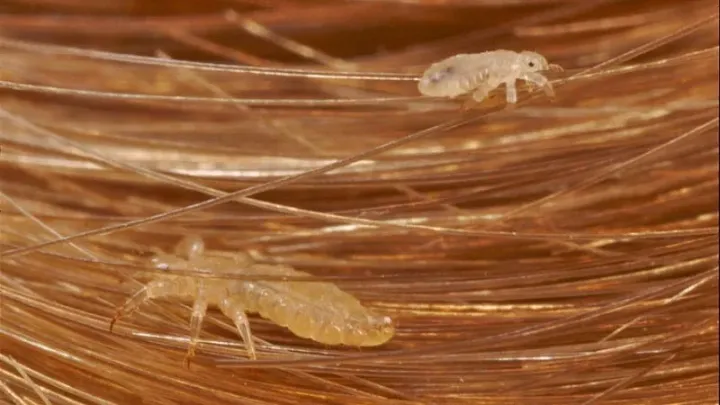
Description
How to identify
The head louse (Pediculus humanus capitis) belongs to the order Phthiraptera and the family Pediculidae. It is a strictly obligate ectoparasite of humans.
The insect possesses a piercing-sucking mouthpart exclusively adapted for feeding on human blood. It does not have the biological mechanisms to feed on plant tissues.
The entire life cycle occurs on the host's head, requiring specific constant temperature conditions that are not found on plants.
Systematically, this insect is classified as an animal parasite, lacking any morphological features related to plant-feeding insects.
There is no ecological overlap between the habitat of the head louse and the agricultural environment.
What it damages
The head louse causes zero damage to agricultural crops, including cereals, vegetables, or ornamental plants. It does not ingest plant sap or tissue.
It poses no threat to seeds, roots, or harvestable produce, and it does not vector plant diseases or pathogens.
Agricultural losses associated with this insect are non-existent, as it is biologically incompatible with the feeding requirements of phytophagous organisms.
Fields, greenhouses, and orchards are not suitable habitats for this parasite, as it cannot survive away from a warm-blooded host.
Therefore, it is misclassified if labeled as a pest in any agronomic context or botanical database.
Control measures
There are no control measures for this insect within the scope of agronomy or integrated pest management. The use of pesticides on plants for this purpose is strictly prohibited and ineffective.
Management of this parasite is exclusively a medical and public health issue involving personal hygiene and pharmaceutical pediculicides.
Standard agronomic practices such as fertilization, irrigation, or soil cultivation have no impact on the population of this insect.
Agencies responsible for crop protection do not monitor or regulate this species as it is not a threat to agricultural productivity.
Prevention relies on sanitation protocols for human personal items rather than environmental or biological controls in the field.
Taxonomy
- Latin name
- Pediculus humanus
- Family
- Pediculidae
- EPPO code
- PEDIHA
Discussion
No discussions yet — be the first.