
Louse
Pediculus
Description
How to identify
The Latin name Pediculus refers specifically to the genus of lice belonging to the order Phthiraptera. These are obligate ectoparasites of mammals and are strictly irrelevant to agricultural botany or plant protection.
In the agricultural sector, there is a common linguistic confusion between the term "louse" and various small sap-sucking insects like aphids (Aphididae) or psyllids (Psyllidae). True lice cannot feed on plant sap.
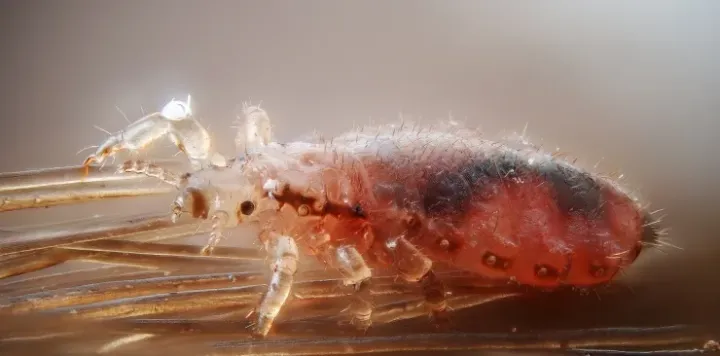
Biologically, lice are flattened, wingless insects with specialized claws for clinging to host hairs. They lack the mouthparts necessary for piercing plant cuticles and have no enzymes to digest cellulose or plant proteins.
Their taxonomic position within the family Pediculidae is well-defined. They undergo hemimetabolous development exclusively on animal hosts. They are physiologically incapable of surviving on plant matter.
It is critical for agronomists to distinguish between true lice (veterinary concern) and plant-infesting insects (agricultural concern) to prevent the application of useless and harmful substances on crops.
What it damages
True lice do not cause damage to agricultural crops. They are not phytophagous; therefore, they do not consume foliage, fruits, or roots, nor do they cause any economic loss to harvest yields.
However, if a farmer suspects "lice" on crops, they are likely dealing with aphids. These pests extract phloem sap from the plant, which leads to nutrient deprivation, stunted growth, and general physiological weakness.
Aphid feeding results in the injection of toxic saliva into the plant, which causes leaf curling, yellowing, and deformation of young shoots. This drastically reduces the plant's capacity for photosynthesis.
Furthermore, aphids secrete honeydew, which serves as a substrate for sooty mold. This mold creates a black coating on leaves, further obstructing light absorption and reducing the quality of market crops.
While true lice are a veterinary issue, plant-infesting "lice" (aphids) are among the most destructive pests in global agriculture, requiring constant monitoring and intervention.
When it appears
The life cycle of Pediculus is independent of agricultural seasons. They live year-round on their mammalian hosts, unaffected by planting or harvesting cycles of agricultural crops.
Plant pests often called "lice" (aphids) are highly seasonal. Their activity peaks during the spring and summer when succulent new growth is available for colonization and feeding.
Environmental conditions such as temperature (optimal 20-25°C) and humidity play a decisive role in the rate of aphid population growth. Dry, warm weather can lead to massive outbreaks in a short period.
Agronomists should schedule crop inspections during early vegetative growth stages. This is when the most tender tissues are susceptible to rapid colonization by sap-sucking pests.
In autumn, as the growing season concludes, many aphids migrate to overwintering hosts or produce diapausing eggs to survive the winter, requiring late-season control strategies.
Signs of infestation
Signs of true lice infestation are limited to animal behavior: excessive scratching, skin irritation, and hair loss in livestock. There are no observable symptoms of these pests on plants.
Signs of infestation by aphids ("plant lice") include twisted, yellowing leaves, the presence of dense insect colonies on the underside of leaves, and deformed terminal growth.
The presence of a sticky, shiny substance known as honeydew on the foliage is a primary diagnostic sign of a sap-sucking pest infestation. This is often followed by the development of black sooty mold.
Severe infestations can lead to the wilting of plants, premature flower drop, and a general lack of vigor in the crop, which can lead to significant yield losses in commercial production.
Visually, colonies appear as dense clusters of small, soft-bodied insects varying in color from green to black or brown, usually located on the most actively growing parts of the plant.
Control measures
Controlling true lice requires specific veterinary interventions and approved insecticides for livestock, which are completely different from those used in crop protection.
Control of aphids (plant pests) involves a combination of cultural practices, such as crop rotation and weed management, which help eliminate secondary hosts for the pests.
Biological control, such as the introduction of natural predators like ladybugs (Coccinellidae) and lacewings, is highly effective for reducing pest pressure without excessive chemical use.
- Application of systemic insecticides (e.g., neonicotinoids).
- Use of insecticidal soaps and horticultural oils.
- Regular field scouting and threshold-based application of controls.
Effective management requires identifying the correct pest to ensure the right product is applied at the right time, minimizing environmental impact while protecting agricultural yield.
Taxonomy
- Latin name
- Pediculus
- Family
- Pediculidae
- EPPO code
- PEDISP
Discussion
No discussions yet — be the first.