
Peccary
Pecari
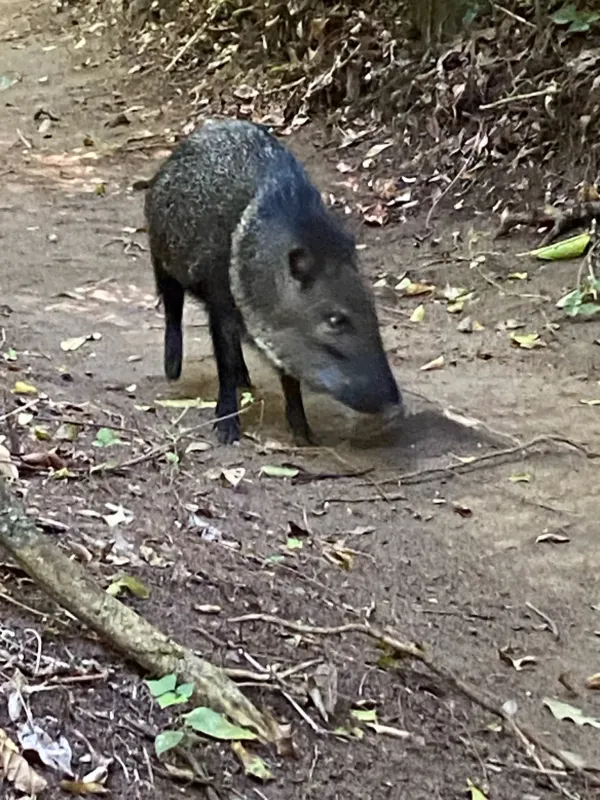
Description
How to identify
Peccaries (family Tayassuidae, order Artiodactyla) are medium-sized hoofed mammals that superficially resemble pigs but belong to a distinct taxonomic group.
They possess a sturdy body covered in coarse, bristly hair and have well-developed tusks that grow straight down, unlike the curved tusks of true swine.
These animals are highly gregarious, typically living in herds that range in size, which makes them a formidable force when they enter agricultural lands.
Peccaries are well-adapted to various habitats and show significant intelligence and agility, allowing them to navigate obstacles to access food sources.
Their biological resilience and lack of specialized dietary requirements allow them to thrive in areas adjacent to human-cultivated fields.
What it damages
Peccaries are known to cause substantial damage to commercial crops, particularly in tropical and subtropical regions where they are native.
They frequently invade corn and sorghum fields, trampling young plants and consuming the grain during the milky stage of maturation.
Root crops such as tubers and potatoes are particularly vulnerable, as peccaries use their snouts to dig extensively, destroying the crop and the soil structure.
Orchards often suffer from their presence, as they may gnaw on the bark of young trees, causing structural damage and opening entry points for pathogens.
The cumulative destruction caused by a herd moving through a field can result in total loss of sections of the crop within a single night.
When it appears
Feeding activity often peaks when crops reach the harvestable stage, as the high sugar and starch content makes them highly attractive to the animals.
During prolonged dry seasons, peccaries are more prone to forage in agricultural areas because irrigation systems provide them with both food and water.
Since peccaries do not have a restricted breeding season, population pressures remain constant throughout the year, requiring continuous monitoring.
Their daily activity cycle is predominantly crepuscular and nocturnal, which limits the opportunities for farmers to observe and intervene during daylight.
Understanding their local movement patterns is essential, as herds often rotate through different areas based on the seasonal availability of crops.
Signs of infestation
The most reliable sign of a peccary presence is the distinct, small, and sharp-hooved tracks left behind in soft soil or muddy areas.
Large patches of disturbed, overturned soil indicate where the herd has been foraging for roots, tubers, or buried plant matter.
Broken stalks and damaged plants are typically scattered in irregular patterns, as the herd moves through the field in a disorganized fashion.
A strong, musky odor, often described as pungent, is frequently present in areas where a herd has been congregating or marking their territory.
Fences or enclosures may show signs of stress or damage at the ground level, reflecting the animals' attempts to burrow or push under barriers.
Control measures
The most effective long-term deterrent is the installation of high-tensile mesh fencing that is buried at least 30–50 cm deep to prevent burrowing.
Integrated pest management should include motion-activated lighting or acoustic alarms that can scare the animals away when they approach the field perimeter.
Maintaining a clear buffer zone around fields, devoid of dense brush, reduces the cover that peccaries prefer for daytime resting and approach.
In some cases, the application of scent-based deterrents around the perimeter can create a temporary psychological barrier for the herd.
- Installation of electric fencing with low-height strands.
- Strategic rotation of crops to less accessible locations.
- Use of natural predator scent markers.
Taxonomy
- Latin name
- Pecari
- Family
- Tayassuidae
- EPPO code
- PECRSP
Discussion
No discussions yet — be the first.