
Paramadarus complexus
Paramadarus complexus
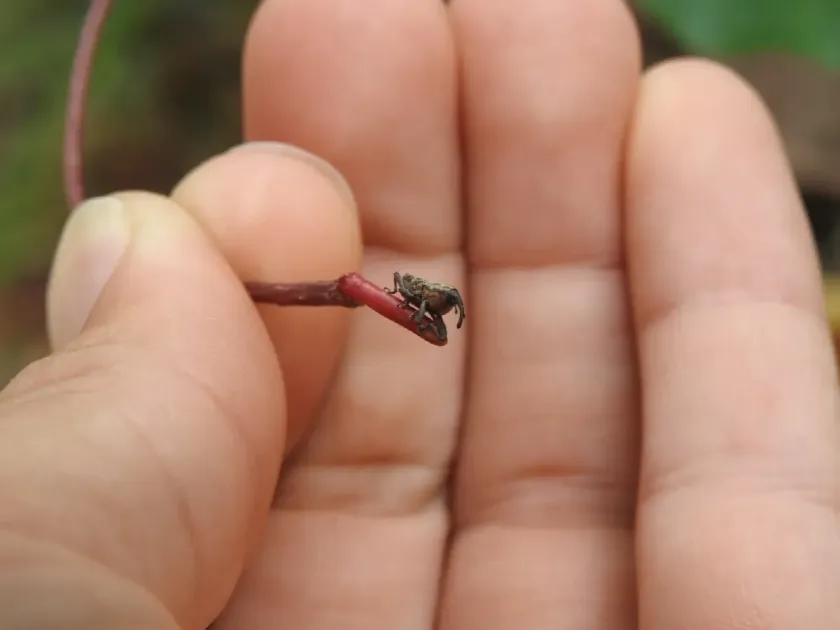
Description
How to identify
Paramadarus complexus is a species of weevil (Curculionidae family) that can act as a plant pest in specific agricultural systems. It is characterized by the typical morphological traits of true weevils, including a distinct snout and robust exoskeleton.
The insect undergoes complete metamorphosis, passing through egg, larval, pupal, and adult stages. Each life stage occupies a specific ecological niche, often related to the soil and the host plant's tissues.
Adults are relatively small, which makes them difficult to monitor in large agricultural fields without the use of specialized traps or systematic sweep-net sampling.
The taxonomic classification places it within the Curculionidae family, a group well-known for its hidden, internal feeding habits, which makes detection a significant challenge for farmers.
The biological success of this species relies on its ability to overwinter successfully in the soil, emerging precisely when the host crops begin their vegetative growth cycle.
What it damages
The pest primarily targets legumes, feeding on various plant organs. Both adults and larvae contribute to yield losses through direct consumption and structural damage to the host plant.
Larval feeding inside the roots or stems interferes with the vascular system, significantly impeding the plant's ability to transport water and essential minerals to the upper leaves.
Adult feeding results in characteristic leaf damage, where small holes are chewed into the lamina, reducing the overall photosynthetic capacity of the canopy during critical growth stages.
Structural weakening of the root collar is a frequent issue, which can lead to plant lodging or total death of seedlings if the infestation density is high enough.
By compromising the plant's structural integrity, the pest also increases the likelihood of secondary fungal infections, which further complicates the health of the cultivated crop.
When it appears
Adult emergence typically occurs in early spring as soil temperatures rise, synchronizing with the germination and early development of host legumes.
The most significant damage usually occurs during the seedling stage, when young plants have minimal biomass and are highly sensitive to even minor tissue removal.
The developmental timeline of the larvae spans several weeks throughout the growing season, heavily influenced by regional humidity levels and the physiological state of the host plants.
By the end of the agricultural season, adults move toward their overwintering sites, often staying within or near the fields where they caused the initial damage.
The frequency and severity of infestations are often linked to environmental stability, with warmer springs often leading to earlier and more pronounced pest activity.
Signs of infestation
One of the earliest signs is the appearance of small, distinct holes on the foliage, which are easily distinguishable from general wear and tear on the leaves.
A noticeable decrease in plant vigor or the appearance of localized patches of stunted growth often indicates that the larvae are active within the root systems.
Wilting during the heat of the day, despite adequate irrigation, is a classic sign of internal vascular damage caused by the feeding activity of the larvae.
Reduction in overall stand density is a critical indicator of severe infestation levels, requiring immediate intervention to save the remainder of the crop.
- Small, clean-edged holes in leaves;
- Early yellowing and wilting of plant tissues;
- Visible tunnels in the root collar or root cortex.
Control measures
Crop rotation remains the most effective long-term strategy for managing Paramadarus complexus, preventing the buildup of population densities in a single field over time.
Good agricultural practices, such as deep autumn tillage, can expose larvae and overwintering adults to adverse weather conditions and predators, significantly reducing their numbers.
Chemical control involving systemic insecticides is recommended during the early growth stages if monitoring reveals that threshold levels have been exceeded.
Seed treatment with professional-grade insecticides provides a critical layer of defense, protecting germinating seeds and young seedlings during their most vulnerable period.
Integrated Pest Management (IPM) should also include the control of weeds that may host the pest, thereby reducing reservoirs of the population between primary crop cycles.
Taxonomy
- Latin name
- Paramadarus complexus
- Order
- Coleoptera (beetles)
- Family
- Curculionidae
- EPPO code
- PRMDCO
Discussion
No discussions yet — be the first.