
Grape berry moth
Paralobesia viteana
Description
How to identify
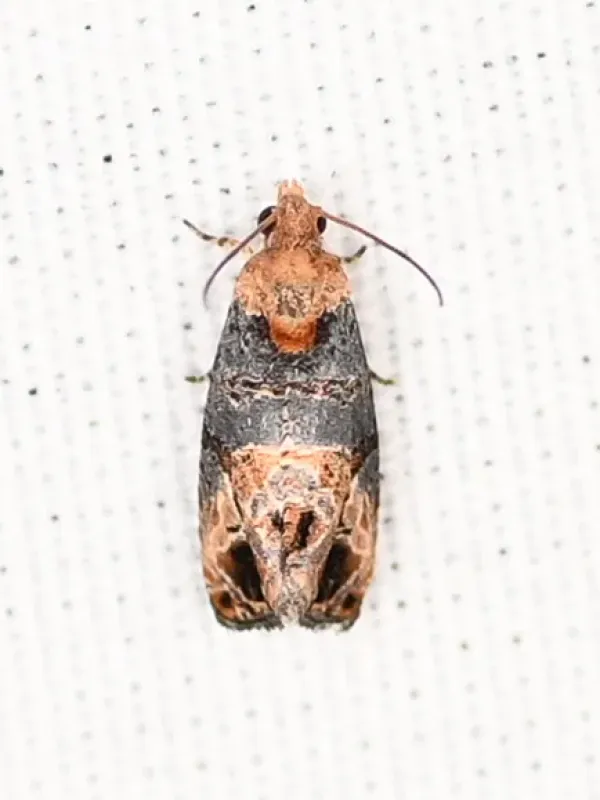
The Grape berry moth (Paralobesia viteana) is a small moth belonging to the Tortricidae family. Adult moths have a wingspan of approximately 10-12 mm, with brownish-gray forewings featuring intricate, mottled patterns that provide excellent camouflage against grape bark and leaves.
Larvae, commonly known as caterpillars, undergo several developmental stages. Initially, they appear creamy-white or light green, eventually darkening to a brownish or purple hue as they mature. Fully grown caterpillars typically measure about 9-10 mm in length and possess sparse, fine hairs.
The pupae are typically brown and are found tucked away in folded leaves or hidden within the crevices of the vine's bark. The eggs, which are tiny and translucent, are laid by females directly on the pedicels or the young clusters of the grapevines.
As a member of the order Lepidoptera, this pest displays a complex life cycle driven by environmental conditions. Unlike other similar species, Paralobesia viteana has specific behavioral traits in North American climates that require precise timing for effective population monitoring.
To identify the presence of this insect, growers rely on visual inspections for webbing on flower clusters or the use of pheromone traps. These traps are highly effective in detecting the early flight of adult moths, providing a critical window for management actions.
What it damages
The primary damage is caused by the larvae feeding on the reproductive parts of the grapevine. They attack both cultivated and wild grapes, feeding on blossoms, green berries, and ripening fruit, which can lead to significant yield reductions.
During the early season, larvae of the first generation web together the blossom clusters and feed on the flower buds. This prevents proper pollination and fruit set, often causing the entire flower cluster to wither and drop prematurely.
As the berries develop, larvae bore into the fruit to consume the pulp and seeds. A single caterpillar can damage multiple berries by tethering them together with silk webbing, creating an environment that promotes decay and secondary infections.
The later generations are particularly devastating as they target ripening berries. This feeding pattern not only causes direct yield loss but also ruins the aesthetic quality of the clusters, rendering them unsuitable for fresh market sale or high-quality winemaking.
Indirect damage includes the entry of secondary pathogens like Botrytis cinerea (gray mold) through the larval entry holes. This accelerates fruit rot, which can spread rapidly through the entire cluster, causing total loss of the affected fruit.
When it appears
The Grape berry moth overwinters as a pupa, sheltered within the fallen leaves or in the rough bark of the vines. Adults begin emerging in the spring, typically coinciding with the bloom period of the grapevine, determined by the accumulation of degree-days.
The first generation of larvae feeds on the flower clusters shortly after hatching. This stage is crucial for vineyard management, as controlling this generation significantly reduces the potential for subsequent, more destructive generations to build up.
The second and third generations emerge mid-summer through early autumn, attacking the developing fruit. In warmer regions with long growing seasons, the pest can complete three or more life cycles, creating a persistent pressure on the vineyard.
Moth activity is primarily nocturnal. Favorable temperatures, usually between 20°C and 28°C, accelerate the life cycle, leading to rapid increases in population density if left unchecked by integrated pest management strategies.
Monitoring is essential throughout the season. By tracking moth flights with pheromone traps, agronomists can apply control measures at the precise time when larvae are most vulnerable, usually just after egg-hatch and before they bore into the berries.
Signs of infestation
The earliest signs of infestation are silk webs on the flower clusters, which bind the buds and florets together. Careful examination of these webs often reveals small, active larvae feeding on the floral tissue.
On ripening berries, the primary sign of damage is a small, circular entry hole. Surrounding the hole, the skin of the berry often appears sunken or discolored, which is a clear indicator that a larva is feeding inside the fruit.
As the larvae mature, the damaged berries become deformed and may begin to turn purple or blue earlier than the rest of the cluster. Premature shriveling and dropping of berries from the cluster are classic symptoms of advanced infestation.
A secondary sign is the presence of gray mold on the berries, fostered by the high humidity within the larval webbing. Clusters will appear loose and messy, often emitting a distinct smell of rotting fruit due to the secondary decay.
On leaves adjacent to infested clusters, one might observe small patches of skeletonized tissue. This occurs when young larvae feed on the leaf surface before migrating to the more nutrient-rich grape berries.
Control measures
Effective management requires a combination of cultural practices and chemical interventions. Pruning and canopy management are vital; improving airflow and sunlight penetration discourages moth activity and reduces the micro-humidity that the larvae prefer.
Chemical control involves the application of selective insecticides timed to coincide with the hatching of the larvae. Using products that have a residual effect but remain safe for beneficial insects is a cornerstone of modern integrated pest management.
Biological controls, such as the use of Bacillus thuringiensis (Bt) sprays, are highly effective against young larvae. Additionally, pheromone mating disruption technology is increasingly used to prevent the males from finding females, effectively suppressing the next generation.
Cultural sanitation is crucial for long-term control. Removing and destroying fallen leaves and infested fruit remnants in the autumn eliminates the overwintering sites for the pupae, drastically reducing the moth population for the following season.
Maintaining a regular monitoring program using pheromone traps allows for data-driven decisions. By avoiding calendar-based spraying and applying treatments only when threshold levels are reached, growers can maintain high-quality yields while minimizing the environmental impact.
Taxonomy
- Latin name
- Paralobesia viteana
- Order
- Lepidoptera (butterflies)
- Family
- Tortricidae
- EPPO code
- PAROVI
Discussion
No discussions yet — be the first.