
Grape berry moth
Paralobesia
Description
How to identify
The Grape Berry Moth (scientific name: Paralobesia viteana) is a member of the Tortricidae family of moths and is considered a significant pest in viticulture.
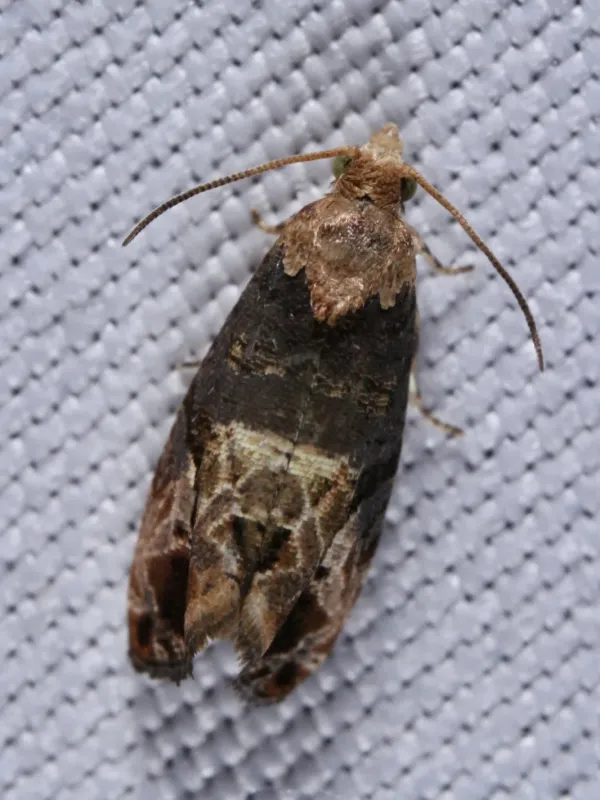
Adult moths are small, with a wingspan of approximately 10–12 mm. Their forewings feature a mottled brown and gray pattern, which acts as camouflage against vine bark.
Larvae, or caterpillars, undergo several developmental stages. Initially, they are creamy white, later maturing into a dark olive or brown color with a prominent dark head capsule.
Eggs are minute and translucent, usually deposited singly by females on the surface of grape blossoms, berries, or the rachis of the cluster.
Pupae overwinter in protected sites, typically inside cocoons spun within rolled leaves or hidden deep in the crevices of the vine's rough bark.
What it damages
The primary host for this pest is the grapevine (Vitis vinifera), though wild Vitis species may also serve as secondary hosts in vineyard surroundings.
Damage is exclusively caused by larvae, which feed on the reproductive parts of the vine, starting from the flowering stage through berry development.
Early-season larvae feed on developing buds and blossoms, which often results in the abscission of these parts and a reduction in cluster set.
As berries enlarge, larvae bore into the fruit, consuming the pulp and seeds, rendering the grapes completely unmarketable for fresh consumption or winemaking.
Infested berries are highly susceptible to secondary pathogens, most notably Botrytis cinerea (gray mold), which can ruin entire clusters rapidly.
When it appears
The pest overwinters as a pupa within a cocoon, strategically placed in protected locations such as vine bark or leaf litter on the vineyard floor.
Adult emergence of the first generation generally aligns with the onset of vine bloom, triggered by rising temperatures exceeding 15 degrees Celsius.
Depending on the climatic zone, the Grape Berry Moth can produce two to three generations per growing season, necessitating ongoing vigilance.
Flight activity is often continuous and overlapping, meaning different life stages can be found on the vineyard simultaneously throughout the summer.
The most severe economic damage typically occurs mid-to-late season as larvae target the ripening berries, which are high in sugar and nutrients.
Signs of infestation
The presence of fine webbing on flower clusters or developing grapes is often the first visible indicator of infestation by this pest.
Small entry holes on the skin of the berry, accompanied by frass (larval excrement) at the site, confirm that a larva has burrowed into the fruit.
Distorted leaves or foliage with rolled edges may serve as temporary shelters for larvae during their development or pupation phases.
Visible discoloration or premature shriveling of individual berries within a healthy-looking cluster is a classic symptom of internal larval feeding.
In cases of high pest pressure, entire clusters may appear ragged, discolored, and covered in webs, significantly lowering the overall yield quality.
Control measures
Cultural control involves removing loose bark from trunks during the dormant season and burying or destroying leaf litter to reduce overwintering sites.
Pheromone monitoring traps are essential for tracking moth flights and determining the optimal timing for intervention against specific generations.
Biological control, such as the application of Bacillus thuringiensis, provides an effective and environmentally friendly option for managing young larvae.
Chemical control programs use selective insecticides applied when egg hatching is at its peak, ensuring compliance with pre-harvest intervals.
- Bark removal and sanitation.
- Pheromone trap monitoring.
- Biological application of B.t.
- Timed insecticide applications.
Taxonomy
- Latin name
- Paralobesia
- Order
- Lepidoptera (butterflies)
- Family
- Tortricidae
- EPPO code
- PAROSP
Discussion
No discussions yet — be the first.