
Paracolopha morrisoni
Paracolopha morrisoni
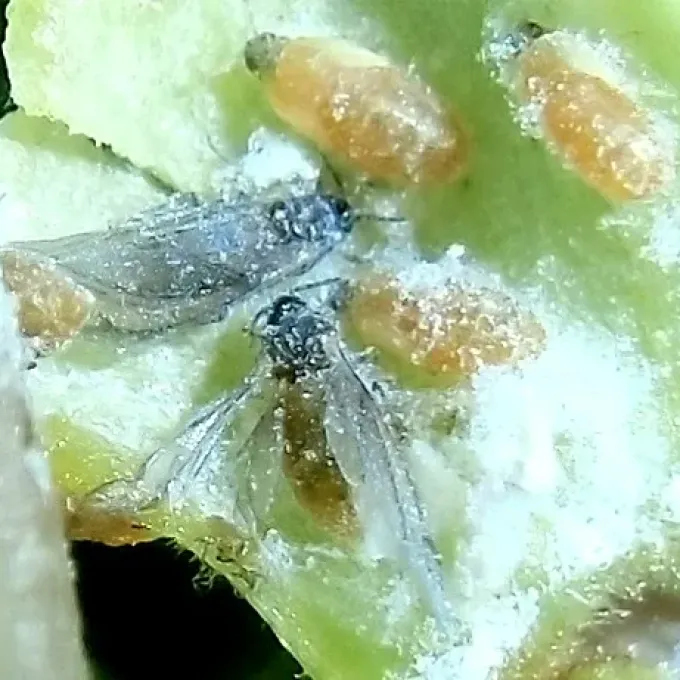
Description
How to identify
Paracolopha morrisoni is an aphid species belonging to the Aphididae family, order Hemiptera. This insect is a specialized pest characterized by specific morphological features in both adult and larval stages.
Adult specimens are typically small with an oval body shape adapted for sap-feeding. Their coloration provides effective camouflage on host plants, making them difficult to spot.
Systematically, this species is closely related to other cereal aphids, yet it maintains a distinct life cycle involving host alternation, which is critical for agricultural monitoring.
The biology of the species is primarily studied regarding its impact on cultivated and wild grasses. The insect exhibits a high reproductive potential under favorable environmental conditions.
Specialists identify the species by examining the morphology of the mouthparts and antennae, allowing for precise differentiation from related aphid species present in the same habitats.
What it damages
The primary host crops for Paracolopha morrisoni include wheat, barley, and various wild grasses that serve as a nutritional base for the pest.
The pest feeds on cellular sap by piercing the plant epidermis with its stylet, which leads to significant nutrient depletion and stress for the affected plants.
Feeding sites often develop necrotic spots, which inhibit photosynthesis and weaken the overall vitality of the vegetative stage of the crop.
Mass infestations in agricultural fields can lead to substantial reductions in grain yields and a decline in the quality of the harvested product.
Beyond direct mechanical damage, this aphid can act as a vector for various plant viral diseases, which significantly complicates field phytosanitary management.
When it appears
The activity of this pest is highly dependent on temperature and humidity levels. Moderately warm spring and summer periods are optimal for their development.
The life cycle consists of several generations. The first individuals appear on primary hosts in the spring as soon as ambient temperatures stabilize.
Throughout the growing season, the pest migrates to secondary hosts, such as cereal fields, where the most intense population growth occurs.
In the autumn, the insects migrate back to primary host plants to lay eggs, which overwinter to ensure the survival and continuation of the species for the next season.
The speed of generation turnover correlates with the accumulation of active temperatures, meaning that in hot summers, population numbers can increase rapidly.
Signs of infestation
A key indicator of infestation is the formation of aphid colonies on the underside of leaves or in leaf sheaths, which can be observed during field inspections.
Symptoms include leaf curling and the appearance of yellow or brown spots in feeding areas, indicating the extraction of plant cell contents.
Leaves often become covered in honeydew—a sugary excretion that facilitates the growth of sooty mold, further damaging the plant.
- Yellowing and premature wilting of plant tips.
- Presence of shed skins (exuviae) left by larvae on leaf surfaces.
- Increased activity of ants attracted to aphid excretions.
Severe infestations cause ear deformation and the development of shriveled grains, which significantly impacts total yield volume.
Control measures
Control strategies for Paracolopha morrisoni rely on an integrated approach, combining agrotechnical practices with chemical interventions.
An essential measure is the eradication of weeds that serve as pest reservoirs, alongside crop rotation to prevent the buildup of local aphid populations.
Chemical protection involves the use of systemic insecticides, which penetrate plant tissues to provide long-lasting control against these sap-sucking pests.
Field treatments should be conducted based on economic damage thresholds to minimize costs and reduce the environmental impact on the surrounding ecosystem.
Biological control, by encouraging natural predators such as ladybirds, lacewings, and parasitic wasps, is an effective way to keep pest populations below harmful levels.
Taxonomy
- Latin name
- Paracolopha morrisoni
- Order
- Hemiptera (bugs, aphids, leafhoppers)
- Family
- Pemphigidae
- EPPO code
- BYRSMO
Discussion
No discussions yet — be the first.