
Pantorhytes
Pantorhytes plutus
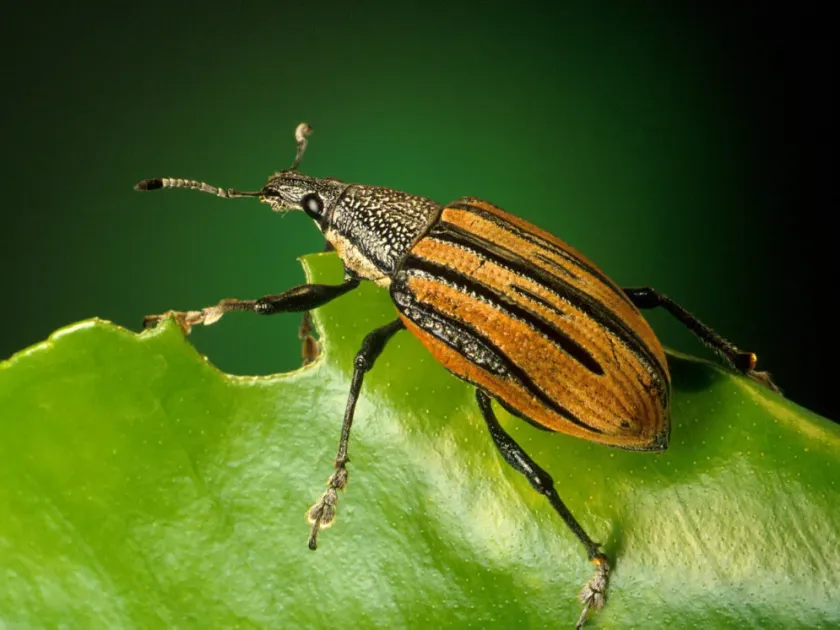
Description
How to identify
Pantorhytes (genus Pantorhytes, specifically Pantorhytes plutus) is a destructive weevil belonging to the order Coleoptera and the family Curculionidae. These beetles are notorious pests of various tropical crops, primarily cocoa.
The adult beetle is characterized by a hardened exoskeleton, often dark or metallic in color, which provides excellent camouflage against the bark of host trees. They are medium-sized insects with a prominent snout typical of the weevil family.
The larvae are apodous (legless), creamy white, and develop entirely within the host plant tissues. This hidden lifestyle makes them difficult to target with conventional surface-applied insecticides.
The life cycle is dictated by the humid tropical climate, allowing for overlapping generations throughout the year. Adults are nocturnal, preferring to hide during the daylight hours.
These insects thrive in environments with high humidity and dense foliage, which are standard conditions for many cocoa plantations in their native range.
What it damages
The primary host of Pantorhytes plutus is the cocoa tree (Theobroma cacao). Both seedlings and mature trees are susceptible to significant injury from different life stages of the pest.
Larval damage is the most severe; larvae bore tunnels into the cambium and xylem of the tree trunk and branches, severely restricting the transport of water and nutrients.
Adult beetles feed on the margins of leaves and succulent young shoots. While leaf feeding is generally less damaging than larval boring, heavy infestations can cause substantial foliage loss.
The tunnels created by larvae often serve as entry points for secondary fungal and bacterial infections, leading to the rapid decay of affected branches and canopy dieback.
Without intervention, extensive feeding by larvae can lead to the death of the tree, significantly reducing the economic productivity of the entire plantation.
Signs of infestation
Notched or ragged leaf edges are the most visible indication that adult beetles are present and feeding on the foliage.
Small holes on the trunk or bark, often accompanied by gumming or sap exudation, are classic symptoms of larval tunneling within the wood.
A decline in tree vigor, including yellowing leaves or wilting branches, is a strong indicator that the vascular system is being compromised by larval activity.
Night-time scouting using flashlights reveals adult beetles resting on the branches, as they are most active after sunset.
The accumulation of frass (larval waste) at the base of the tree or in branch forks is a clear sign that larvae are currently active under the bark.
Control measures
Chemical control focuses on the application of systemic insecticides that can penetrate the bark or contact insecticides applied during the peak nocturnal activity of the adults.
Pruning and sanitation are critical; removing and destroying heavily infested branches helps lower the population density and prevents the spread of larvae to healthy parts of the tree.
Biological control methods, including the release of beneficial fungi (such as Beauveria bassiana) or entomopathogenic nematodes, show promise in managing larval stages.
Improving orchard management by thinning excessive canopy cover increases light penetration and reduces humidity, creating less favorable conditions for the pest.
- Regular inspection of bark for entry holes.
- Use of pheromone or light traps for monitoring.
- Preventing the transport of infested plant material between regions.
Taxonomy
- Latin name
- Pantorhytes plutus
- Order
- Coleoptera (beetles)
- Family
- Curculionidae
- EPPO code
- PANYPL
Discussion
No discussions yet — be the first.