
Pantorhytes
Pantorhytes
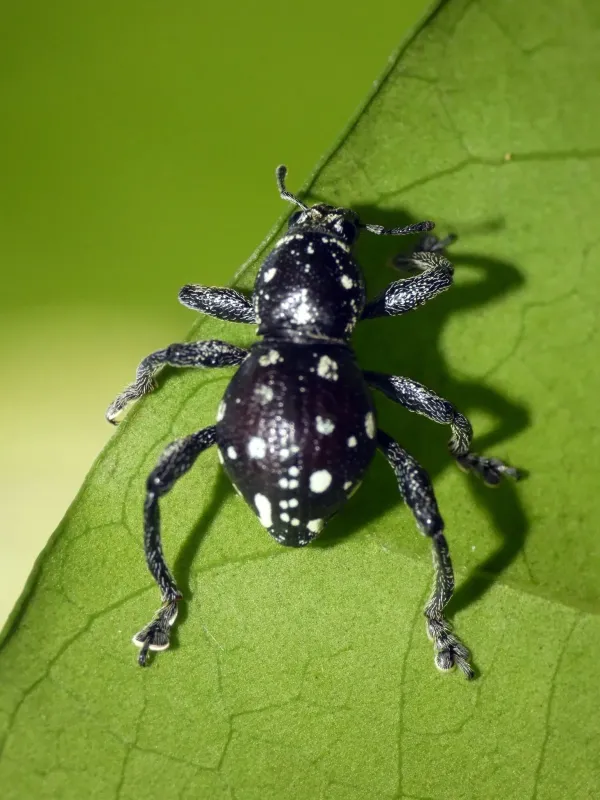
Description
How to identify
Pantorhytes is a genus of weevils belonging to the family Curculionidae. These insects are characterized by a robust body and a distinct elongated snout, typical of the broader weevil group.
Adult beetles often display vibrant coloration with metallic lusters or contrasting spots, acting as a warning mechanism against predators. Their size varies by species, typically ranging from 10 to 20 mm in length.
The larvae are legless, whitish grubs with a darkened head capsule. They live a cryptic lifestyle, developing within the woody tissues of their host plants, which makes early detection difficult.
The genus includes numerous species primarily distributed across Southeast Asia and the Pacific regions. They are highly specialized phytophagous insects adapted to the humid conditions of tropical forests.
Species identification often requires entomological analysis, particularly of genital structures and elytral surface features, as many related species share similar morphological traits.
What it damages
The primary hosts of Pantorhytes are cocoa trees (Theobroma cacao). However, they can also cause significant damage to other tropical fruit and ornamental tree species.
Adult beetles primarily feed on leaves, creating irregular holes and ragged edges, which leads to a reduction in the plant's total photosynthetic surface area.
Larvae cause the most significant economic damage by boring tunnels into the stems and branches of young trees, disrupting the vascular system and weakening the structural integrity of the plant.
In large-scale plantations, larval activity can lead to the death of young saplings, as the bored tissues provide entry points for secondary fungal and bacterial infections.
Mass infestations significantly reduce cocoa bean yields due to overall physiological stress on the tree and premature leaf drop.
Signs of infestation
The first visual sign of beetle presence is the occurrence of multiple holes and irregular margins on young cocoa leaves, characteristic of weevil herbivory.
Larval infestation in the wood can be identified by the presence of frass — fine sawdust-like excrement accumulating at the base of the tree or within bark crevices.
In areas where larvae have entered the trunk, there is often visible gumming or sap exudation as a defensive response to mechanical tissue damage.
Upon careful inspection of the bark, one can observe small exit holes, indicating the emergence of adults after the completion of the pupal stage.
In advanced cases, the dieback of individual branches is observed, resulting from the disruption of sap flow caused by larval tunnels within the stem tissue.
Control measures
Agronomic control methods include regular sanitary pruning of infested branches and the removal of severely affected trees to prevent the spread of the population.
For small plots, manual collection of adult beetles is effective, particularly during the early morning hours when their activity is at its lowest.
The application of biological control agents, such as entomopathogenic fungi or nematodes, has shown promising results in tropical plantation environments.
Chemical control must be applied with caution; contact insecticides are primarily utilized during peak adult activity periods within the tree canopy.
Maintaining a healthy plantation ecosystem is essential, as it helps support natural enemies of the pest, including parasitic wasps and predatory ants.
Taxonomy
- Latin name
- Pantorhytes
- Order
- Coleoptera (beetles)
- Family
- Curculionidae
- EPPO code
- PANYSP
Discussion
No discussions yet — be the first.