
Scorpionfly
Panorpa
Description
How to identify
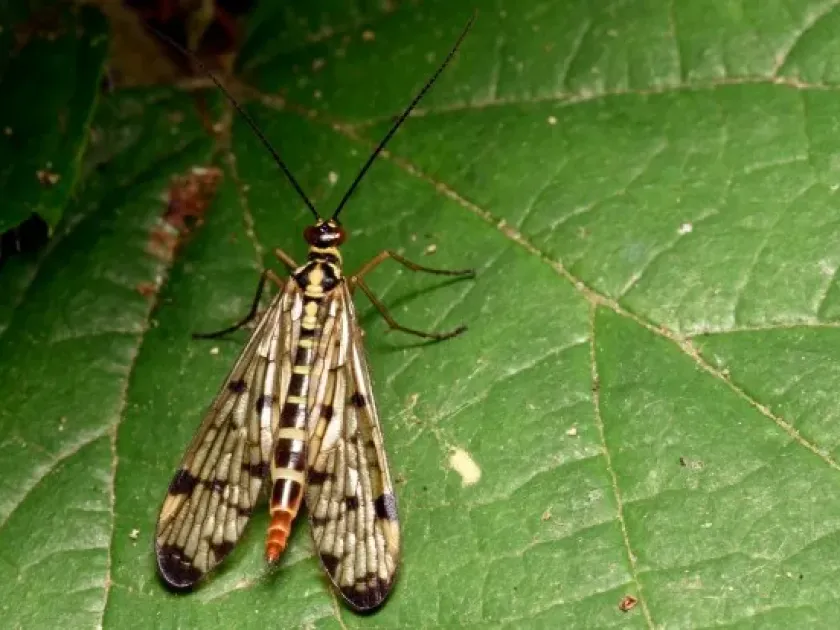
The Common Scorpionfly (Panorpa communis) belongs to the order Mecoptera and the family Panorpidae. It is easily recognized by its elongated head, which forms a beak-like rostrum, and the male's upturned abdominal tip, resembling a scorpion's sting.
Adult insects reach 15-20 mm in length. Their wings are transparent with a characteristic mottled dark brown pattern. Despite the intimidating appearance, the male's tail structure is strictly for mating and is completely harmless to humans.
The life cycle involves complete metamorphosis: egg, larva, pupa, and adult. Larvae resemble small caterpillars and typically live in the soil or leaf litter, possessing a well-developed head and a segmented body structure.
These insects prefer cool, shaded, and humid environments, such as hedgerows, forest edges, and overgrown parts of home gardens. They are largely scavengers and opportunistic feeders on small arthropods.
From an agronomic perspective, it is crucial to classify Panorpa as a neutral or beneficial insect rather than a crop pest, as they do not possess the specialized anatomy to damage healthy plants.
What it damages
Scorpionflies do not damage living plant tissues. They lack the mouthparts required to chew leaves or suck sap from stems, making them incapable of causing economic damage to crops or ornamental plants.
Reports of damage are non-existent in professional agricultural literature. Their presence on vegetation is usually secondary, as they may be attracted to the site by other insects or decaying organic matter.
The larvae act as saprophages in the soil, feeding on decaying organic materials and small dead organisms. This activity contributes to the decomposition process rather than harming root systems or crops.
If you see a scorpionfly on your crops, it is simply resting or hunting for nectar and small insects that might actually be causing harm to your plants, making the scorpionfly a potential ally.
There is no record of Panorpa communis causing yield loss, fruit damage, or foliage degradation, which differentiates them from actual agricultural pests that require targeted control strategies.
When it appears
Adult Common Scorpionflies are primarily active during the late spring and early summer months, typically peaking in May and June. During this time, they are most visible as they seek mates.
Larvae develop throughout the warm season within the soil profile. They overwinter in the soil or under debris, often in the pupal or larval stage, waiting for the return of spring conditions.
Their activity period often overlaps with the flowering stage of various garden plants, which can occasionally cause alarm for inexperienced gardeners who mistake them for pollinators or flower pests.
Humidity is a vital factor for their survival. Excessive heat and dry conditions typically force the population to retreat into deeper, moisture-retaining layers of the soil or mulch.
By late summer and autumn, the population numbers decline as the insects complete their annual cycle. They are a univoltine species, meaning they typically complete only one generation per year.
Control measures
No specific control measures are necessary for the Common Scorpionfly. Since they do not damage crops, any intervention against this species is considered unnecessary and counterproductive to ecological balance.
The use of insecticides to eliminate scorpionflies is strongly discouraged. Broad-spectrum pesticides will kill beneficial predators and parasitoids, potentially leading to outbreaks of actual agricultural pests.
Standard horticultural hygiene, such as removing excess rotting debris or overgrowth, can naturally discourage their presence if they are considered a nuisance, but this should not be targeted at the species itself.
Maintaining a diverse garden ecosystem with natural predators and bird habitats is the best way to keep insect populations balanced. Scorpionflies are a natural part of a healthy, biodiverse farm environment.
Agronomists should prioritize monitoring for true pests like aphids, spider mites, or beetles, leaving the harmless Panorpa to fulfill its role in the garden's nutrient cycling and natural order.
Taxonomy
- Latin name
- Panorpa
- Family
- Panorpidae
- EPPO code
- PNRPSP
Discussion
No discussions yet — be the first.