
Pandemis pyrusana
Pandemis pyrusana
Description
How to identify
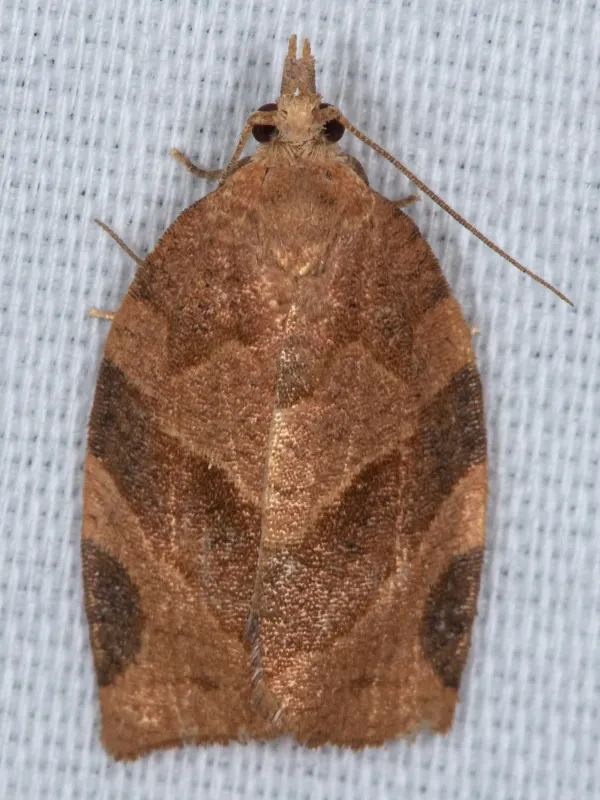
Pandemis pyrusana, commonly known as the Pandemis leafroller, is a moth species belonging to the family Tortricidae. The adult moth has a wingspan of approximately 18 to 25 mm, with forewings that are typically tan to light brown, featuring darker, oblique bands and a characteristic net-like pattern.
The larvae, or caterpillars, progress through several instars. Early instars are often light green with a darker head capsule. As they mature, larvae can reach a length of about 20 mm, exhibiting a more vibrant green color while maintaining a brownish or black head capsule.
Pupae are dark brown and are typically concealed within silken webs spun between leaves or attached to fruit. These structures provide essential protection from environmental extremes and natural predators, facilitating the survival of the developing insect.
The species is highly adaptable and can complete one to three generations per year depending on regional climate conditions. This variability makes it a significant pest in orchards, requiring ongoing monitoring throughout the growing season.
Pheromone traps are essential tools for monitoring the flight patterns of adult moths. By accurately timing the presence of these insects, agronomists can apply control measures at the most vulnerable stages of the pest's life cycle.
What it damages
As a polyphagous pest, Pandemis pyrusana attacks a wide range of host plants. It is particularly problematic in orchards, causing substantial damage to pome fruits such as apples and pears, as well as various stone fruits like cherries and plums.
Larvae primarily damage foliage by tying leaves together with silk and feeding within these structures. This activity leads to leaf skeletonization, reduced photosynthetic efficiency, and, in severe infestations, significant defoliation of the tree canopy.
The most direct economic damage occurs when larvae feed on developing fruit. They chew shallow excavations or deeper holes into the fruit skin, which ruins the market quality and creates entry points for fungal pathogens, such as rot diseases.
Secondary infections often exacerbate the initial damage. Once the surface of the fruit is compromised, it becomes susceptible to post-harvest decay, leading to fruit drop and massive losses during storage and transport.
In high-pressure years, if left unmanaged, the damage from Pandemis leafroller can be extensive, potentially affecting a large percentage of the total harvest and requiring significant labor for culling damaged fruits.
When it appears
The species typically overwinters as second or third-instar larvae within silken hibernacula hidden in bark crevices or protected spots on the tree. As spring temperatures rise above 10°C, the larvae resume activity.
The first adult flight generally occurs in late spring or early summer. Following mating, females deposit egg masses on the upper surface of leaves, which will eventually hatch into the first generation of caterpillars of the new season.
Multiple overlapping generations often occur throughout the summer. Because the development of different generations can overlap, growers may observe all life stages simultaneously in the orchard by mid-summer.
The period of most intensive larval feeding occurs during the rapid growth and sugar accumulation phase of the fruit, making this the critical window for implementing protective orchard management strategies.
As autumn approaches and temperatures drop, the final generation larvae seek protected sites to hibernate. They remain in diapause through the winter, completing the biological cycle and ensuring population persistence.
Signs of infestation
- Presence of silken webs on shoot tips.
- Leaves rolled or tied together by silk.
- Skeletonized leaves with visible feeding damage.
- Shallow scarring or holes on the fruit surface.
- Presence of larval frass (excrement) around damaged fruit or leaves.
Control measures
Integrated Pest Management (IPM) practices, such as removing debris and scraping rough bark, can help eliminate overwintering sites for the larvae. Good orchard sanitation reduces the initial population pressure for the following spring.
Biological control agents, including Bacillus thuringiensis sprays or the use of parasitoid wasps like Trichogramma, can be highly effective at suppressing larval populations and parasitizing egg masses during the peak flight season.
Chemical control must be timed precisely based on monitoring data. Applications should target young, newly hatched larvae before they securely anchor themselves inside leaf rolls or penetrate the fruit, as these areas are difficult to reach with sprays.
Managing pesticide resistance is critical for long-term efficacy. Growers should rotate insecticides with different modes of action to prevent the development of resistant populations of Pandemis pyrusana within the orchard.
Mating disruption using pheromone dispensers is a highly effective, non-toxic strategy for large-scale operations. By saturating the orchard air with synthetic pheromones, male moths are unable to locate females, significantly reducing the reproductive rate.
Taxonomy
- Latin name
- Pandemis pyrusana
- Order
- Lepidoptera (butterflies)
- Family
- Tortricidae
- EPPO code
- PANDPY
Discussion
No discussions yet — be the first.