
Barred fruit tree tortrix
Pandemis heparana
Description
How to identify
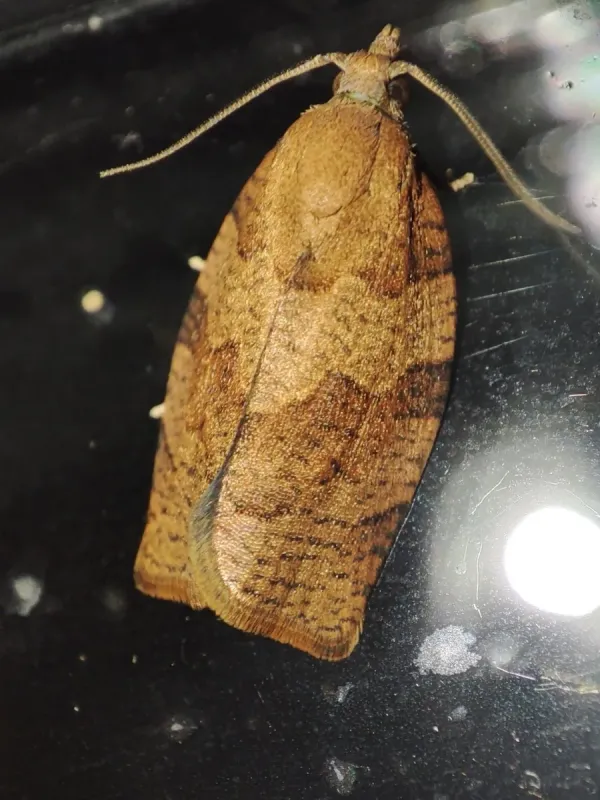
The Barred fruit tree tortrix (Pandemis heparana) is a moth species belonging to the family Tortricidae. It is a significant pest characterized by a wingspan of 22–26 mm and brownish forewings with distinctive dark transverse bands.
The life cycle involves four stages: egg, larva, pupa, and adult. The insect typically survives the winter as a second or third-instar larva, protected by a silken hibernaculum hidden in bark crevices or among fallen foliage.
In spring, larvae resume feeding on budding leaves and flowers. As they develop, they grow into yellowish-green caterpillars with a dark-colored head, reaching up to 25 mm in length.
Adult moths are nocturnal and lay eggs in batches on the upper surfaces of leaves, which are covered by a secretion that forms a protective, scale-like layer.
Depending on the geographical region, the pest can complete one or two generations per year, making continuous monitoring throughout the season vital for crop safety.
What it damages
This species is a highly polyphagous pest, meaning it attacks a wide variety of host plants, which makes it a persistent threat in both commercial orchards and small gardens.
Major host crops include apples, pears, plums, cherries, and apricots. It also frequently infests ornamental shrubs and forest trees, providing a reservoir for infestations into fruit orchards.
Larval feeding causes direct damage to buds, which inhibits growth, and later to foliage, where larvae skeletonize leaves by feeding on the tissue while leaving major veins intact.
The most severe economic impact occurs when larvae feed on developing fruit. They graze the surface or bore into the flesh, creating deep holes that ruin the fruit's quality and marketability.
Damage to the fruit skin often invites secondary infections from fungi and bacteria, leading to premature rot and significant yield losses during storage.
Signs of infestation
The most visible sign of infestation is the presence of leaves spun together with silk threads, which serve as protective shelters for the larvae during their feeding period.
Early-season activity is marked by damaged or hollowed-out flower buds, which may fail to develop into fruit, causing a noticeable reduction in the yield potential.
Fruit infestation is indicated by irregular surface scarring or deep tunnels, often found where a leaf is webbed against the surface of a developing apple or pear.
- Silken webs pulling leaves together into clusters.
- Skeletonized leaf patches and ragged leaf edges.
- Holes or excavated areas on the surface of ripening fruits.
- Small, dark piles of frass (larval excrement) near the feeding sites.
- Stunted growth of new shoots due to apical damage.
Regular visual inspections of the terminal shoots and fruit clusters are essential, especially during the peak flight periods identified by pheromone trapping.
Control measures
Management strategies should focus on integrated pest management (IPM) to maintain the population below the economic injury level while preserving beneficial insect species.
Cultural practices, such as removing infested fruit and debris during and after harvest, significantly reduce the overwintering population for the following season.
Pheromone traps are essential for monitoring adult flight activity, allowing growers to time their insecticide applications precisely when larvae are most vulnerable.
Biological control methods, including the release of Trichogramma wasps, can be highly effective in parasitizing egg batches and keeping moth populations in check.
When chemical intervention is necessary, growers should rotate products with different modes of action to prevent the development of insecticide resistance in the population.
Taxonomy
- Latin name
- Pandemis heparana
- Order
- Lepidoptera (butterflies)
- Family
- Tortricidae
- EPPO code
- PANDHE
Discussion
No discussions yet — be the first.