
Pandemis leafroller
Pandemis
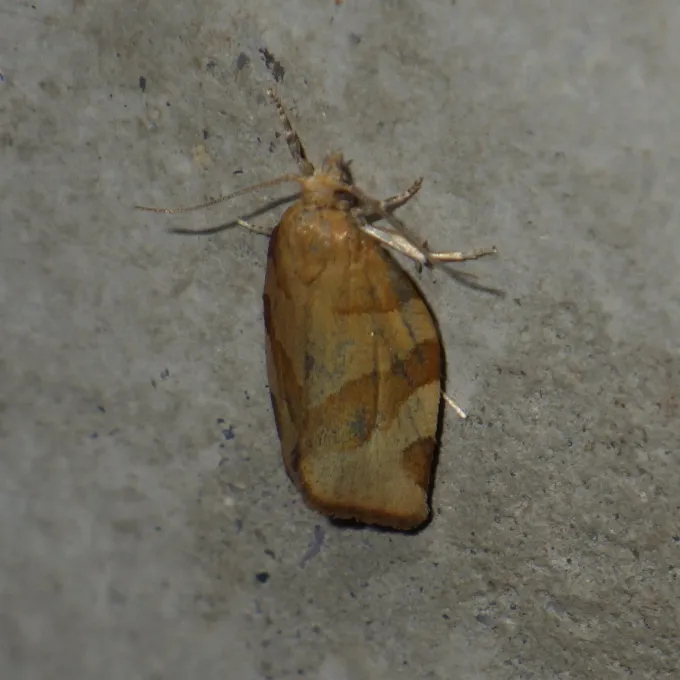
Description
How to identify
The Pandemis genus belongs to the Tortricidae family. Adult moths have a wingspan ranging from 18 to 26 mm, with forewings typically displaying shades of ochre-yellow to brown, marked by distinct darker transverse bands.
Larvae, or caterpillars, typically grow to 20–25 mm in length. They are usually green or yellowish-green with a dark head. A key diagnostic feature is the dark thoracic plate, which distinguishes them from other similar leaf-tying species.
Pupae are dark brown and are concealed within rolled leaves or silk nests. The species overwinters as second or third-instar larvae, seeking refuge under loose tree bark or within crevices of branches to survive cold temperatures.
Development is heavily dependent on ambient temperature. Warmer, humid conditions accelerate the emergence of larvae in the spring, leading to synchronized activity during the critical budding and flowering stages of fruit trees.
Monitoring efforts often utilize pheromone traps to capture adult males. This data is essential for timing insecticide applications, ensuring that treatments occur when larvae are most vulnerable before they roll the leaves.
What it damages
The Pandemis leafroller is a highly polyphagous pest, meaning it attacks a wide range of host plants. Pome fruits like apples and pears are primary targets, though it also infests stone fruits such as cherries, plums, and apricots.
Beyond fruit trees, the larvae can survive on various ornamental shrubs and forest trees. This broad host range makes the pest difficult to eradicate entirely, as it can migrate from nearby woodlands into commercial or home orchards.
Young larvae feed by skeletonizing the undersides of leaves. As they mature, they construct silken webs to roll or tie leaves together, creating a protected environment where they continue to feed and grow safely from predators.
Fruit damage is the most significant economic concern. Larvae chew deep cavities into the skin and flesh of young fruits. These injuries not only ruin the fruit's appearance but also invite secondary pathogens, leading to rapid decay.
In cases of heavy infestation, the cumulative effect of foliage destruction and fruit loss can severely weaken the tree's overall vigor. Repeated annual damage leads to reduced harvests and weakened tree structures.
When it appears
Larval activity begins in early spring as temperatures rise, usually coinciding with the onset of bud break. These early-season larvae feed voraciously on fresh growth, which can stunt the development of new branches.
The first generation of adults emerges in late May or June. Moths mate and deposit egg masses on the foliage, which hatch into the summer generations of larvae. This cycle can repeat multiple times per season depending on the climate.
Second and sometimes third generations of moths are active during mid-to-late summer. This timing is particularly problematic as it puts the ripening fruit at risk just weeks before harvest, complicating chemical control options.
The entire developmental cycle from egg to adult takes approximately 30 to 45 days. Higher temperatures shorten this duration, potentially leading to overlapping generations where larvae of different ages are present simultaneously.
As autumn approaches, the final generation of larvae reaches a state of diapause. They find protected sites under bark or in sheltered areas of the tree canopy to remain dormant throughout the winter months.
Signs of infestation
The most obvious sign of an infestation is the presence of rolled or folded leaves. These are often tied together with fine, white silk, forming a protective tube or nest where the caterpillar lives.
On fruits, you will see shallow or deep pits caused by larval feeding. These damaged areas are often covered with webbing and frass (the insect's excrement), which are clear indicators of recent activity.
Stunted or damaged buds in the spring are a sign that larvae have been feeding on the new growth. In severe cases, the tips of the branches may appear scorched or entirely withered due to leaf destruction.
Visible presence of silk webbing around fruit clusters or between two leaves is a tell-tale sign of the leafroller. The silk acts as a scaffold that keeps the leaves securely fastened together.
Adult moth activity can be detected in the evening hours. They are nocturnal and are attracted to light sources or synthetic pheromones, which can be used to track the local population density in the orchard.
Control measures
Cultural control practices include removing and destroying heavily infested leaves or shoots during the early spring. Scraping old bark from trunks can also destroy the overwintering sites of the larvae.
Biological control involves the use of microbial insecticides such as *Bacillus thuringiensis* (Bt). These products target the larvae specifically and are safe for beneficial insects, making them a good choice for integrated pest management.
Chemical control must be timed precisely with egg hatching and early larval stages. Using selective insecticides helps maintain the balance of natural predators like spiders and parasitic wasps in the orchard environment.
Resistance management is crucial, so always rotate chemical groups if spraying is necessary. Ensure that all application intervals are strictly observed to meet harvest safety standards for consumption.
- Utilize pheromone mating disruption dispensers.
- Encourage natural predators through diverse orchard landscaping.
- Monitor with light traps to detect peak flight periods.
Taxonomy
- Latin name
- Pandemis
- Order
- Lepidoptera (butterflies)
- Family
- Tortricidae
- EPPO code
- PANDSP
Discussion
No discussions yet — be the first.