
Pandeleteius submaculatus
Pandeleteius submaculatus
Description
How to identify
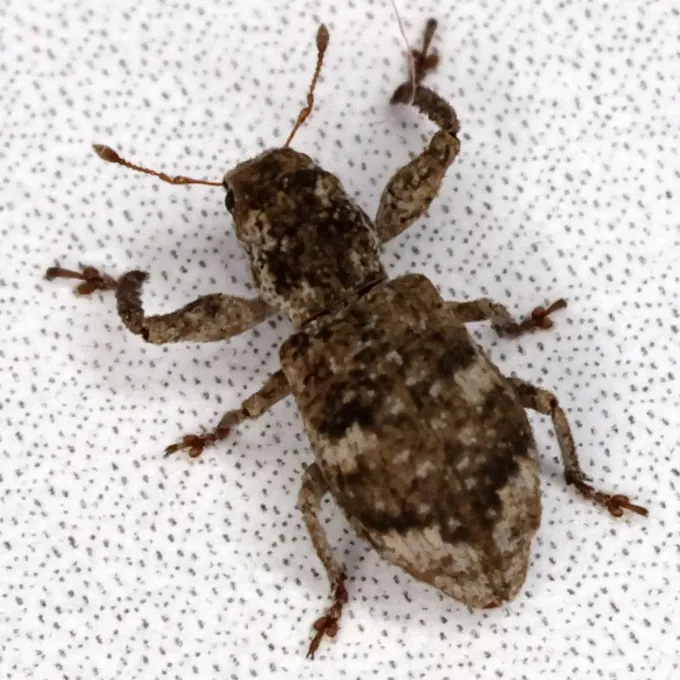
Pandeleteius submaculatus belongs to the order Coleoptera and the family Curculionidae. These are small beetles possessing the elongated snout typical of the weevil family, although members of the genus Pandeleteius generally have a shorter snout compared to more common weevil species.
Adults typically measure between 3 to 6 millimeters in length and are covered in fine scales, providing a camouflaged appearance. Their coloration ranges from gray to brown, featuring characteristic dark spots on the elytra, which inspired the specific epithet submaculatus.
The larvae are legless, fleshy, and usually white or yellowish with a dark brown head capsule. They lead a cryptic life, developing inside plant tissues, which makes early detection difficult during routine inspections of plantations or nurseries.
The taxonomy of this species places it within the subfamily Entiminae, many members of which are known as generalist pests affecting both ornamental and agricultural crops. Identifying this species in the field often requires specialized entomological keys.
These beetles possess a defensive mechanism called thanatosis, or playing dead. When threatened, they fold their legs and fall to the ground, which is an important survival strategy that complicates population monitoring through visual counting.
What it damages
Both adults and larvae cause damage, though the range of affected crops can vary depending on the geographical region. Tree species and certain vegetable crops are the most frequent targets, particularly during their juvenile growth stages.
Adult beetles feed on leaves, creating characteristic semi-circular notches along the margins, which reduces the plant's overall photosynthetic capacity. High pest density can lead to total defoliation of young saplings, severely stunting their development.
Larvae prefer to develop within the root system or beneath the bark of young shoots, gnawing through vascular bundles. This disrupts the transport of nutrients and water, ultimately causing wilting and the potential death of the affected plant part.
Pandeleteius submaculatus poses a significant threat to young plantings in nurseries, where damage to the root collar can be fatal. While mature plants are generally more resilient, heavy infestations can weaken them, making them susceptible to secondary infections.
The economic impact is primarily driven by the reduction in the market value of the produce and slowed growth rates, which is critical in intensive agricultural settings where uniform plant development is required.
When it appears
The peak activity of adult beetles usually coincides with the spring and summer seasons, aligning with the onset of active sap flow and the growth of fresh foliage. This is the period when insects are most vulnerable to targeted management interventions.
Overwintered adults emerge from the soil or leaf litter as soon as air temperatures remain consistently positive. Active feeding and mating occur during the first one to two months after emergence, depending on regional climatic conditions.
Eggs are deposited into cracks in the bark or directly into the soil near the root zone of the host plant. Embryonic development typically spans one to three weeks, influenced by soil moisture levels and ambient temperature.
The larval stage is the most prolonged, often encompassing the entire summer period as they feed voraciously on plant tissues. Pupation generally occurs within a soil cell near the end of the season before adult beetles prepare for the winter.
New generation adults may emerge in late summer or remain in the soil in an adult diapause state through the winter. This strategy ensures survival during harsh weather and allows for a rapid start to the life cycle the following spring.
Signs of infestation
A primary indicator of the pest's presence is the appearance of notched leaf margins. Unlike caterpillars, which may consume entire leaves, these weevils leave jagged edges with clear bite marks, which are easily identifiable upon close inspection.
The presence of wilting shoots in the absence of obvious fungal pathogen symptoms often suggests hidden larval feeding under the bark. Peeling back the bark layer in such instances often reveals distinct larval galleries or tunnels.
Frass, appearing as fine dark granules on leaf surfaces or at the base of the stem, is a reliable sign of intense adult feeding. This serves as a critical trigger for scouts to initiate population density monitoring protocols.
Stunted plant growth and yellowing of the lower foliage during the hottest parts of the day often indicate larval damage to the root system. Affected plants appear depressed and lose their turgor, failing to recover even after irrigation.
- Presence of adult beetles on the underside of leaves during morning hours.
- Recovery of larvae from the root ball during physical inspections.
- Characteristic necrotic spots at egg-laying sites on the bark of shoots.
Control measures
The primary control strategy involves crop rotation and maintaining spatial isolation of nurseries from infested forest areas. This significantly reduces the risk of initial pest colonization and limits population spread.
Biological control methods include the application of entomopathogenic fungi and nematodes, which effectively target larvae within the soil. These biological agents prove highly effective when applied under conditions of adequate soil moisture.
Chemical protection involves spraying plants with systemic insecticides during the peak emergence of adult beetles. It is essential to conduct applications during the evening to minimize impact on beneficial pollinators and reduce evaporation losses.
Agrotechnical practices, such as deep autumn plowing, disrupt the overwintering sites of adults and destroy pupae residing in the upper soil layers. Regular weed control is also necessary to eliminate alternative food sources for the pest.
The use of sticky bands on the stems of trees and shrubs prevents migrating beetles from climbing up the plant. This method is an environmentally friendly and highly effective way to manage adult populations without broad-spectrum chemical use.
Taxonomy
- Latin name
- Pandeleteius submaculatus
- Order
- Coleoptera (beetles)
- Family
- Curculionidae
- EPPO code
- PADESU
Discussion
No discussions yet — be the first.