
Pandeleteius hilaris weevil
Pandeleteius hilaris
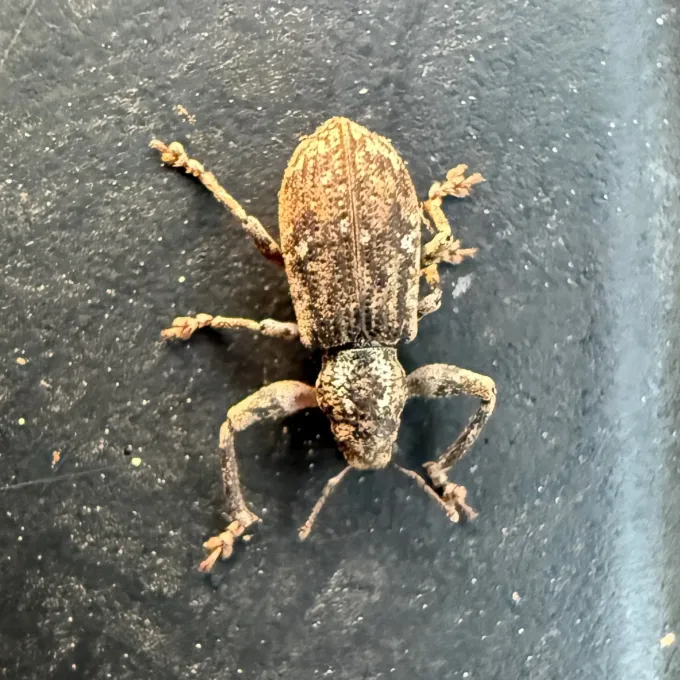
Description
How to identify
This insect belongs to the order Coleoptera and the family Curculionidae. It is characterized by a prominent snout (rostrum) used for feeding and oviposition, which is a classic feature of the weevil family.
The adult beetle possesses a morphology that allows it to blend seamlessly into its host plant’s environment, utilizing cryptic coloration and surface patterns as a primary defense mechanism.
Its life cycle follows a complete metamorphosis, progressing through egg, larval, pupal, and adult stages, each adapted to survive in specific microhabitats provided by the host plant.
Larvae typically lead a concealed existence, often burrowing into plant tissues or residing within leaf litter, making early detection and intervention particularly challenging for growers.
Adults are active during the growing season, showing high sensitivity to temperature fluctuations, which dictate their emergence and feeding intensity throughout the spring and summer months.
What it damages
Pandeleteius hilaris primarily feeds on a variety of woody plants and shrubs, causing significant stress to both ornamental species and various horticultural crops.
Adult feeding results in characteristic edge-notching of leaves, which reduces the plant's total photosynthetic area and can hinder overall growth and development.
Larval stages are often more destructive as they may feed on internal plant structures, such as tender shoots or developing buds, disrupting the flow of water and nutrients.
Severe infestations can lead to partial or total defoliation, leaving the plant vulnerable to secondary infections, environmental stress, and diminished reproductive potential.
The cumulative effect of adult and larval damage can significantly reduce the market value of nursery stock, often rendering the plants unsuitable for sale due to their unsightly appearance.
Signs of infestation
The most recognizable sign of infestation is the notched leaf margins, where the beetle has methodically eaten along the edges of the foliage.
During daylight hours, adults may be located by gently shaking branches, which causes them to drop to the ground and exhibit thanatosis, or feigned death, to evade detection.
Frass (insect excrement) on leaves and small entry or exit holes on twigs are clear indicators of beetle activity within the plant canopy.
Wilting of terminal shoots without any visible sign of localized disease is often a red flag that larvae have bored into the stem, causing vascular disruption.
General yellowing or poor vigor of a plant should prompt a closer investigation of both the leaf underside and the base of the plant where larvae might be active.
Control measures
Effective management relies on the application of targeted insecticides, typically timed with the peak emergence of adults in the early spring.
Cultural control measures, such as the pruning and destruction of infested branches, are critical to reducing the local population density and preventing future spread.
Promoting plant health through balanced fertilization and proper irrigation helps the host plants recover more quickly from the tissue damage caused by this pest.
Integrated Pest Management (IPM) practices should be employed, utilizing a combination of biological agents and reduced-risk chemical applications to protect the surrounding ecosystem.
- Regular monitoring of host plants for leaf damage
- Mechanical collection of adults during the morning hours
- Application of entomopathogenic fungi as a biological control
- Quarantine of new plant material to prevent cross-contamination
- Proper sanitation to remove potential larval habitats like debris
Taxonomy
- Latin name
- Pandeleteius hilaris
- Order
- Coleoptera (beetles)
- Family
- Curculionidae
- EPPO code
- PADEHI
Discussion
No discussions yet — be the first.