
Oak tortrix moth
Pammene splendidulana
Description
How to identify
The oak tortrix moth (Pammene splendidulana) is a lepidopteran insect belonging to the Tortricidae family. It is a specialized pest that primarily targets oak trees.
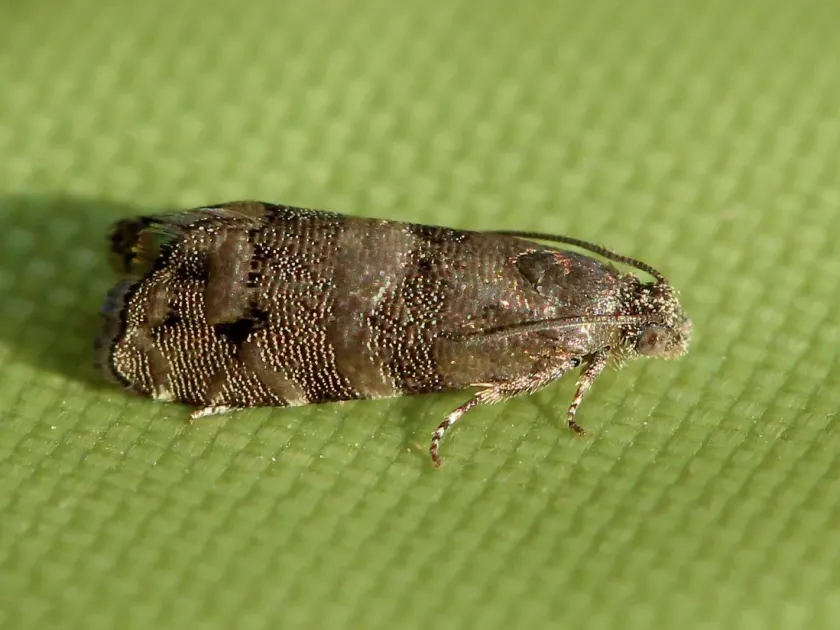
Adult moths have a wingspan of approximately 12–16 mm. Their forewings feature a mottled pattern of brown and grey, providing excellent camouflage against oak bark.
The larvae are small caterpillars, reaching about 10–12 mm in length. They are typically yellowish-white with a distinct dark head capsule.
Systematically, this species is part of the order Lepidoptera. It has a monovoltine life cycle, meaning it completes only one generation per year, strictly following the phenology of the oak tree.
The distribution of the moth is closely linked to the presence of oak forests, where it can become a significant pest in nursery settings and natural stands.
What it damages
The damage is caused by larvae that bore into and consume the internal tissues of developing acorns. This directly destroys the seed embryo.
For forestry, this pest is a major concern as it ruins high-quality seed material, preventing successful natural regeneration and nursery production.
A single larva can hollow out an entire acorn. While one larva per acorn is typical, high infestation rates can lead to nearly total crop failure.
Damaged acorns often fall prematurely, show dark discoloration, and are prone to secondary fungal infections that further decay the seed.
This feeding behavior reduces the reproductive capacity of affected oak trees and causes economic losses for forestry operations and seed collectors.
When it appears
Adult moths emerge in the spring, typically in April or May, coinciding with the flowering of the oak trees.
Following mating, females lay eggs on the young acorn cups or adjacent leaves. The incubation period lasts approximately two weeks depending on the local climate.
Once hatched, larvae bore into the fruit. They feed throughout the summer as the acorns grow and develop on the tree branches.
In autumn, as acorns reach maturity and fall, the larvae exit the fruit and burrow into the soil or leaf litter to pupate and overwinter.
The species remains in a dormant state in the soil throughout the winter and spring, emerging as adults when conditions are suitable for the next cycle.
Signs of infestation
The most visible sign of infestation is a small entry hole on the surface of the acorn, often accompanied by silk webbing and larval frass.
Infested acorns may appear withered, prematurely browned, or deformed compared to healthy ones growing on the same branch.
Cracking open an affected acorn will reveal a hollowed-out center filled with dark brown fecal material (frass) and the larva itself.
Increased fruit drop during mid-summer, before acorns are fully mature, is a strong indicator of a high population density of this pest.
The presence of adults in the canopy can be monitored using pheromone traps, which attract male moths during the peak flight season.
Control measures
Chemical control involves timing insecticide applications to coincide with the period between adult egg-laying and larval entry into the acorns.
Biological control methods include the use of bacterial pesticides, such as Bacillus thuringiensis, which are effective against young larvae.
Sanitation is critical: collecting and destroying infested fallen acorns prevents the larvae from successfully reaching the soil to overwinter.
Encouraging natural predators, such as insectivorous birds and parasitic wasps, can help manage populations in stable forest ecosystems.
- Deploying pheromone traps for population monitoring and mating disruption.
- Isolating new forest nurseries from established, heavily infested oak stands.
- Conducting strict quality control and sorting of collected acorns for nursery use.
Taxonomy
- Latin name
- Pammene splendidulana
- Order
- Lepidoptera (butterflies)
- Family
- Tortricidae
- EPPO code
- PAMMSL
Discussion
No discussions yet — be the first.