
Brown-winged knot-horn
Pammene germarana
Description
How to identify
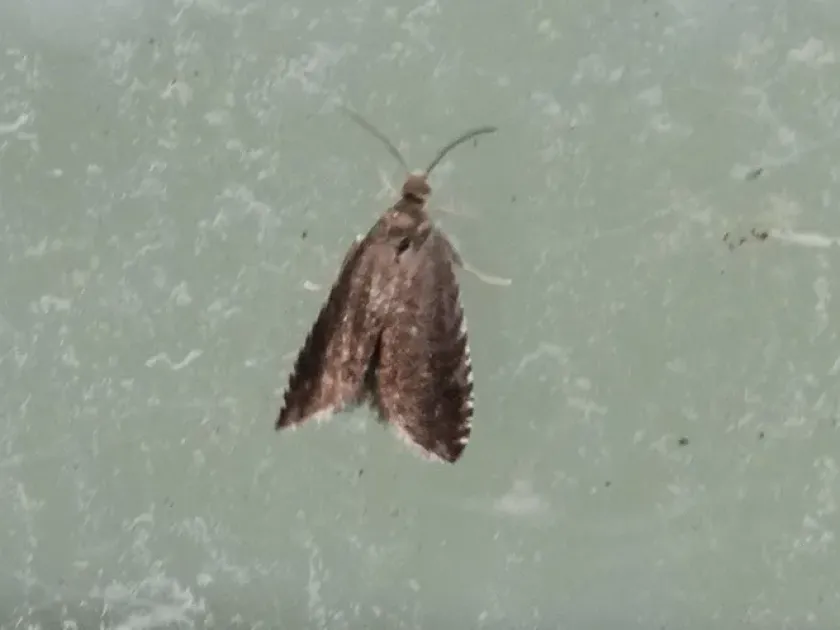
The brown-winged knot-horn (Pammene germarana) is a small moth belonging to the Tortricidae family. The adult moth has a wingspan of approximately 12–15 mm and features brownish wings with a subtle metallic sheen.
The larvae, or caterpillars, reach about 12 mm in length and appear pale pink or dirty white with a distinct brown head. They spend most of their life cycle feeding internally within the fruit, making them hard to spot.
The eggs are laid singly by females on the surface of fruit or leaf stalks. They are oval, flat, and nearly transparent, which makes them very difficult to detect during standard field inspections.
Pupation occurs within dense cocoons hidden under the rough bark of trees or inside dry plant debris. This stage is crucial for the insect to survive winter temperatures and emerge in spring.
The species has evolved to synchronize its life cycle with the development of pomaceous fruit trees, ensuring that larvae are present when fruits are most vulnerable to initial penetration.
What it damages
This moth primarily targets pome fruits, with apples being the most susceptible host. Pears may also be affected when the population density is high in the surrounding orchard area.
Larvae initially feed on leaves, sometimes mining them, but quickly move to the fruits. They burrow through the skin and feed on the internal flesh, moving toward the seed cavity.
The internal damage caused by the larvae leads to premature fruit drop. Even if the fruit remains on the tree, the entrance hole serves as an entry point for secondary fungal infections.
Affected fruits often become deformed and develop rot spots around the entrance holes. These fruits are unsuitable for market and cannot be stored for long periods without rapid decay.
Severe infestations can result in significant economic losses, as a large percentage of the harvest may be rejected by processors and retailers due to the presence of larvae or rot.
When it appears
Adult moths of the first generation typically begin to emerge in late May or early June, coinciding with the critical period when young fruits are forming on the trees.
The length of the developmental stages is highly sensitive to ambient temperatures. Warmer weather accelerates the life cycle, sometimes leading to a partial second generation in the late summer.
The larvae are most active during the summer months. They spend this time feeding on host tissue and eventually preparing for pupation once they have reached their final larval stage.
Overwintering occurs in the larval stage inside a protective cocoon tucked under the bark of the host tree. They remain in this state until the weather warms up in the spring.
Environmental factors, such as humidity and warmth, play a significant role in egg survival rates. Proper monitoring of these factors helps in predicting the intensity of potential outbreaks.
Signs of infestation
A key indicator of an infestation is the presence of frass or waste material near the entry holes on the fruit surface. These areas often appear dark and sunken compared to the surrounding skin.
- Entrance holes on the surface of young apples.
- Premature fruit drop of small or underdeveloped fruits.
- Thin mines or trails on the foliage in the early season.
- Presence of silk webbing on the affected fruit or leaf clusters.
- Visible rot developing around the point of larval entry.
Deformed fruit with dimpled areas is a classic sign of internal larval feeding. Such fruit is generally compromised and will rot quickly if placed into cold storage or transport.
The use of pheromone traps is the most reliable way to monitor adult activity. High capture counts indicate the need for targeted interventions to protect the developing fruit crop.
Control measures
Cultural control is essential, including the removal and destruction of fallen fruit to prevent larvae from completing their development or overwintering near the tree trunk.
Biological control methods involve the use of insecticides based on Bacillus thuringiensis, which target young larvae while remaining safe for beneficial insects and orchard predators.
Chemical intervention should be timed based on pheromone trap data and the egg-laying period. Applying insecticides during the peak of larval hatching is critical for effective management.
Installing trunk bands can help capture larvae as they seek sites for pupation. These bands should be inspected regularly and removed to destroy the larvae before they emerge.
Encouraging the presence of natural enemies, such as parasitic wasps and predatory birds, can help keep populations in check as part of an integrated pest management program.
Taxonomy
- Latin name
- Pammene germarana
- Order
- Lepidoptera (butterflies)
- Family
- Tortricidae
- EPPO code
- PAMMGE
Discussion
No discussions yet — be the first.