
Oak fruit moth
Pammene fimbriana
Description
How to identify
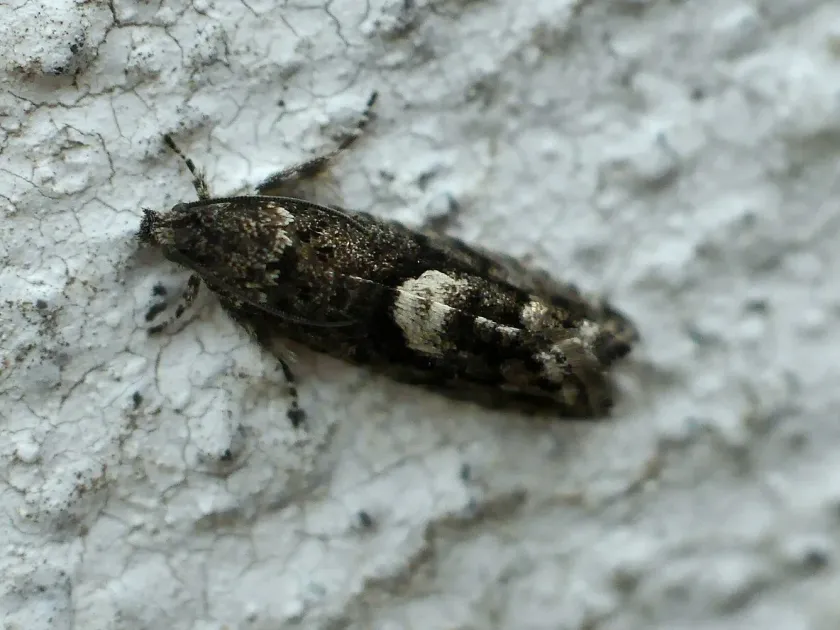
The oak fruit moth (Pammene fimbriana) is a member of the Tortricidae family within the order Lepidoptera. It is a small moth, typically measuring 12 to 15 mm in wingspan, with forewings that feature intricate dark brown patterns that camouflage it against tree bark.
The larval stage, or caterpillar, is the primary developmental phase that causes economic damage. These larvae are light-colored in early stages and turn reddish-brown as they mature, typically residing inside the acorns of oak trees.
What it damages
The pest primarily targets oak acorns. The larvae bore into the fruit to feed on the seed embryo and cotyledons. This destruction often results in the death of the seed, preventing germination and significantly impacting forest regeneration.
While their host range is primarily limited to oaks, high populations can infest nearly all available acorns in an area, causing severe agricultural and ecological impact on timber production and wildlife food sources.
When it appears
The lifecycle of the oak fruit moth is synchronized with the phenology of the oak trees. Adult emergence typically coincides with the flowering and subsequent fruit set of the oaks in late spring and early summer.
After mating, the females lay eggs on or near the young acorns. The larvae develop throughout the summer and eventually drop to the ground or seek shelter in bark crevices to overwinter as pupae, preparing for the next season's cycle.
Signs of infestation
The most reliable sign of an infestation is the presence of small, circular exit or entrance holes on the acorn shell. These holes are often accompanied by "frass" or excrement, which looks like a powdery brown substance around the entry point.
- Premature drop of acorns during the summer.
- Presence of tunnels within the acorn meat.
- Silk webbing often seen around the infested fruit.
- Visible damage to the acorn husk caused by larval boring activity.
Control measures
Sanitation is the most effective management strategy. Collecting and destroying infested acorns before the larvae exit them to pupate is vital in reducing local populations for the following growing season.
In managed forestry settings, biological controls can be implemented. Encouraging natural predators, such as parasitic wasps (ichneumonids), can keep moth populations below economic thresholds without the use of chemical pesticides.
Taxonomy
- Latin name
- Pammene fimbriana
- Order
- Lepidoptera (butterflies)
- Family
- Tortricidae
- EPPO code
- PAMMFI
Discussion
No discussions yet — be the first.