
Oak leafroller moth
Pammene argyrana
Description
How to identify
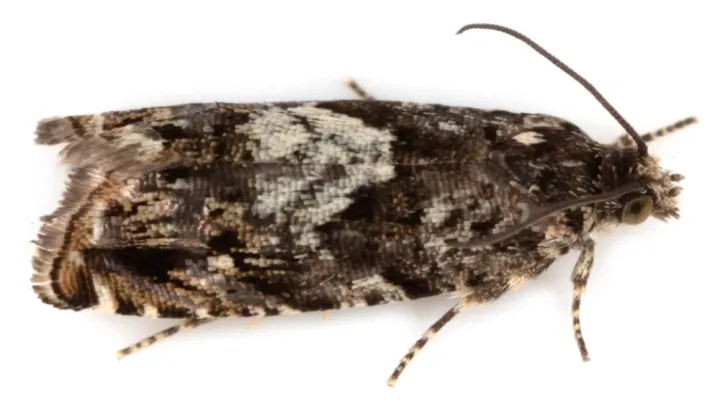
The Oak leafroller moth (Pammene argyrana) belongs to the Tortricidae family within the order Lepidoptera. This moth is relatively small, with a wingspan ranging from 10 to 13 mm. Its forewings display a sophisticated pattern of brownish and grey shades with metallic reflections, providing excellent camouflage when resting on the rough bark of host trees.
What it damages
This species primarily targets various oak species (Quercus spp.). The larvae are specialized bark and phloem feeders. They tend to concentrate their feeding activity around fissures, wounds, or existing galls on the bark, as these areas provide a more accessible nutritional source for the developing larvae compared to thick, intact bark.
When it appears
The flight period of adult moths typically occurs in the spring, spanning April and May. Following mating, females lay eggs into the crevices of the oak bark. The larval stage develops throughout the summer months, and as autumn approaches, the larvae prepare for overwintering, constructing silk-lined hibernacula within the bark layers or similar protected niches.
Signs of infestation
The primary indicators of infestation are the presence of larval frass near the cracks in the bark. Feeding activity often results in localized bark necrosis or minor sap weeping. Over time, untreated infestations can lead to patches of dead bark, which may eventually become susceptible to secondary decay organisms and wood-boring pests.
Control measures
Effective management includes mechanical removal of loose, old bark where larvae overwinter to reduce the population density. During the peak egg-hatching period, application of selective insecticides can prevent larval establishment. Promoting biodiversity by encouraging natural predators such as birds and parasitic wasps remains a core strategy in integrated forest management.
Taxonomy
- Latin name
- Pammene argyrana
- Order
- Lepidoptera (butterflies)
- Family
- Tortricidae
- EPPO code
- PAMMAR
Discussion
No discussions yet — be the first.