
Palpimanus gibbulus
Palpimanus gibbulus
Description
How to identify
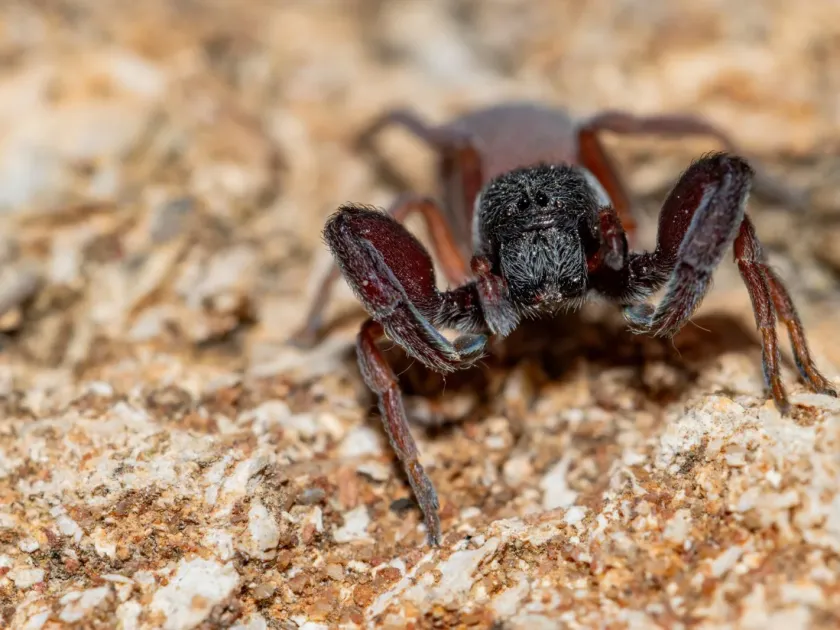
Palpimanus gibbulus is a distinctive spider species belonging to the Palpimanidae family, often found in soil-rich agricultural environments and gardens.
It is easily recognized by its robust, reddish-brown body and significantly thickened front legs, which are specialized for capturing small prey items.
Unlike web-building spiders, this species is a wandering predator that actively roams the ground level in search of food during the day or night.
Adult spiders are typically 8-12 mm in length and feature a highly convex cephalothorax, giving them a sturdy and compact appearance.
They prefer sheltered environments such as the undersides of rocks, crevices in the soil, or dense plant litter, which often hides them from visual inspection.
What it damages
The economic impact of Palpimanus gibbulus is primarily indirect, resulting from the disruption of natural predator-prey dynamics within the field ecosystem.
By consuming beneficial insects like lady beetles and predatory wasps, this spider can inadvertently facilitate outbreaks of aphids, mites, and leaf-feeding insects.
Crops do not suffer direct physical damage from the spider itself, but the resulting loss of natural biological control leads to reduced plant vigor and yield losses.
In high-density populations, the spider acts as a competitor to other beneficial insect species, complicating Integrated Pest Management (IPM) strategies.
The damage is cumulative, as the ecological balance shifts, requiring farmers to intervene with other control measures that might have been unnecessary otherwise.
When it appears
The species becomes active in the spring as soil temperatures rise, marking the beginning of their hunting season after winter dormancy.
Activity peaks during the warm summer months, coinciding with the peak vegetative growth stages of most common field crops and horticultural plants.
As temperatures drop in the autumn, the spiders prepare for hibernation by seeking deeper soil refuge or protected areas under debris.
Developmental cycles are sensitive to environmental moisture levels, with moderate humidity being optimal for their movement and reproductive success.
Farmers can observe the highest number of wandering adults during the transition from late spring to mid-summer when soil cultivation is most intensive.
Signs of infestation
A primary sign of their presence is a noticeable decline in the population of beneficial ground-dwelling insects in the vicinity of the crops.
The discovery of large, reddish-brown spiders under mulch or soil debris during routine field checks provides clear evidence of their local colonization.
The absence of typical spider webs, even in areas with high spider counts, confirms that wandering predatory species like Palpimanus gibbulus are dominant.
Uneven patterns of pest outbreaks on leaves can indicate that the natural predator population, which usually regulates these pests, has been disturbed.
Visual spotting of the characteristic thick-legged morphology during weeding operations remains the most reliable method of identification in the field.
Control measures
Effective control revolves around soil management; frequent tilling or loosening of the soil disrupts their hunting paths and forces them to relocate.
Avoiding broad-spectrum insecticides is crucial to allow natural competition from other predators to keep the spider population in check.
Sanitation practices, such as removing excess crop debris and weeds, eliminate the habitat patches that these spiders utilize for nesting and protection.
Maintaining a high biodiversity of beneficial insects can help balance the predatory pressure and mitigate the impact of this species on the farm.
- Regular soil cultivation to disrupt sheltered habitats.
- Clean farming practices to reduce hiding spots near crops.
- Monitoring beneficial insect populations to ensure ecological balance.
Taxonomy
- Latin name
- Palpimanus gibbulus
- Family
- Palpimanidae
- EPPO code
- PLPMGI
Discussion
No discussions yet — be the first.