
Palpimanus
Palpimanus
Description
How to identify
Palpimanus is a genus of spiders belonging to the family Palpimanidae. These organisms are specialized predators, not plant pests.
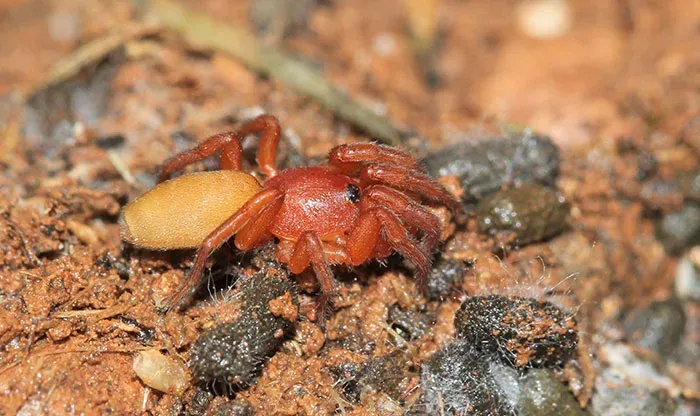
They are easily recognizable by their enlarged, club-shaped anterior legs, which they use to capture their prey rather than harming vegetation.
Typically found in leaf litter or under rocks, these spiders exhibit a cryptic lifestyle, keeping them away from the foliage of crops.
Their bodies are often deep red or brown, and they possess a unique anatomy that distinguishes them from common house or garden spiders.
As araneophages, their primary ecological role is strictly predatory, and they possess no physiological means to consume plant matter.
What it damages
Palpimanus spiders cause zero damage to agricultural crops, vegetables, or ornamental plants, as they are exclusively carnivorous.
They do not feed on sap, roots, stems, or leaves, making them entirely neutral or even beneficial in an agricultural setting.
There is no evidence of these spiders acting as vectors for plant diseases or causing physical injury to seedlings or mature crops.
Farmers should be aware that these spiders do not threaten the yield, making them irrelevant to the list of major crop pests.
Instead of causing harm, their presence can indicate a balanced micro-ecosystem where other spider populations are being naturally regulated.
Control measures
No control measures are required for Palpimanus, as they are not pests and do not pose a threat to agricultural productivity.
The use of broad-spectrum insecticides should be avoided to prevent unnecessary harm to beneficial predators, including members of the Palpimanidae family.
Integrated pest management (IPM) strategies should actively encourage the presence of such predators as part of the natural control of the ecosystem.
Monitoring efforts should be directed toward identifying actual harmful insects, while allowing harmless predators to maintain their natural habitat.
Maintaining field margins and avoiding excessive soil disturbance helps protect these beneficial organisms that support sustainable farming practices.
Taxonomy
- Latin name
- Palpimanus
- Family
- Palpimanidae
- EPPO code
- PLPMSP
Discussion
No discussions yet — be the first.