
Palloptera
Palloptera
Description
How to identify
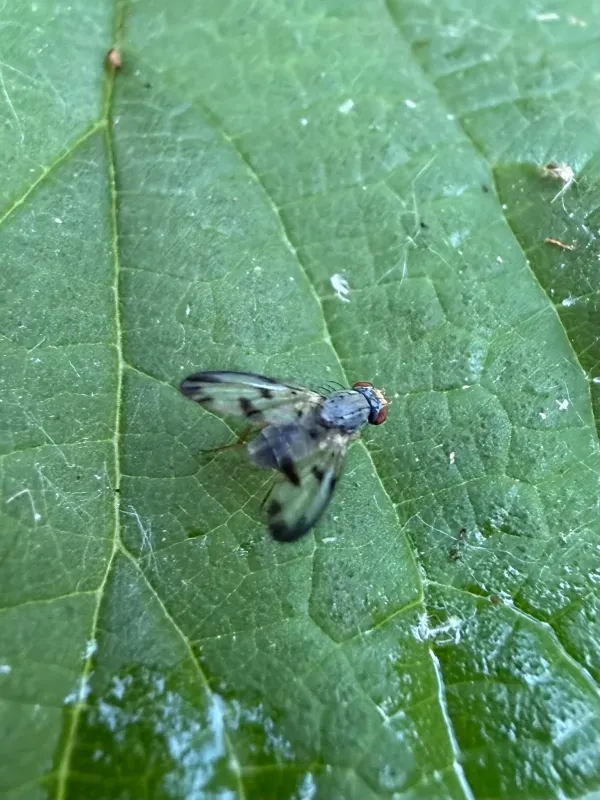
Palloptera is a family of true flies known as the flutter flies, named for their characteristic wing movements and patterned appearance. These insects are small to medium-sized flies.
Their bodies are often slender, ranging in color from yellowish to dark brown. The wings frequently feature distinct dark spots or bands, which serves as a primary feature for field identification.
The larvae of these flies are typical cyclorrhaphous maggots. They possess a simplified body structure without legs, perfectly adapted for living inside plant tissues or decaying organic matter.
Taxonomically, they belong to the order Diptera. While many species are harmless, some are considered significant pests in orchard and ornamental plant management.
Adult flies are generally active during the day and are often observed resting on foliage. They rely on their patterned wings to blend in with leaf shadows and textures.
What it damages
The primary economic damage is caused by the larval stage. Depending on the species, larvae can infest fruits, stems, or under the bark of trees and shrubs.
In fruit-growing, the larvae bore into developing fruit. This feeding behavior causes internal rot, leading to fruit drop and a significant reduction in the quality and quantity of the harvest.
Certain species are known to attack buds and shoots. Such damage results in the stunted growth of the plant and sometimes the total loss of the flower or fruit-bearing capacity.
The physical wounds created by feeding larvae act as entry points for secondary pathogens, such as fungi and bacteria, which exacerbate the damage beyond just larval consumption.
Infestations often go unnoticed until external symptoms appear, such as softening or discoloration, by which time the internal damage to the plant tissue is already extensive.
When it appears
The seasonal cycle of Palloptera typically begins in early spring when adult flies emerge from overwintering sites. This timing is closely linked to increasing temperatures.
Egg-laying usually coincides with the flowering and fruit-set stages of host plants. The presence of young, succulent tissues makes these plants attractive targets for the female flies.
Throughout the growing season, multiple generations can occur, especially in warmer climates. This leads to a prolonged window of vulnerability for the affected crops.
As autumn approaches, activity wanes as the flies seek out protected environments, including soil debris and bark crevices, to enter diapause for the winter.
Understanding the specific flight period in a local area is crucial for effective monitoring and timing of protective treatments to stop the infestation early.
Signs of infestation
The most common sign of infestation is the presence of small entry holes on the skin of fruits or the surface of stems. Near these holes, the tissue may appear bruised or sunken.
If the damage occurs on stems, localized swelling or necrosis might be visible. In some cases, sap or resin leakage can be observed as the plant reacts to the larval tunneling.
Premature ripening and subsequent drop of fruits are strong indicators that larvae are active within the crop. If you cut open such fruits, you will find the maggots.
- Small dark spots on the wings of adult flies.
- Early fruit drop or yellowing of the skin.
- Distorted growth patterns in new shoots.
- Visible tunneling marks in the plant tissue.
- Secondary decay signs like fungal growth on fruits.
Using yellow sticky traps is a reliable way to detect the arrival of adult Palloptera on your property and estimate the potential pressure on your crops.
Control measures
Effective management begins with strict sanitation practices. Removing infested fruits and plant debris prevents the next generation from successfully overwintering.
Monitoring using traps allows for precise timing of chemical applications. Treatments should be applied before the larvae burrow deep into the tissue, where they become protected.
In larger agricultural settings, pheromone-based lures can be used to disrupt mating cycles, effectively reducing the population without excessive chemical use.
Cultural methods, such as soil cultivation under trees, can expose pupae to predators or unfavorable environmental conditions, further decreasing the emergence of adults.
Integrated Pest Management (IPM) strategies, which combine biological control with minimal insecticide usage, are recommended to maintain ecological balance in the garden.
Taxonomy
- Latin name
- Palloptera
- Order
- Diptera (flies)
- Family
- Pallopteridae
- EPPO code
- PALLSP
Discussion
No discussions yet — be the first.