
Palingenia
Palingenia
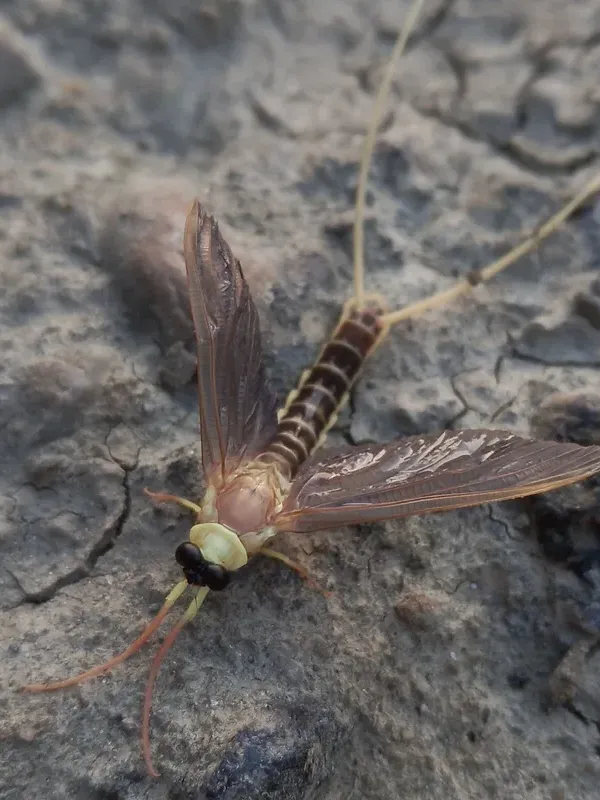
Description
How to identify
Palingenia is a genus of large insects belonging to the order Ephemeroptera, commonly known as mayflies, within the family Palingeniidae.
Adult mayflies are characterized by their delicate, elongated bodies and extremely long caudal filaments, which serve during mating flights.
The adult stage is ephemeral, characterized by a non-functional digestive system, as they do not feed during their short lifespan.
The larvae are distinct in their anatomy, possessing specialized mandibles that allow them to burrow into hard clay substrates at the bottom of rivers.
The most famous species, Palingenia longicauda, is a bioindicator of water quality and a subject of interest for limnologists globally.
What it damages
Palingenia species are not agricultural pests and do not pose any threat to crops, vegetables, or horticultural plants.
Their entire biological cycle is strictly confined to aquatic environments, preventing any interaction with land-based agricultural systems.
Since the adults do not feed, they do not cause any physical damage to the leaves, stems, or fruits of terrestrial plants.
The larvae, which live in river sediments, do not interact with terrestrial crops or impact soil quality in agricultural fields.
Their ecological role is restricted to aquatic food webs, where they serve as a food source for various fish species.
When it appears
The aquatic larval stage of Palingenia lasts for several years, during which they remain hidden within their clay burrows on the riverbed.
The transition to the adult stage occurs through a synchronized mass emergence, typically taking place during the summer months.
This mass emergence is a short-lived event, often confined to a few hours in the evening when conditions are optimal for reproduction.
The lifecycle is highly dependent on environmental variables, such as water temperature and current speed, influencing the timing of emergence.
Once the mating flight is completed, the adults die quickly, providing a significant organic pulse to the river ecosystem.
Control measures
There are no control measures required for Palingenia, as they are essential components of healthy aquatic biodiversity.
In fact, Palingenia populations are under threat due to habitat destruction and water pollution, necessitating conservation efforts.
Agricultural management should focus on preventing the runoff of pesticides and fertilizers into rivers to protect these sensitive insects.
Protection of riverine habitats and maintaining the integrity of clay beds are the primary methods to support their populations.
Effective water management serves as the best protection for this species, ensuring the health of the entire river ecosystem.
Taxonomy
- Latin name
- Palingenia
- Family
- Palingeniidae
- EPPO code
- PLNGSP
Discussion
No discussions yet — be the first.