
Oriental weevil
Pagiophloeus orientalis
Description
How to identify
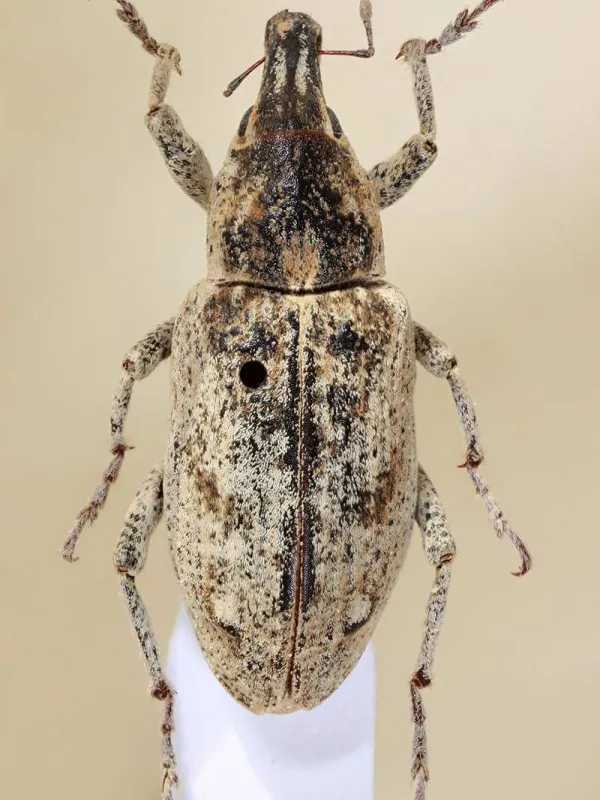
The Oriental weevil (Pagiophloeus orientalis) is a species of snout beetle (family Curculionidae) known for its wood-boring larvae that affect various tree species.
Adult beetles are characterized by a long snout and a dark, cryptic coloration that allows them to blend in seamlessly with the bark of host trees.
The life cycle undergoes complete metamorphosis, consisting of egg, larva, pupa, and adult stages, with larvae spending their entire developmental period inside wood.
Larvae are legless, fleshy, and typically white with a hardened dark head capsule, evolved specifically for tunnelling through woody plant tissues.
This species is predominantly found in tropical and subtropical regions where the climate supports consistent reproductive activity throughout the year.
What it damages
The Oriental weevil attacks primarily hardwood trees, including several species of leguminous plants, causing significant structural damage to the tree trunk.
Larval tunnelling disrupts the vascular system, specifically the xylem and phloem, which severely limits the tree's ability to transport water and nutrients.
Persistent infestations often result in reduced growth rates, branch dieback, and in severe cases, the eventual death of the affected plant.
The damage created by larvae also provides entry points for wood-rotting fungi and other secondary pathogens that can lead to tree decay.
In nursery settings, the pest can cause extensive economic loss by ruining the commercial viability of young trees and saplings.
Signs of infestation
Presence of the pest is often indicated by small, circular exit holes on the bark where mature beetles have emerged from the trunk.
Frass (a mixture of wood dust and excrement) accumulating in bark crevices or at the base of the tree is a classic symptom of internal larval activity.
Canopy wilting or irregular foliage color changes serve as warning signs that the tree's water-conducting vessels have been compromised.
Patches of dead or depressed bark, sometimes with sap weeping, may indicate where females have oviposited into the tree tissue.
Severe infestations might lead to bark splitting or flaking, exposing the intricate network of galleries carved out by the developing larvae.
Control measures
Effective management requires rigorous monitoring to detect early signs of infestation, followed by the immediate removal of infested wood to limit spread.
Chemical control involving systemic insecticides is often used to treat the trunk area, targeting adult beetles before they can lay eggs on the bark.
Maintaining high plant vigor through proper fertilization and irrigation helps trees form a better defense against boring pests.
Biological control methods, such as the use of specialized entomopathogenic nematodes or fungi, can be integrated into management programs to suppress larvae.
- Regular pruning and removal of infested material.
- Trunk injections with approved systemic insecticides.
- Using sticky traps or pheromone attractants to monitor beetle activity.
Taxonomy
- Latin name
- Pagiophloeus orientalis
- Order
- Coleoptera (beetles)
- Family
- Curculionidae
- EPPO code
- HYLOOR
Discussion
No discussions yet — be the first.