
Pagiophloeus
Pagiophloeus
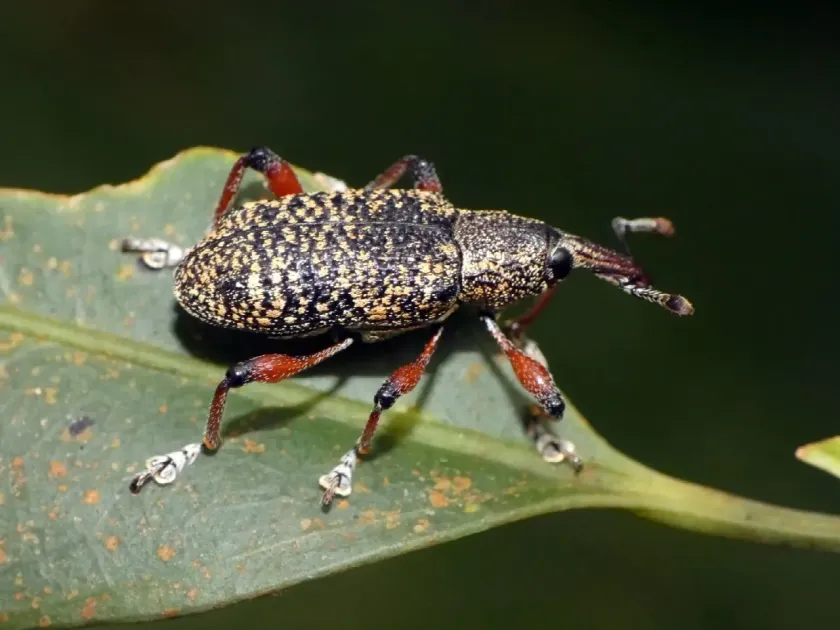
Description
How to identify
Pagiophloeus is a genus of beetles belonging to the Curculionidae family, commonly known as weevils. These insects are characterized by their distinct rostrum, or snout, which is a hallmark of the Curculionidae family within the order Coleoptera.
The adult beetles possess a robust, hardened exoskeleton that often features scales or patterns, providing camouflage against the bark of host trees. They typically measure between 10 to 15 millimeters, depending on the specific species within the genus.
The larvae are legless, fleshy, and C-shaped, typically white or cream-colored with a well-developed, dark sclerotized head capsule. This morphology is perfectly adapted for boring through woody tissues.
The life cycle of Pagiophloeus involves complete metamorphosis: egg, larva, pupa, and adult. The developmental stages are tightly linked to the internal tissues of the host plant, where the larvae spend most of their life.
Systematically, this genus is recognized as a significant group of wood-boring weevils found primarily in tropical and subtropical forest ecosystems, where they pose ecological and economic challenges.
What it damages
Pagiophloeus causes substantial damage to a wide range of woody plants, including fruit trees, rubber plantations, and valuable timber species. The primary damage is attributed to the larval stage, which feeds on the internal tissues of the tree.
By boring extensive galleries through the vascular cambium and sapwood, the larvae disrupt the flow of water and nutrients throughout the tree. This often leads to severe stress, wilting, and reduced growth rates.
Adult beetles contribute to the damage by feeding on young shoots, bark, and buds. This feeding activity can cause deformation, stunted growth, and make the plant more susceptible to opportunistic pathogens.
Severe infestations can result in the girdling of stems, leading to the death of entire branches or the whole tree. In plantations, this leads to significant yield losses and reduces the longevity of the orchard or forest stand.
The wood quality of timber species is compromised by the presence of larval tunnels, rendering the wood unfit for high-value uses and facilitating the entry of secondary fungal infections.
When it appears
The seasonal activity of Pagiophloeus is highly dependent on environmental conditions, particularly rainfall and temperature. In tropical regions, populations may remain active throughout most of the year.
Females typically lay eggs in cracks, crevices, or specially prepared pits in the bark of the host tree. This behavior is usually synchronized with periods of active sap flow, which ensures adequate nutrition for emerging larvae.
The larval stage is the most prolonged, often lasting several months as they slowly excavate galleries within the wood. Pupation typically occurs at the end of the larval gallery, often just beneath the surface of the bark.
Upon completing their transformation, the new generation of adults bores an exit hole to emerge. This emergence period is crucial for mating and the subsequent dispersal of the population to new host trees.
Depending on the climatic zone, the number of generations per year can vary. In favorable climates, overlapping generations are common, necessitating continuous monitoring throughout the growing season.
Signs of infestation
One of the earliest indicators of Pagiophloeus presence is the appearance of small, circular exit holes in the bark of stems and branches. These may be accompanied by sap flow or gumming, which is a defensive reaction by the tree.
Frass, which resembles fine sawdust or wood shavings, is often found around the exit holes or at the base of the tree. This debris is pushed out of the galleries by the larvae as they feed.
Visual signs of a stressed tree include yellowing leaves, drooping foliage, and premature leaf drop. In advanced stages, dieback of the upper branches is a clear indicator that the vascular system has been compromised.
- Small exit holes on the trunk
- Gumming or sap oozing from bark
- Accumulation of wood dust at the base
- Wilting and dieback of the canopy
- Adult beetles present on the bark at dusk
When the bark is carefully inspected or peeled away in heavily infested areas, the characteristic internal galleries can be seen, providing definitive proof of the pest's activity.
Control measures
Integrated pest management (IPM) for Pagiophloeus begins with cultural practices, such as the removal and destruction of heavily infested trees that serve as breeding reservoirs for the pest.
Systemic insecticides are the preferred chemical method. These can be applied as trunk injections or bark sprays to reach the larvae hidden deep within the wood, providing a targeted approach to control.
The use of pheromone traps or light traps can be highly effective in monitoring adult populations and reducing their numbers by catching them before they can mate and lay eggs on the trees.
Maintaining optimal tree health through balanced fertilization and proper irrigation ensures that trees have sufficient vigor to recover from minor damage and resist further colonization by boring insects.
Biological control options involve encouraging natural predators and parasitoids. Entomopathogenic fungi or specialized wasps that attack weevil larvae can significantly lower population levels when managed correctly in a field environment.
Taxonomy
- Latin name
- Pagiophloeus
- Order
- Coleoptera (beetles)
- Family
- Curculionidae
- EPPO code
- PAGPSP
Discussion
No discussions yet — be the first.