
Signal crayfish
Pacifastacus leniusculus
Description
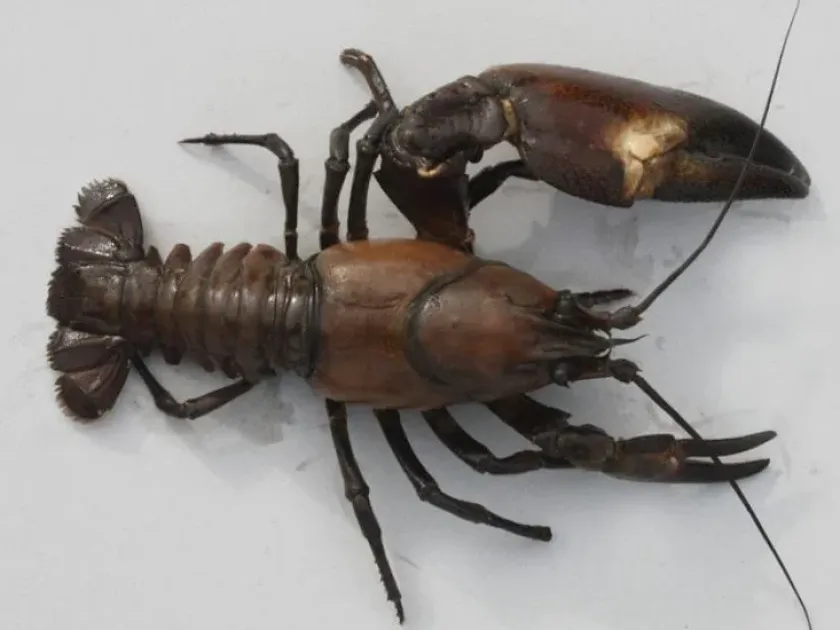
How to identify
The signal crayfish (Pacifastacus leniusculus) is a crustacean of the order Decapoda, native to North America but introduced widely elsewhere.
The name comes from a distinct white or light blue patch at the hinge of the claw, resembling a signal flag.
Adults reach lengths of 15 to 18 cm and are characterized by a smooth carapace, usually brown or olive-green in color.
As an aggressive invasive species, it rapidly outcompetes native crayfish species, often leading to their local extinction.
It is a carrier of crayfish plague (Aphanomyces astaci), which is highly lethal to European species but does not affect the signal crayfish itself.
What it damages
In agriculture, the signal crayfish is known for its extensive burrowing behavior that damages water infrastructure.
Burrows are frequently excavated into the banks of irrigation channels and dams, leading to structural failures and water loss.
This erosion can cause bank collapse, interrupting the distribution of water required for crop irrigation during peak growing seasons.
They consume aquatic macrophytes, which disrupts the natural balance of pond ecosystems and leads to poor water quality.
In aquaculture, they can prey on fish eggs and juvenile fish, significantly reducing the productivity of fish farms.
When it appears
Activity begins in early spring as water temperatures rise, typically peaking from May through August.
During the summer, the species is highly mobile and focuses on burrow expansion and reproduction, increasing its impact on embankments.
As temperatures drop in late autumn, the crayfish retreat to deeper waters to overwinter in subterranean structures.
The breeding season occurs in autumn, and females carry the eggs throughout the winter until the following spring.
Peak emergence of juveniles coincides with late spring, rapidly increasing the total number of individuals within a single season.
Signs of infestation
One of the most obvious signs is the appearance of numerous burrows along the edges of irrigation canals and retention ponds.
Increased water turbidity caused by the physical disturbance of sediment during burrowing activity is a common indicator.
The presence of exuviae (cast-off shells) on the bank or floating in the water indicates a healthy and growing population.
Structural damage such as unexpected leaks, cracks, or erosion patterns in irrigation infrastructure should trigger an inspection.
A decline in biodiversity, specifically the loss of native crayfish, amphibians, or fish, often points to the colonization of this invasive species.
Control measures
Intensive trapping using specifically designed crayfish traps is the primary method for population management.
Structural reinforcement of canal banks, such as lining with geotextiles or rip-rap, prevents the animals from digging deep tunnels.
Where possible, winter drawdown of water levels can desiccate burrows and reduce the survival rate of the population.
Public awareness and strict regulations regarding the release of live crustaceans are essential to prevent further spread.
- Implement regular surveillance programs during the summer months
- Avoid manual transport of crayfish between different water bodies
- Consult local environmental authorities for regional management plans
Taxonomy
- Latin name
- Pacifastacus leniusculus
- Family
- Astacidae
- EPPO code
- PACILE
Discussion
No discussions yet — be the first.