
Pales weevil
Pachylobius picivorus
Description
How to identify
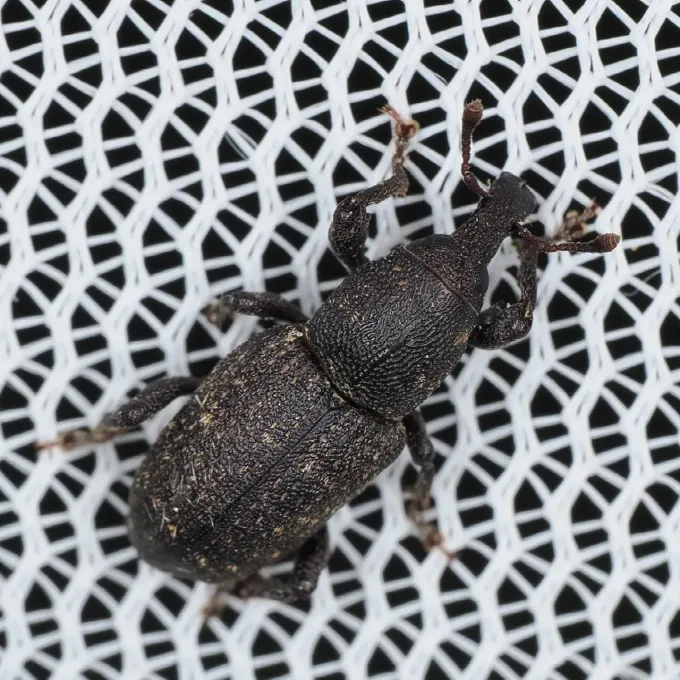
The Pales weevil (scientific name Pachylobius picivorus) is a member of the Curculionidae family within the order Coleoptera. Adult beetles typically measure between 10 and 15 mm in length and possess the characteristic elongated snout common to weevils.
The body is dark brown or black in color, often featuring patterns created by patches of yellow or white scales on the elytra. The surface of the elytra exhibits distinct rows of pits, providing a textured appearance.
Larvae, which develop within wood or root systems, are legless, white, and have a distinctive yellowish head capsule. They go through several larval stages before pupating within the host plant tissue.
These insects are primarily nocturnal, spending daylight hours hiding in leaf litter or under the bark of stumps, which makes them highly elusive during routine field inspections.
Due to their high mobility, adult weevils can fly significant distances to locate suitable host trees, making them a recurring challenge in young pine plantations and nursery settings.
What it damages
Adult weevils cause the most significant damage by feeding on the bark of young conifer seedlings, particularly pines, spruces, and larches, which are generally under 10 years old.
Feeding typically occurs at the base of the stem near the root collar. The beetles consume the bark down to the cambium layer, leaving irregular, crater-like wounds or consuming the entire circumference of the stem.
When girdling occurs, the transport of nutrients is halted, leading to the rapid wilting and eventual death of the seedling. This is a primary cause of plantation failure in many forest ecosystems.
High densities of Pales weevil are often found in areas where mature timber was recently harvested, as these sites provide both ample food for adults and breeding grounds for larvae.
Secondary infections are common, as feeding wounds allow pathogens, such as various fungi, to enter the tree, further compromising the health and survival rate of young plantings.
When it appears
Adult activity typically begins in early spring, once temperatures consistently reach or exceed 10 degrees Celsius, signaling the start of the insect's emergence from overwintering sites.
Peak activity and feeding generally occur during May and June. During this window, the beetles are most actively seeking out young seedlings for nutritional sustenance.
While feeding may slow down during the heat of mid-summer, the weevils remain present in the environment throughout the growing season, posing a continuous threat to susceptible seedlings.
As autumn approaches and temperatures drop, adult beetles migrate into the soil or deeper layers of forest litter to hibernate until the following spring.
The life cycle can vary between one and two years depending on local climate conditions, with warmer regions often facilitating faster development of the next generation.
Signs of infestation
The most diagnostic sign of an infestation is the presence of irregular, gouged patches of bark on the lower stem of seedlings, often accompanied by heavy sap flow at the site.
Visual changes in the canopy of the seedlings, such as yellowing or browning of needles, indicate that the tree's vascular system has been severely compromised by feeding damage.
Finding adult beetles beneath the bark of nearby stumps or in the soil around the base of damaged seedlings provides direct confirmation of their presence.
Small, crater-like feeding holes are frequently observed on the stem, which look like dark, resin-covered depressions on the bark surface.
In severe cases, the sudden collapse or death of numerous seedlings within a specific area is a clear indicator of a Pales weevil outbreak that requires immediate intervention.
Control measures
Effective management begins with silvicultural practices, such as removing stumps or waiting a designated period after harvest before replanting, to reduce the breeding capacity of the local population.
Mechanical control options, including physical barriers or specialized seedling protectors, can effectively prevent the weevils from reaching the bark of young trees.
Chemical control involving insecticides is often necessary in high-pressure areas, specifically targeting the emergence period when adult activity is at its peak.
Utilizing containerized seedlings with robust root systems can improve initial establishment success and provide trees with better vigor to withstand early pest pressure.
- Monitoring with pheromone-based traps to track population density.
- Applying entomopathogenic fungi as a biological control agent.
- Regular inspection of newly established plantations during the spring.
Taxonomy
- Latin name
- Pachylobius picivorus
- Order
- Coleoptera (beetles)
- Family
- Curculionidae
- EPPO code
- PACLPI
Discussion
No discussions yet — be the first.