
Citrus root weevil
Pachnaeus citri
Description
How to identify
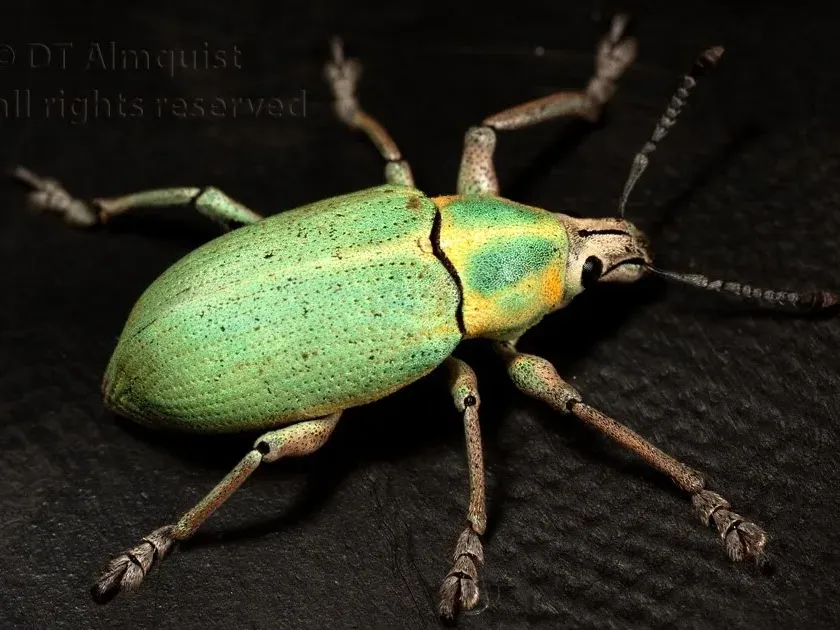
The citrus root weevil, scientifically known as Pachnaeus citri, belongs to the family Curculionidae within the order Coleoptera. Adult beetles are typically 10–12 mm long and exhibit a distinct blue-green or grey coloration.
Their bodies are covered in dense scales, which provide effective camouflage against the foliage of citrus trees. They possess the characteristic elongated snout (rostrum) and elbowed antennae typical of the weevil family.
Larvae are legless, white to cream-colored grubs with a prominent, well-developed head capsule. They spend their entire developmental period in the soil, feeding on plant roots.
The life cycle undergoes complete metamorphosis, including egg, larva, pupa, and adult stages. Adult activity is most pronounced during warmer months when climate conditions favor their propagation.
Soil moisture plays a crucial role in the survival of larvae, as they are highly sensitive to extreme desiccation within the soil profile during their early developmental stages.
What it damages
Adult weevils primarily feed on the foliage of citrus trees, including orange, lemon, and grapefruit varieties. They cause damage by notching the edges of the leaves, resulting in irregular or semi-circular patterns.
The larvae represent the most destructive stage, as they consume fine rootlets and strip the bark off larger structural roots. This feeding activity significantly impairs the tree's ability to absorb water and nutrients.
Beyond citrus, this pest can attack a variety of ornamental plants and shrubs, extending its impact across diverse agricultural and landscaping environments.
Heavy infestations lead to tree decline, characterized by reduced canopy density, lower fruit yields, and premature fruit drop. In extreme cases, young trees may suffer total mortality.
The pest is known for its remarkable adaptability to varying orchard environments, making long-term control a challenging task for commercial fruit producers.
Signs of infestation
Visible leaf notching at the margins is the most obvious sign of an adult weevil presence within the tree canopy during the active season.
Root damage manifests as sudden wilting, chlorosis, and general tree decline. The trees appear less vigorous compared to non-infested specimens, often struggling during dry periods.
Excavation of the topsoil around the base of the tree often reveals the presence of larvae. Roots may show evidence of surface scarring or complete loss of fibrous root material.
Stunted shoot growth and a lack of new vegetative development are reliable indicators that the root system has been compromised by larvae, affecting the tree's nutritional status.
Adults can often be found by inspecting the undersides of leaves or by using a drop cloth beneath the canopy, as they are often inactive during the hottest parts of the day.
Control measures
Chemical control usually involves the application of systemic insecticides designed to target adult beetles as they consume foliage, thereby reducing the breeding population.
Biological control methods include the application of entomopathogenic nematodes to the soil, which serve as natural predators of the larvae, effectively reducing soil populations.
Good orchard management, including proper irrigation and nutritional support, helps trees tolerate and recover from root damage more effectively.
For smaller orchards, mechanical methods such as hand-picking adults or using trunk barriers can help manage local beetle populations during peak activity periods.
- Maintaining clean ground under tree canopies.
- Monitoring soil moisture levels in the root zone.
- Regular inspection for leaf damage patterns.
Taxonomy
- Latin name
- Pachnaeus citri
- Order
- Coleoptera (beetles)
- Family
- Curculionidae
- EPPO code
- PACNCI
Discussion
No discussions yet — be the first.