
Blue citrus root weevil
Pachnaeus azurescens
Description
How to identify
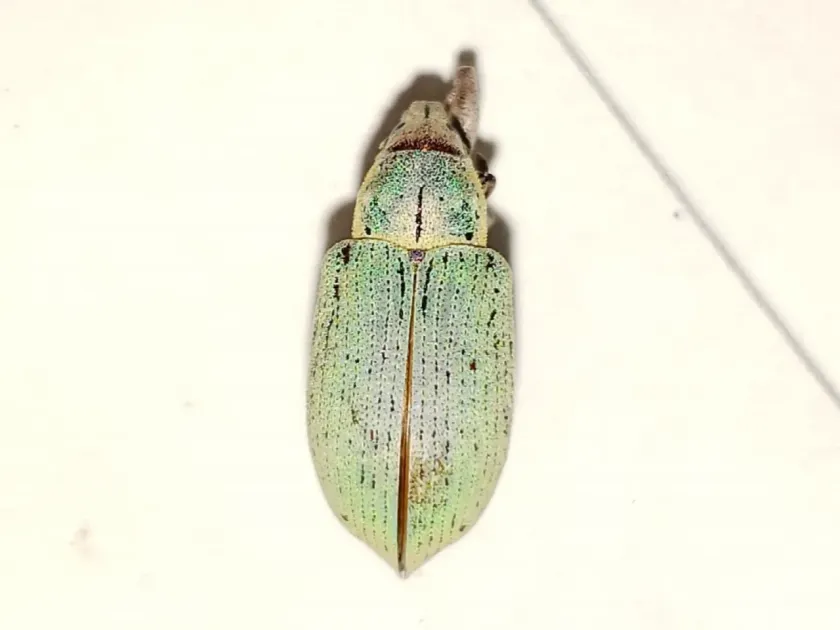
The blue citrus root weevil, scientifically known as Pachnaeus azurescens, belongs to the family Curculionidae. These beetles are easily recognized by their vivid blue or blue-green metallic coloration.
The adult insect has a typical snout-like rostrum and measures approximately 8 to 12 mm in length. Their bodies are covered in specialized scales that reflect light, creating their unique appearance.
Larvae of this species are legless, white-colored, and typically C-shaped. They are primarily soil-dwelling organisms that spend the majority of their development feeding on root tissues.
The life cycle encompasses a complete metamorphosis, including egg, larva, pupa, and adult stages. Females lay eggs on foliage, which then fall to the ground upon hatching.
Pupation occurs entirely within the soil. Once the adult emerges, it crawls up to the tree canopy to begin feeding on leaves and searching for mating partners to continue the cycle.
What it damages
This weevil primarily targets citrus species, including oranges, lemons, and grapefruits. It is a significant pest that impacts both the root system and the canopy of host trees.
Root damage is the most severe aspect of the infestation. Larvae feed on fibrous roots, weakening the tree's ability to uptake water and nutrients, leading to stunted growth.
Adult feeding causes characteristic semi-circular or irregular notches along the margins of leaves. While this rarely kills the tree, it reduces photosynthesis and tree vigor.
In cases of severe infestation, the cumulative effect of root destruction and leaf damage can lead to the decline of productive citrus groves and significant yield reductions.
Young trees are particularly susceptible, as their smaller root systems can be decimated quickly by a high population of larvae, potentially causing tree mortality.
Signs of infestation
Visual identification of adults on the foliage during the daytime is a primary sign of an active infestation, as they are often found resting on the underside of leaves.
The presence of notched leaf margins is a definitive symptom of adult weevil feeding. Monitoring these signs helps growers estimate the population density in the grove.
Tree decline, characterized by yellowing leaves, lack of new growth, and overall canopy thinning, often indicates advanced root damage caused by larval activity in the soil.
Soil disturbance or damage to the bark at the base of the trunk may also indicate that larvae or pupae are present in the immediate vicinity of the root zone.
Persistent ant activity around the base of the trees can sometimes suggest the presence of honeydew-producing insects or general plant stress, which may be linked to weevil damage.
Control measures
Chemical control focuses on applying insecticides during the peak adult emergence period to prevent further foliage damage and to reduce the egg-laying population.
Soil-applied systemic insecticides are often recommended to manage the larval stages, as they provide protection to the root zone from within the plant tissues.
Biological control agents, such as entomopathogenic nematodes (e.g., Heterorhabditis species), are highly effective at controlling larval populations in the soil environment.
Cultural practices, including maintaining healthy, well-irrigated trees, can help the plants better tolerate feeding damage and recover from minor infestations.
Implementing a regular scouting and monitoring program using traps allows for targeted pesticide application, minimizing the environmental impact and protecting beneficial organisms.
Taxonomy
- Latin name
- Pachnaeus azurescens
- Order
- Coleoptera (beetles)
- Family
- Curculionidae
- EPPO code
- PACNAZ
Discussion
No discussions yet — be the first.