
Ovachlamys fulgens
Ovachlamys fulgens
Description
How to identify
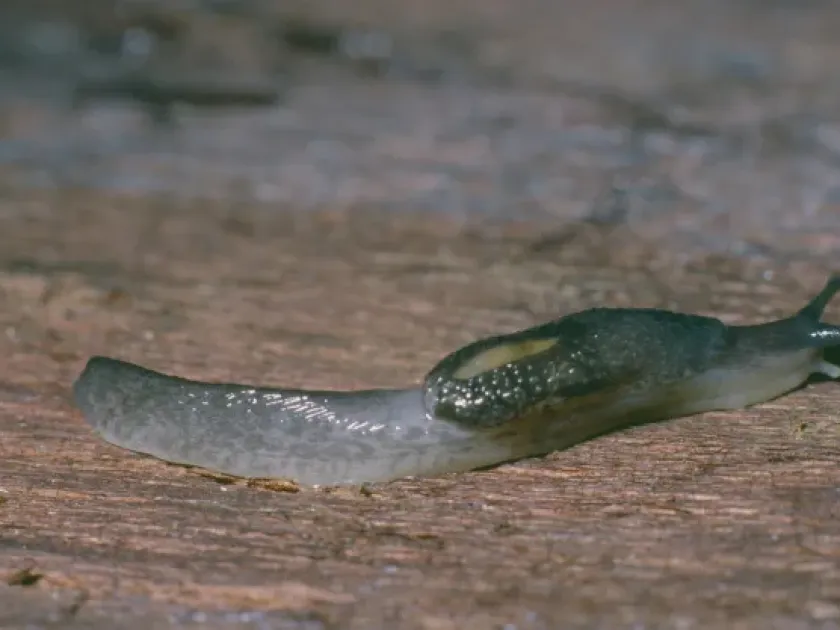
Ovachlamys fulgens is a small terrestrial pulmonate gastropod belonging to the Helicarionidae family. It is recognized by its delicate, translucent, and glossy shell, which typically exhibits a yellowish-brown coloration.
The soft body of the snail is usually greyish-white or brownish, capable of fully retracting into its shell. Measuring only 10–12 millimeters in length, these snails are notoriously difficult to detect, often blending in with soil particles and organic debris.
Taxonomically, this species is classified under the order Stylommatophora. They are known for their high mobility and ability to colonize various environments, particularly in greenhouses, nurseries, and indoor gardens where moisture is abundant.
As an invasive species in many parts of the world, Ovachlamys fulgens is frequently introduced through contaminated potting soil or ornamental plant stock. Its secretive nature allows it to establish populations quickly without immediate detection.
Proper identification requires careful inspection of the underside of leaves and the soil surface near the root zone, especially during the day when these gastropods seek shelter from light and desiccation.
What it damages
Ovachlamys fulgens is a generalist feeder (polyphage) that infests a wide range of horticultural, vegetable, and ornamental plants. It poses a significant threat to tender seedlings and high-value greenhouse crops.
The primary damage occurs as the snails rasp away plant tissue, creating irregular holes and ragged edges on the leaves. In cases of severe infestation, the loss of leaf area can severely stunt growth and kill young plants.
Beyond leaf consumption, the pest often attacks flower buds and developing shoots. This feeding behavior not only mars the aesthetic value of ornamental flowers but also disrupts the structural development of the plant.
These snails are also vectors for various pathogens. Their slime trails and the open wounds they create on the plant surface provide entry points for bacteria and fungi, frequently leading to secondary infections and rot.
In greenhouse settings, where conditions are consistently favorable, a small initial population can rapidly scale into a major outbreak, threatening entire batches of greenhouse production if left unmanaged.
When it appears
The activity level of Ovachlamys fulgens is strictly governed by humidity and temperature. In temperate climates, their activity peaks during warm, wet seasons, while in enclosed facilities, they can remain active year-round.
Greenhouses and indoor environments offer stable microclimates that allow the snails to breed continuously. A single generation can complete its cycle rapidly, leading to overlapping generations and a constant presence of all life stages.
Oviposition typically occurs in moist substrate, underneath leaf litter, or in the crevices of plant pots. High humidity is essential for egg survival and juvenile development, making damp environments hotspots for population growth.
As nocturnal feeders, these snails remain hidden during daylight hours. They seek refuge in dark, damp spots to prevent water loss, only becoming active at night or during overcast, rainy weather.
Seasonal patterns of abundance are heavily influenced by human-managed irrigation schedules. Consistent soil surface moisture created by frequent overhead watering significantly favors the survival of juvenile snails.
Signs of infestation
The most reliable sign of an infestation is the presence of dried, silvery mucus trails found on leaves, stems, or the edges of plant containers. These trails glisten under direct light.
Leaves showing irregular, jagged feeding damage are characteristic of snail activity. Unlike insect damage, which may have clean-cut lines, mollusk feeding usually results in messy, eroded tissue margins.
Close inspection of the soil or the area around the plant base may reveal small, white, spherical eggs. Finding these in clusters is a definitive sign that a breeding population is present.
Wilting plants or those showing signs of stunted growth, despite adequate irrigation, may indicate that the snails are feeding on the stems or roots at the soil surface, causing systemic stress to the plant.
In high-density infestations, the presence of feces or a distinct, earthy, musty smell in the greenhouse can be an indicator that a large population of snails is active in the vicinity.
Control measures
Rigorous phytosanitary practices are the first line of defense. All new plant arrivals should be inspected and quarantined before being introduced into a general cultivation area to prevent the entry of snails.
Cultural control measures focus on habitat modification. Keeping the cultivation area free of weeds, debris, and excessive mulch denies the snails their necessary daytime shelter, thereby reducing their survival rate.
Physical barriers, such as copper tape around pots or barriers of diatomaceous earth or lime, can effectively deter snail movement, preventing them from accessing vulnerable plants on benches or tables.
Chemical control should prioritize the use of iron phosphate-based molluscicides. These products are formulated as baits, are highly effective against gastropods, and pose minimal risk to pets and non-target organisms.
Simple trapping methods, such as placing damp wooden boards or citrus peels on the soil surface at night, are highly effective. Collecting and disposing of the snails that gather under these traps is a low-impact strategy for small-scale control.
Taxonomy
- Latin name
- Ovachlamys fulgens
- Order
- Molluscs
- Family
- Helicarionidae
- EPPO code
- OVACFU
Discussion
No discussions yet — be the first.