
Ovachlamys
Ovachlamys
Description
How to identify
Ovachlamys is a genus of land snails in the family Helicarionidae. The most notable species is Ovachlamys fulgens, commonly known as a semi-slug.
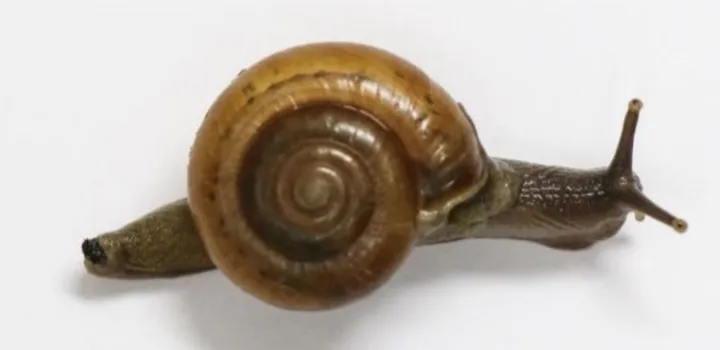
This mollusk is characterized by a thin, semi-transparent, yellowish-brown shell that is too small for the animal to fully retract into.
The body of the snail typically ranges from gray to brown, and its small, fragile shell makes it difficult to spot among dense foliage.
Adult specimens generally measure between 10 and 15 millimeters, allowing them to hide effectively in moist environments or under garden debris.
Native to tropical regions, this pest has successfully spread to various parts of the world, often through the trade of ornamental plants.
What it damages
Ovachlamys is a generalist feeder capable of causing significant damage to a wide range of agricultural, ornamental, and horticultural crops.
Vegetable crops such as cucumbers, tomatoes, and leafy greens are particularly susceptible to their deep feeding scars and holes.
Ornamental plants, including orchids, anthuriums, and various greenhouse flowers, frequently suffer from damage to leaves, buds, and young shoots.
The feeding activity not only ruins the aesthetic value of ornamental plants but also significantly reduces the yield of vegetable harvests.
Beyond physical damage, the presence of these mollusks can facilitate the spread of secondary fungal and bacterial pathogens on plants.
When it appears
The activity level of Ovachlamys is strongly influenced by temperature and moisture availability in their environment.
In greenhouses or tropical regions, these snails remain active throughout the year as long as environmental conditions remain favorable.
Populations tend to peak during wet seasons or in areas with consistently high relative humidity and adequate shade.
During dry spells, the snails seek refuge deep within the soil or in damp, dense vegetation to prevent desiccation.
They possess a rapid reproductive cycle, enabling them to produce multiple generations during a single growing season when food is abundant.
Signs of infestation
The most common sign of infestation is the appearance of glistening mucous trails left by the snails on leaves, stems, and soil.
Irregular, scalloped holes in leaves or completely missing leaf edges are primary symptoms of their feeding activity.
Small, translucent clusters of eggs can often be found in the soil or under mulch in infested areas during the growing season.
Active specimens can be observed directly on plants during nighttime hours or early morning when they are most likely to feed.
Stunted growth or damaged growing tips are indicators that the snails have been feeding on the most succulent parts of the plant.
Control measures
Integrated pest management (IPM) is essential for controlling Ovachlamys, combining cultural practices with targeted chemical applications.
Good sanitation, such as removing weeds, garden debris, and mulch piles, helps eliminate daytime hiding spots for the snails.
Trapping methods, including the use of beer baits or commercial mollusk traps, are effective for monitoring and reducing local populations.
Applying molluscicides containing metaldehyde or iron phosphate around the base of affected plants can significantly decrease snail numbers.
Regular phytosanitary inspection of new nursery stock is crucial to prevent the accidental introduction of these pests into new areas.
Taxonomy
- Latin name
- Ovachlamys
- Order
- Molluscs
- Family
- Helicarionidae
- EPPO code
- OVACSP
Discussion
No discussions yet — be the first.