
Great Bustard
Otis tarda
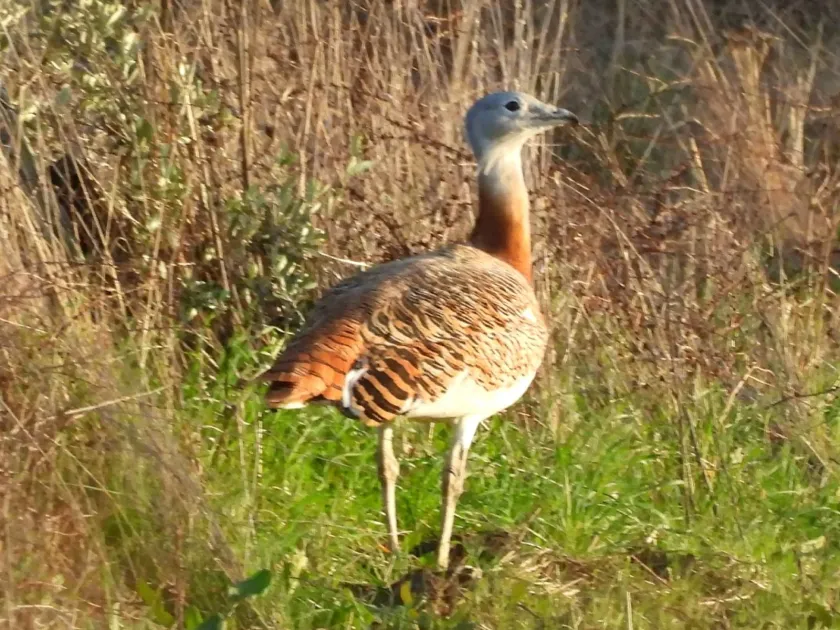
Description
How to identify
The Great Bustard (Otis tarda) is a massive ground-dwelling bird belonging to the Otididae family. It is recognized as one of the heaviest flying birds in existence, known for its majestic appearance and shy nature.
Physically, the species features a robust body, a long neck, and powerful legs designed for walking across open grasslands. Adult males possess unique feather displays during the breeding season, which makes them easy to distinguish from females.
Taxonomically, the bird belongs to the order Otidiformes. They are primarily diurnal creatures that prefer open habitats where they can maintain clear visibility of their surroundings to avoid potential threats.
Their biological adaptations are perfectly suited for steppe ecosystems. However, as natural landscapes shrink, the Great Bustard has increasingly adapted to using agricultural fields as temporary feeding grounds.
Due to their status as a rare and endangered species, Great Bustards are protected by strict environmental laws across their entire habitat range, necessitating careful management of agricultural interactions.
What it damages
The Great Bustard is an omnivorous bird, consuming a mix of vegetable matter, including green shoots and seeds, alongside invertebrates like insects. In agricultural settings, they may feed on young cereal and oilseed crops.
During the early vegetation phase, birds may consume the tender shoots of winter and spring crops, resulting in thinner plant stands. This can impact the uniform growth of the field if the damage is concentrated.
They are also known to occasionally feed on young rapeseed or sunflower seedlings. The mechanical impact of a flock walking through a field, causing trampling of the vegetation, often exceeds the direct consumption damage.
While reports of damage exist, it is usually sporadic. The beneficial role of these birds in controlling locust and beetle populations often offsets the losses caused to seedlings during the growing season.
Agronomists are encouraged to monitor the intensity of feeding before considering any interventions, as the damage is rarely severe enough to cause total crop failure in well-established fields.
When it appears
Spring is the primary season when Great Bustards are most frequently observed in fields, as they seek out fresh, nutrient-rich green shoots. This period coincides with the critical early development phase of many crops.
During the summer, the birds tend to move toward more secluded areas for nesting. They may still visit fields occasionally to feed on insects or mature grains, depending on the availability of alternative natural food sources.
Autumn brings the migration and flocking behavior, where birds may be found on stubble fields. At this time, they feed primarily on crop residues and waste grains, which is typically considered non-destructive to agriculture.
In colder regions, the Great Bustards migrate, meaning they are absent from agricultural lands for significant portions of the year. Their presence is largely determined by local climate patterns.
The annual cycle of the bird dictates that the pressure on crops is highest during the early growing season, requiring proactive planning for seasonal field protection.
Signs of infestation
Identifying the presence of Great Bustards is straightforward due to their distinct, large, three-toed tracks left on moist soil. These prints are significantly larger than those of most other field birds.
Feeding signs include neatly cropped tips of leaves or shoots. Unlike rodents that may gnaw at the base or roots, Great Bustards typically remove the upper foliage in a surgical manner.
The presence of large, distinct droppings in the field is a clear indicator of a flock's visit. These deposits are often found concentrated in areas where the birds spent time resting or grazing.
Trampled patches of crops indicate where a group of birds has moved through the field. These areas often appear flattened, contrasting sharply with the healthy, upright growth of surrounding plants.
Visual confirmation during dawn or dusk is the most reliable method for identifying these birds, as they are large and relatively easy to spot when they are actively grazing in open fields.
Control measures
Because the Great Bustard is a strictly protected species, lethal control methods are illegal. All management strategies must be non-lethal and comply with regional environmental regulations.
Visual deterrents, such as streamers, reflective tapes, or life-sized silhouettes of raptors, are generally effective at keeping birds away from specific zones within a field.
Acoustic deterrents, including programmable sound systems that emit predator cries or erratic noise, can effectively discourage flocks from lingering in valuable crop areas.
Setting up decoy feeding areas at the edges of the fields, away from high-value crops, can successfully divert the birds toward less sensitive zones and reduce the impact on production.
Maintaining good agronomic practices, such as ensuring timely sowing and maintaining high soil fertility, helps plants recover quickly from the minor grazing pressure caused by wildlife.
Taxonomy
- Latin name
- Otis tarda
- Family
- Otididae
- EPPO code
- OTISTA
Discussion
No discussions yet — be the first.