
Clay-colored weevil
Otiorhynchus singularis
Description
How to identify
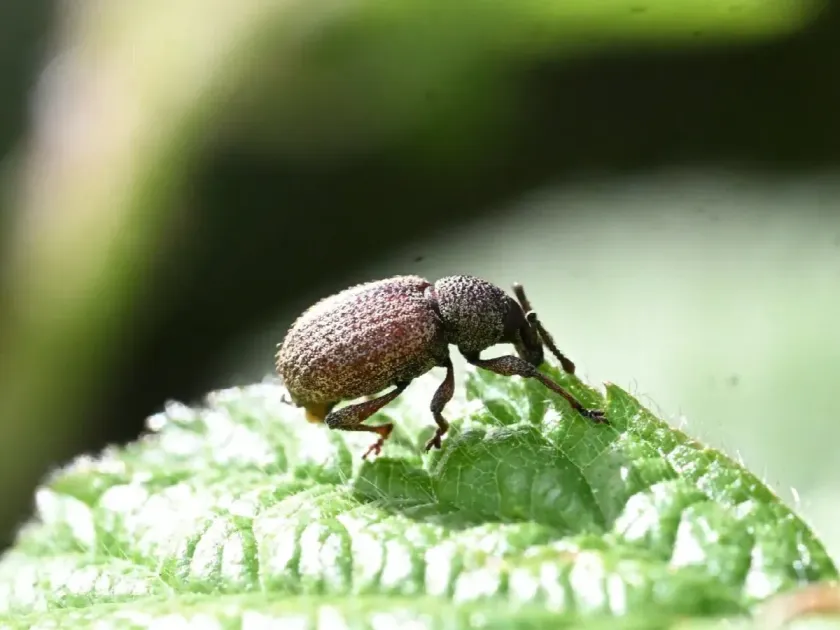
The Clay-colored weevil (Otiorhynchus singularis) is a beetle belonging to the Curculionidae family within the Coleoptera order. Adult insects measure approximately 6–8 mm in length and possess a characteristic oval shape with a body covered in brown to grayish scales.
The head features a short, broad snout. A key biological trait of this species is that it reproduces parthenogenetically, meaning that all individuals are female, allowing the population to expand rapidly without the need for mating.
The larvae are legless, C-shaped, and creamy-white in color with a distinctive brown head capsule. This appearance makes them easily identifiable when inspecting the soil around the roots of affected plants.
These pests overwinter either as adults in the topsoil or as larvae of various stages within the root zone. During spring, they become active, with adults emerging from the soil to feed on foliage during the night.
The developmental cycle is strongly influenced by soil temperature and moisture. In temperate climates, they typically complete one generation per year, though larvae can survive in the soil for extended periods if conditions remain favorable.
What it damages
This polyphagous pest targets a wide variety of agricultural, horticultural, and ornamental plants. Both the adult beetles and the larvae cause significant economic damage through different feeding patterns.
Adults primarily feed on the foliage of berry crops like raspberries, strawberries, and currants. They create characteristic notches along the leaf margins, which, while rarely killing the plant, can severely stunt growth.
Larvae are significantly more destructive as they feed on the root systems of trees and shrubs. This is particularly harmful to apple trees, grapevines, and a range of ornamental plants including rhododendrons and roses.
In nursery settings, the Clay-colored weevil can decimate young transplants by completely consuming the roots. This leads to the rapid collapse and death of the plant, often before the infestation is even detected.
Glasshouse crops are also at risk. The protected environment allows for high infestation rates, making it difficult to maintain healthy plants without rigorous monitoring and preventative management practices.
Signs of infestation
Detecting an infestation is challenging because adults are strictly nocturnal. During the day, they remain hidden in soil, mulch, or near the base of the plant, leaving no visible trace of their presence.
The most recognizable sign of adult feeding is the scalloped or notched edges on leaves. If you suspect an infestation, perform a night inspection using a flashlight; the beetles are easily spotted while feeding on the leaves.
Symptoms of larval damage include stunted growth, wilting during dry periods, and overall lack of vigor. In severe cases, young plants may lose their anchorage in the soil and can be easily pulled out due to root destruction.
Root zone inspection is necessary to confirm larval presence. Digging carefully around the base of a wilting plant often reveals the C-shaped white larvae residing in the soil.
Bark damage near the soil line is another indicator, as adults sometimes feed on the stems of young seedlings, which can lead to girdling and subsequent plant death.
Control measures
Effective management requires an integrated approach. Cultural controls such as thorough soil cultivation in the autumn are effective at disrupting overwintering sites and exposing larvae to predators like birds.
Chemical control focuses on applying systemic insecticides to the root zone to target larvae. Foliar applications of contact-stomach insecticides should be timed for the evening when adults are actively feeding on the foliage.
Biological control using entomopathogenic nematodes (such as Heterorhabditis bacteriophora) is a highly successful and eco-friendly method. These nematodes are applied to the soil and parasitize the larvae in their natural habitat.
Preventative measures include rigorous inspection of new planting stock and maintaining a weed-free environment. This limits alternative food sources and shelter for the beetles, reducing the likelihood of colonization.
- Use physical barriers to prevent adult climbing.
- Apply mulches that are less attractive to egg-laying females.
- Encourage natural predators like carabid beetles and birds in the garden.
- Rotate crops to prevent the buildup of soil-borne pest populations.
Taxonomy
- Latin name
- Otiorhynchus singularis
- Order
- Coleoptera (beetles)
- Family
- Curculionidae
- EPPO code
- OTIOSI
Discussion
No discussions yet — be the first.