
Otiorhynchus sensitivus
Otiorhynchus sensitivus
Description
How to identify
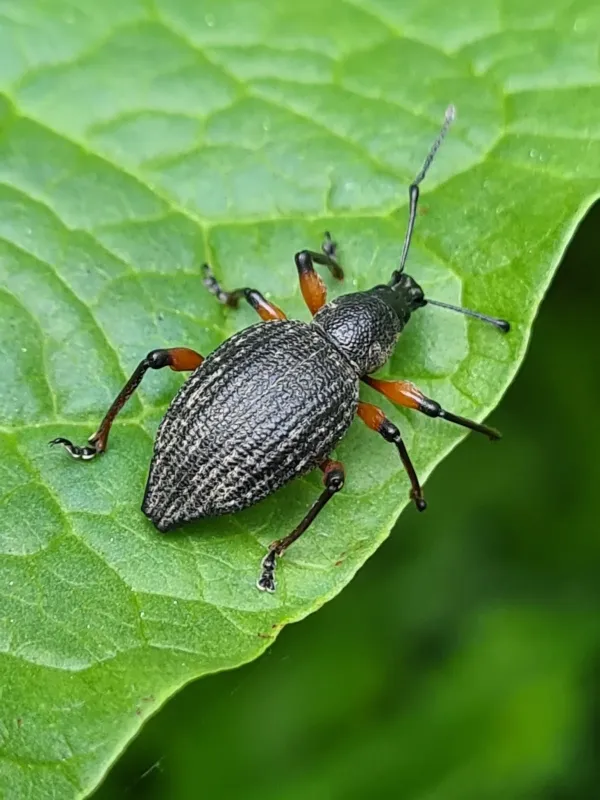
Otiorhynchus sensitivus is a species of weevil belonging to the Curculionidae family. The adult beetle is characterized by an oval body, typically measuring 7–9 mm in length, and is covered with small, often dull-colored scales that help it blend into the soil environment.
The snout, or rostrum, of this beetle is relatively short and broad, which serves as a key morphological feature for distinguishing this species from other members of the genus. The body color ranges from dark brown to black.
The larvae are legless, white, and curved, with a distinct brown head capsule. They reside exclusively underground, feeding on plant roots, which makes them difficult to monitor until significant plant damage becomes apparent.
These insects are primarily nocturnal. During the day, they remain hidden in soil crevices, under leaf litter, or at the base of plants, making them difficult to spot during routine inspections.
When disturbed, adult weevils instinctively fall to the ground and remain motionless, mimicking soil particles. This defensive behavior is highly effective at evading visual detection by predators and observers alike.
What it damages
Otiorhynchus sensitivus is a polyphagous pest, meaning it attacks a wide variety of agricultural, horticultural, and ornamental plants. It is particularly notorious for damaging berries like strawberries and raspberries, as well as various ornamental shrubs.
Adults consume the leaves, typically starting from the edges and leaving a characteristic serrated or jagged pattern. While usually not lethal to mature trees, heavy defoliation significantly reduces the plant's photosynthetic capacity.
The larvae cause far more severe damage by feeding on the root system. They sever small root hairs and tunnel into larger roots, which disrupts the plant's ability to take up water and nutrients.
Visible symptoms of larval damage include stunted growth, wilting, and yellowing foliage, especially during periods of drought. If the root system is severely compromised, the plant may die entirely.
Ornamental gardens and commercial nurseries are particularly susceptible to this pest, as larvae can destroy entire batches of seedlings or potted plants before an infestation is diagnosed.
When it appears
The activity of adult beetles typically begins in late spring, around May. Throughout the summer months, they continue to feed and reproduce, with population peaks often occurring in June and July.
Adults are most active at night, which is when they emerge from the soil to climb onto plants for feeding. During the day, they move back toward the soil surface or into sheltered spots.
Larval development occurs in the soil and can take several months. In many regions, the larvae overwinter in the soil, protected from extreme temperatures at depths of 20–30 cm.
As soil temperatures rise in the spring, the larvae resume feeding on roots. This timing coincides with the early growth phase of many crops, making the plants highly vulnerable to root damage.
The life cycle is influenced heavily by regional climate; in warmer years, the beetles may complete their development faster, potentially leading to higher population density within a single season.
Signs of infestation
The most recognizable sign of adult activity is the scalloped or notched appearance of leaf margins, which is a classic symptom of weevil feeding on ornamental and garden plants.
Sudden wilting or decline of a plant that is otherwise well-watered is a major indicator of larval root feeding. Checking the soil around the base of such plants often reveals the larvae.
Stunted growth, lack of vigor, and poor flowering in perennial plants that previously thrived are common indicators that the root system has been impacted by the presence of larvae.
In nurseries, the presence of adult beetles under pots or in tray soil is a warning sign of an active infestation that requires immediate attention to prevent larval spread.
- Uneven leaf edges.
- Unexpected plant death during summer.
- Beetles found near root zones at night.
- Reduced crop yield in berry plantations.
Control measures
Controlling Otiorhynchus sensitivus requires an integrated approach that targets both the soil-dwelling larvae and the adult beetles that feed on the foliage.
Cultural control practices, such as regular soil cultivation or hoeing around the base of plants, can disturb the larvae and expose them to natural predators like birds.
Chemical control against adults should be applied in the evening, as this is when the beetles are most active. Contact and systemic insecticides are effective when applied to the foliage.
Biological control methods, particularly the use of entomopathogenic nematodes applied to the soil, are highly effective against larvae. These nematodes naturally parasitize and kill the weevil larvae in the root zone.
Proper garden sanitation, including the removal of dead plant material and weeds, reduces the available hiding spots for adults and minimizes the likelihood of future infestations.
Taxonomy
- Latin name
- Otiorhynchus sensitivus
- Order
- Coleoptera (beetles)
- Family
- Curculionidae
- EPPO code
- OTIOSE
Discussion
No discussions yet — be the first.