
Otiorhynchus rotundatus
Otiorhynchus rotundatus
Description
How to identify
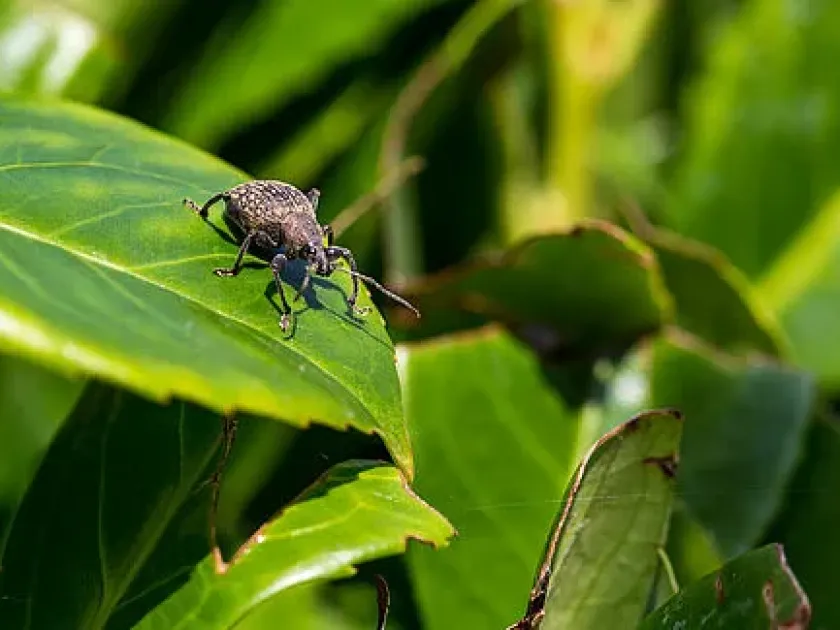
Otiorhynchus rotundatus belongs to the family Curculionidae (true weevils). Adult beetles are approximately 5–7 mm in length and possess the characteristic snout associated with the family.
The body is robust and dark brown to black in color, typically covered with fine scales. A key diagnostic feature is the presence of elbowed antennae which are characteristic of this genus.
The larvae of the weevil are legless, fleshy, and C-shaped, usually white or creamy with a yellowish-brown head capsule.
These beetles are flightless, as their wings are poorly developed. Their dispersal is limited, relying mostly on crawling or being transported via soil and nursery stock.
Their life cycle involves both soil-dwelling larval stages and surface-dwelling adult stages, requiring integrated management strategies for effective control.
What it damages
This pest is a polyphagous insect, attacking a wide range of plants including strawberries, berry bushes, fruit trees, and various ornamental species.
Adult beetles feed on the margins of leaves, creating distinctive irregular notches or jagged edges, often referred to as "leaf notching."
Larvae cause significant damage by feeding on the fine roots and crowns of plants, which weakens the host and reduces its ability to absorb nutrients and water.
In cases of heavy infestation, larvae may consume the entire root system, leading to the sudden death of young plants or shrubs.
The damage is particularly severe in nurseries where root destruction drastically reduces the survival rate of young planting material.
When it appears
Overwintered adult beetles typically emerge from the soil in late spring, as temperatures increase and become stable for activity.
Adult activity is primarily nocturnal; they spend the daylight hours hidden in the soil, under plant debris, or beneath mulch near the host plants.
Oviposition occurs in the soil near the host roots. Larvae hatch and begin feeding during the mid-to-late summer months and into autumn.
Larvae are capable of overwintering in the soil at various depths, continuing their development during the following spring season if conditions remain favorable.
A single generation usually takes one year to complete, but environmental conditions can lead to variations in the life cycle length.
Signs of infestation
The most visible sign of an Otiorhynchus rotundatus infestation is the presence of semi-circular notches along the leaf margins of host plants.
Unexpected wilting or stunted growth of plants, despite adequate irrigation, often indicates that the root system has been compromised by larvae.
Finding adult beetles under debris, stones, or mulch during the day is a clear indication that the population has established in the area.
Premature leaf yellowing or dieback of young shoots can be a secondary sign of significant larval feeding on the roots and root collar.
Presence of insect frass on the soil surface, combined with notched foliage, is a strong indicator of an active infestation that requires management.
Control measures
Cultural control practices, such as deep soil cultivation in autumn, can help expose and destroy larvae present in the root zone.
Mechanical control includes the use of hand-picking adults at night using a flashlight or installing sticky barriers around trunks to prevent migration.
Chemical control involving foliar insecticide applications should be timed to coincide with the nocturnal feeding habits of the adult beetles.
For larval control, the application of entomopathogenic nematodes or soil-applied insecticides in the root zone is highly recommended.
- Implement strict crop rotation schedules.
- Use certified pest-free planting materials.
- Remove weeds and debris to eliminate hiding spots.
Taxonomy
- Latin name
- Otiorhynchus rotundatus
- Order
- Coleoptera (beetles)
- Family
- Curculionidae
- EPPO code
- OTIORO
Discussion
No discussions yet — be the first.