
Rough strawberry root weevil
Otiorhynchus raucus
Description
How to identify
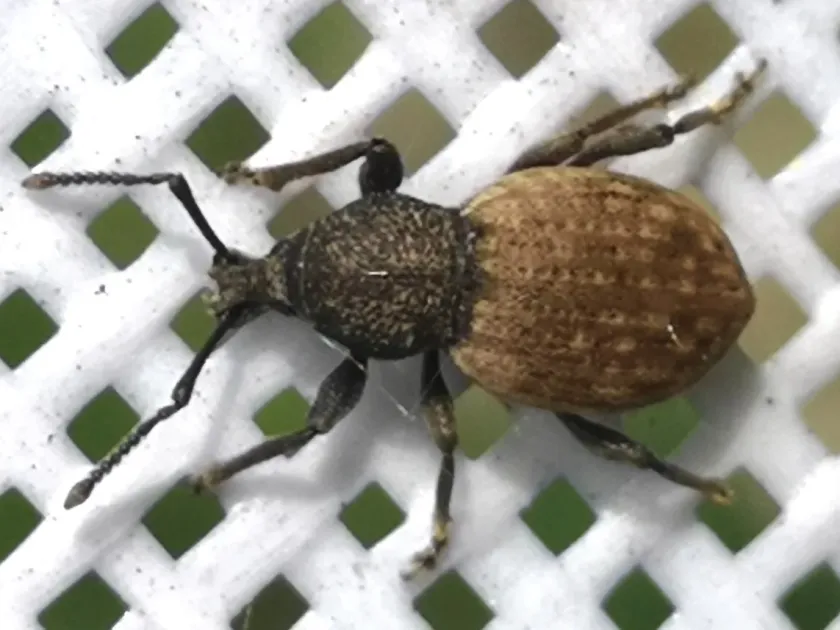
The rough strawberry root weevil (Otiorhynchus raucus) is a beetle belonging to the Curculionidae family. Adult specimens are approximately 6–8 mm in length and possess a typical weevil snout.
The body coloration is generally dark brown to black. Its surface is covered with dense, fine scales and hairs, giving the insect a distinctively dull or rough appearance.
Larvae are legless, C-shaped grubs with a creamy-white body and a brown head. They live exclusively in the soil, which makes them difficult to monitor during the growing season.
Adults are strictly nocturnal and remain hidden during the day under soil debris, rocks, or mulching materials, which makes them hard to detect without specific nocturnal monitoring.
The lifecycle typically spans one year, with both larvae and adults capable of overwintering depending on environmental conditions and location.
What it damages
Adults are polyphagous pests that feed on a wide variety of plants, including ornamental shrubs like roses, as well as several fruit-bearing trees like apples and cherries.
Fruit crops, particularly strawberries, raspberries, and grapes, are highly susceptible to damage. Adults feed by notched the margins of leaves.
The larvae are particularly damaging, as they reside underground and feed on the roots of host plants. This often leads to the destruction of root hairs and secondary root systems.
Severe infestations weaken plants, resulting in stunted growth, yellowing foliage, and potentially death if the root damage is extensive enough to impede water uptake.
The indirect harm includes plant susceptibility to various soil-borne pathogens and fungal infections that enter through the feeding wounds caused by the larvae.
When it appears
Adult activity begins in late spring, usually in May, as they emerge from overwintering sites to feed on the tender young foliage of host plants.
The reproductive period occurs throughout the summer months, during which females deposit eggs into the soil near the base of host plants.
Larval development takes place throughout the summer and autumn. During this time, they stay close to the roots, feeding continuously to accumulate energy.
As soil temperatures drop in the autumn, larvae move deeper into the soil profile to enter a state of diapause and survive the winter months.
The most visible signs of adult feeding are typically reported during the peak of spring and early summer when plants are at their most vulnerable growth stage.
Signs of infestation
The most characteristic sign of infestation is the presence of semi-circular or irregular notches along the leaf margins, often called "notching".
Stunted plant growth, wilting during hot days despite adequate irrigation, and chlorosis of leaves are significant indicators of potential root damage by larvae.
Nocturnal visual inspections using a flashlight on susceptible plants during late spring evenings will often reveal adult weevils feeding on foliage.
The discovery of white, legless grubs in the soil around the root zone when digging or inspecting plant containers confirms an active infestation.
- Notched leaf edges
- Premature plant wilting
- Stunted vegetation development
- Presence of larvae in root zones
Control measures
Cultural control practices, such as regular soil cultivation and weeding, can disrupt the habitat of larvae and reduce the overall population in the garden.
Eliminating debris and mulch around susceptible host plants helps to reduce the number of hiding spots available to adults during the daytime.
Chemical control involving foliar insecticide application is best timed for nighttime, coinciding with the peak period of adult feeding activity.
Biological control methods, such as the application of entomopathogenic nematodes or fungi, are effective for targeting larvae in the soil before they cause significant root harm.
Monitoring using sticky bands on trunks or pitfall traps can help gauge population density and ensure timely interventions before damage becomes severe.
Taxonomy
- Latin name
- Otiorhynchus raucus
- Order
- Coleoptera (beetles)
- Family
- Curculionidae
- EPPO code
- OTIORA
Discussion
No discussions yet — be the first.