
Strawberry root weevil
Otiorhynchus ovatus
Description
How to identify
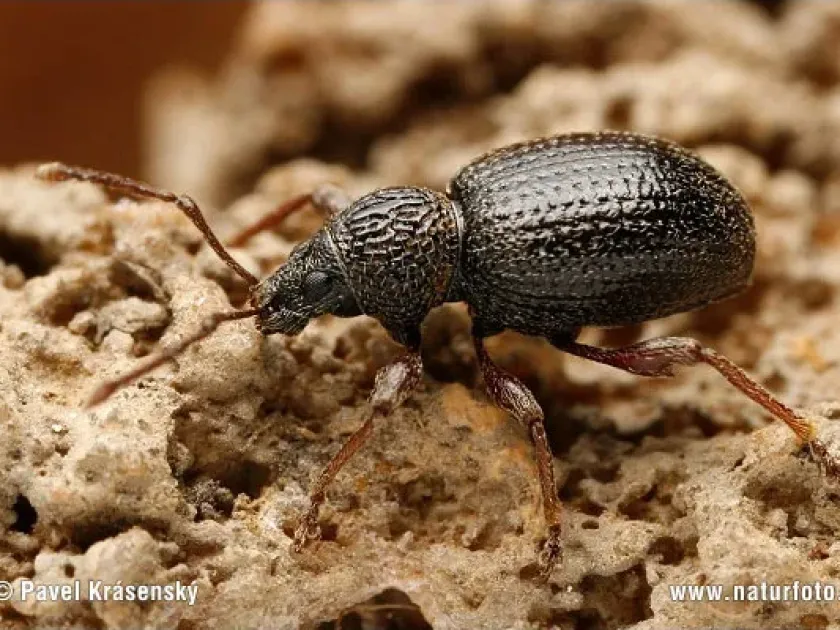
The strawberry root weevil (Otiorhynchus ovatus) is a small beetle belonging to the Curculionidae family. Adult beetles are typically 5 to 6 mm long, with a dark brown or black body characterized by deep punctations on their elytra.
Larvae are C-shaped, legless, and white with a distinct brown head. They live exclusively in the soil, feeding on the root systems of various plants, which often leads to the death of the host plant before the infestation is detected.
The lifecycle includes egg, larva, pupa, and adult stages. They overwinter primarily as larvae deep within the soil, though some adults may survive in sheltered locations under plant debris.
Adult weevils are nocturnal and flightless. They remain hidden during the daylight hours, making it necessary to inspect plants at night to confirm the presence of the pest.
Springtime warming triggers the emergence of adults, who then begin feeding on foliage before mating and laying eggs in the soil around the base of host plants.
What it damages
This weevil is a generalist feeder that attacks numerous plants, including strawberries, raspberries, spruce trees, and various ornamental nursery plants.
The most severe damage is caused by the larvae, which prune the fibrous roots and feed on the root crown. This restricts water and nutrient uptake, causing the plant to wilt and eventually collapse.
Adults cause characteristic semi-circular leaf notches (notching) by feeding on the edges of the leaves. While this rarely kills the plant directly, it reduces photosynthetic capacity.
Stressed plants with compromised root systems are significantly more susceptible to secondary soil-borne pathogens, such as crown and root rots, which often accelerate the decline of the crops.
In nursery settings, a high density of larvae can lead to widespread plant loss, as the larvae quickly strip the root system of young, non-established nursery containers or beds.
Control measures
Cultural control is highly effective; rotating crops and avoiding planting susceptible species in areas previously infested with weevils is a primary management strategy.
Mechanical cultivation of the soil around host plants can help disturb and destroy larvae, reducing the population before they pupate and emerge as adults.
Chemical control focuses on applying insecticides to the foliage in the evening to target active adults, or using soil drenches where permitted to kill larvae in the rhizosphere.
Biological control using entomopathogenic nematodes (such as Heterorhabditis or Steinernema species) has proven successful for suppressing larval populations in moist, soil-based growing media.
Regular monitoring using night-time inspections and adhesive barriers on stems can help determine the timing for targeted applications of control products.
Taxonomy
- Latin name
- Otiorhynchus ovatus
- Order
- Coleoptera (beetles)
- Family
- Curculionidae
- EPPO code
- OTIOOV
Discussion
No discussions yet — be the first.