
Otiorhynchus mastix
Otiorhynchus mastix
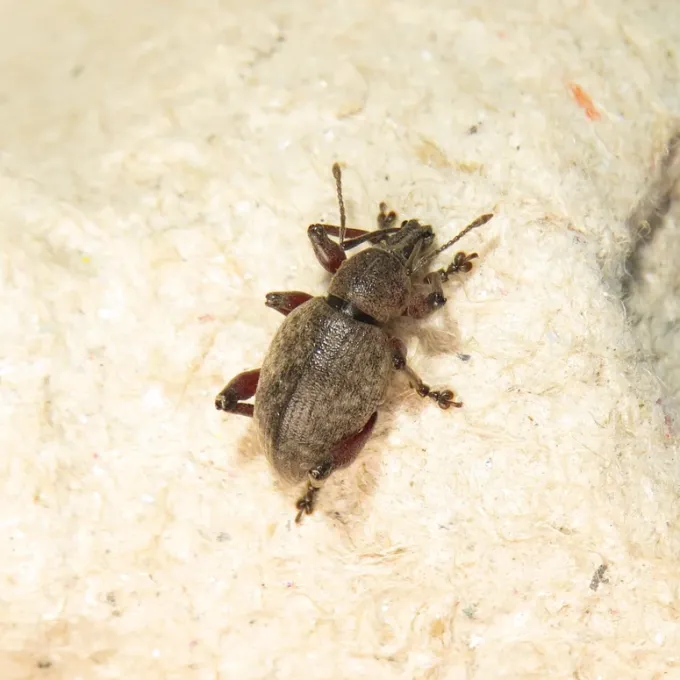
Description
How to identify
Otiorhynchus mastix is a species of broad-nosed weevil belonging to the Curculionidae family. It is recognized by its robust body and characteristic snout, typical of the genus.
The adult beetle usually measures between 10 and 12 mm in length. Its body color ranges from dark brown to black, providing excellent camouflage against soil and bark.
Larvae are legless and C-shaped, with a creamy-white body and a hardened, brownish head capsule. They spend their entire developmental phase underground.
These insects often exhibit parthenogenesis, a reproductive strategy that allows populations to expand rapidly without the need for males, making them highly resilient.
They are strictly nocturnal; during the day, they remain hidden beneath debris, mulch, or within soil cracks, which makes detection quite challenging for growers.
What it damages
Otiorhynchus mastix is a polyphagous pest, meaning it feeds on a wide range of host plants, including viticulture, berry crops, and various ornamental species.
The primary damage is caused by the larvae, which live in the soil and feed on the root system, stripping the bark off the main roots and severing smaller rootlets.
Adult beetles cause damage to the foliage by chewing distinct, semi-circular notches along the margins of the leaves, which is a classic diagnostic sign of their presence.
Severe infestations can lead to stunted growth, nutrient deficiency symptoms, and in young plants, death due to the destruction of the vital root system.
In nursery settings, damage to the root collar or stems can cause significant economic losses by reducing the viability and aesthetic value of the planting stock.
When it appears
The lifecycle of this weevil is tied to soil temperatures. Overwintering typically occurs in the larval stage, buried deep within the soil profile for protection.
As soil temperatures rise in the spring, larvae resume feeding and eventually progress to the pupal stage, usually occurring in late spring or early summer.
Adult emergence generally occurs in early summer, followed by a period of intensive feeding on plant foliage to reach sexual maturity and begin egg-laying.
Females deposit eggs in the soil near the base of host plants. The eggs hatch after a few weeks, and the neonate larvae immediately begin feeding on root tissues.
By late autumn, the younger larval instars move deeper into the soil to prepare for the winter, completing the cycle until the following growing season.
Signs of infestation
The most prominent sign of an infestation is the irregular, notched leaf edges on susceptible host plants, often described as a scalloped appearance.
Affected plants often display reduced vigor, yellowing leaves, and wilting during the hottest part of the day, as the compromised roots cannot sustain water intake.
In cases of severe root damage, plants may become loose in the soil or even fall over, as the mechanical anchor of the roots has been destroyed by larval feeding.
Night inspections with a flashlight can reveal adult beetles feeding on the leaves, confirming their active presence within the canopy of the host plants.
Excavating the soil around the base of a suspected plant often yields the C-shaped larvae, which is the definitive confirmation of an active infestation.
Control measures
Integrated pest management (IPM) is essential for controlling Otiorhynchus mastix, as larvae in the soil are particularly difficult to reach with surface treatments.
Cultural control practices, such as soil cultivation and weeding around the root zone, can physically disturb larvae and pupae, leading to increased mortality rates.
Biological control using entomopathogenic nematodes is highly effective, as these beneficial organisms actively seek out and infect larvae within the soil profile.
For adult beetles, barriers like sticky bands on trunks or the use of hand-picking during night surveys can help reduce the population before egg-laying occurs.
Chemical control should be timed to coincide with the peak adult emergence period, targeting the beetles on the foliage before they lay their eggs in the soil.
Taxonomy
- Latin name
- Otiorhynchus mastix
- Order
- Coleoptera (beetles)
- Family
- Curculionidae
- EPPO code
- OTIOMA
Discussion
No discussions yet — be the first.