
Otiorhynchus lugdunensis
Otiorhynchus lugdunensis
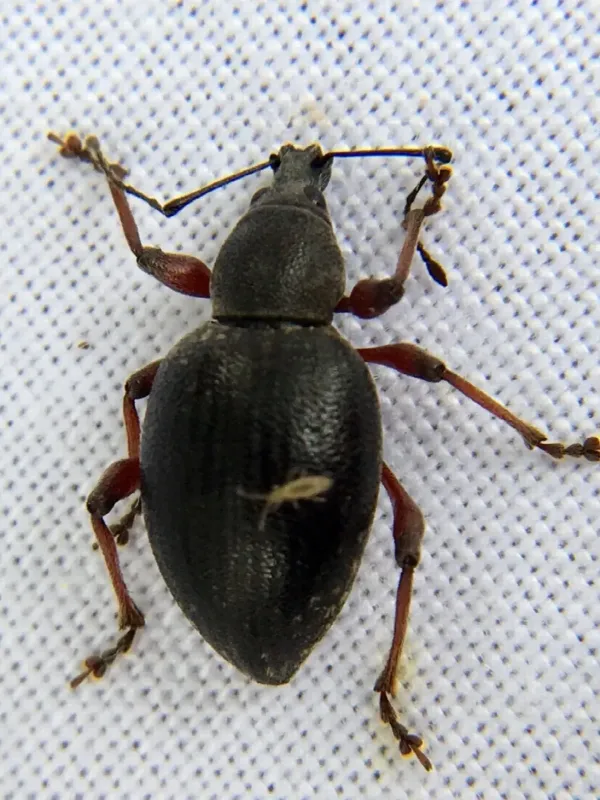
Description
How to identify
Otiorhynchus lugdunensis is a species of broad-nosed weevil belonging to the Curculionidae family, order Coleoptera. These insects are known for their distinctively elongated snouts and robust, dark-colored exoskeletons.
The adult beetles are medium-sized and possess a matte or slightly metallic appearance. Their coloration typically ranges from dark brown to black, enabling them to blend seamlessly with soil particles or dark tree bark.
The larvae are C-shaped, legless, and fleshy, featuring a creamy white body and a light brown head. Unlike the mobile adults, the larvae spend their entire life cycle hidden underground, feeding on roots.
Adult weevils are nocturnal, emerging only at night to feed. During the day, they remain inactive, concealing themselves under mulch, garden debris, or within crevices in the soil, making them difficult to spot.
This species is highly adaptable and acts as a polyphagous pest, capable of damaging a wide array of plants, from ornamental shrubs to berry crops and young orchard trees.
What it damages
Adult feeding is characterized by irregular, notched patterns along the edges of leaves. This aesthetic and physiological damage can stress the plant, although it is rarely fatal on its own.
Larval feeding is significantly more destructive. They consume fine root hairs and tunnel into larger roots, severely compromising the plant’s ability to take up water and essential nutrients from the soil.
Berry crops such as strawberries and raspberries are highly susceptible to larval damage. Infestations often lead to stunted growth, yellowing foliage, and sudden wilting of the affected plants during the heat of the day.
In cases of severe infestation, the root system is systematically destroyed, which can lead to the total death of the host plant. This is particularly problematic in nursery settings where young plants are vulnerable.
Root injury also serves as an entry point for secondary pathogens, such as fungal rots, which further hasten the decline of the plant and make the primary cause of death harder to diagnose without inspecting the roots.
When it appears
The life cycle of Otiorhynchus lugdunensis is driven by soil temperature and moisture levels. Adults typically emerge from their overwintering sites in the soil during the spring when temperatures rise.
Peak adult activity and egg-laying occur during the late spring and summer months. During this period, females deposit eggs in the soil near the root zones of host plants, ensuring food for emerging larvae.
Larvae develop throughout the summer and autumn. As temperatures cool, they continue to feed actively on roots, building up energy reserves necessary for successful overwintering in deeper soil layers.
Overwintering can occur in both larval and adult stages, depending on local climate conditions. This biological flexibility allows the species to survive harsh winters and persist in the environment over multiple seasons.
Soil moisture is a critical factor for egg survival and larval growth. Excessive drought can be detrimental to the population, whereas moderate, consistent moisture facilitates the expansion of the colony.
Signs of infestation
The most recognizable sign of adult activity is the scalloped or notched appearance of leaf margins. Regular inspection of foliage, particularly at night, can confirm the presence of feeding beetles.
Sudden wilting or chlorosis of plants, especially in patches, suggests subterranean activity. If a plant can be easily pulled from the ground, it is a clear indicator that the roots have been decimated.
Digging around the base of the plant during the growing season may reveal the white, C-shaped larvae in the soil. This is the most accurate way to confirm a root weevil infestation.
Reduced vigor and poor fruit yield in previously healthy plants often indicate an ongoing struggle against root damage. Persistent issues despite adequate watering and fertilization usually point to soil-borne pests.
Checking under garden debris or containers near infested areas often reveals adult beetles resting during daylight hours, confirming the population presence.
Control measures
Cultural control is a primary defense; deep cultivation or tilling of the soil around host plants during the larval development phase can physically disrupt and kill many individuals.
Hand-picking adults at night using a flashlight is a practical strategy for small gardens. Barrier methods, such as sticky bands on tree trunks, can also prevent adults from accessing leaves.
Chemical control involves applying insecticides to the foliage to target adults or using soil drenches to reach larvae. Timing these applications to match the peak adult activity is crucial for effectiveness.
Biological control using entomopathogenic nematodes is an excellent, environmentally friendly way to combat larvae. These nematodes naturally parasitize and kill the weevil larvae in the soil.
- Practice crop rotation to interrupt the pest's life cycle.
- Remove garden weeds and plant debris to limit hiding spots.
- Ensure that new nursery stock is inspected for larvae before planting.
- Use systemic treatments only when infestation thresholds are exceeded.
Taxonomy
- Latin name
- Otiorhynchus lugdunensis
- Order
- Coleoptera (beetles)
- Family
- Curculionidae
- EPPO code
- OTIOLU
Discussion
No discussions yet — be the first.