
Cribrate weevil
Otiorhynchus cribricollis
Description
How to identify
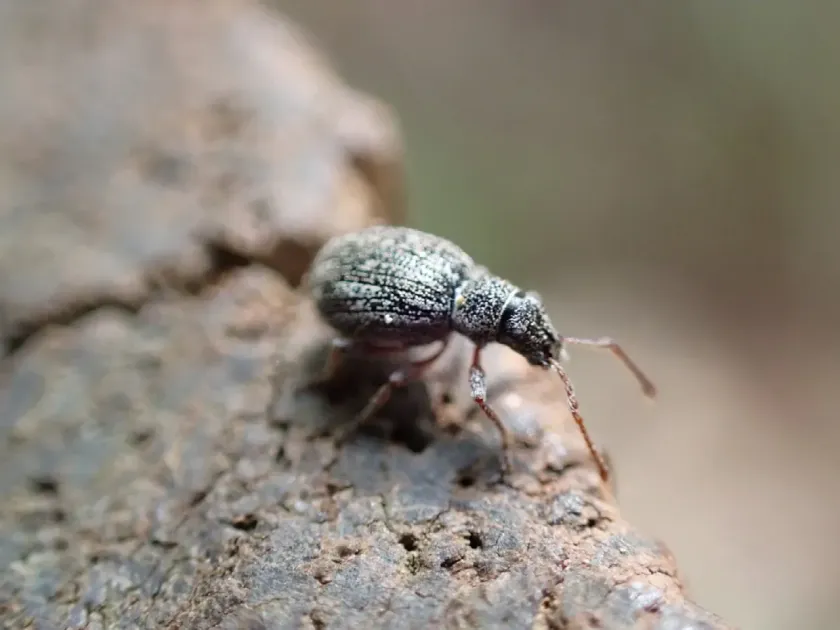
The cribrate weevil (Otiorhynchus cribricollis) is a member of the Curculionidae family. These beetles are typically 6–8 mm long, dark brown or black in color, with a body surface covered in small pits and scales.
Adult weevils are flightless because their elytra are fused together. This physical limitation means they do not spread through flight but are often transported through infested soil, potted plants, or nursery stock movement.
The larvae are cream-colored, legless, and have a distinct brown head capsule. They are strictly soil-dwelling, living in the root zone where they cause significant damage to the plant's underground structures.
The insect follows a complete metamorphosis life cycle. Adults are nocturnal, while larvae develop entirely within the soil profile, moving through different instars depending on temperature and moisture availability.
Identification is easiest at night using a flashlight, as beetles emerge to feed on foliage. During the day, they retreat into soil crevices or under leaf litter, making them difficult to spot without digging.
What it damages
The cribrate weevil is a polyphagous pest, meaning it attacks a wide variety of plants. It is particularly notorious for damaging fruit trees, grapevines, and a range of woody ornamentals.
In nurseries, these weevils can cause devastating losses to young saplings by girdling the bark of stems. This stops nutrient transport and leads to the rapid decline and death of the plant.
Field crops such as potatoes and legumes are also susceptible. In vineyards, both foliage feeding by adults and root damage by larvae can significantly decrease the vigor and yield of the vines over time.
The damage caused by larvae is often more severe than that of adults. By feeding on the root system, they reduce the plant's ability to uptake water and nutrients, which is especially critical during drought stress.
Secondary infections are a common consequence of weevil damage. Wounds left by the feeding insects become entry points for soil-borne pathogens, leading to root rot and other systemic plant diseases.
When it appears
Adult activity begins in the spring when soil temperatures rise. Emergence usually coincides with the bud-break phase of host plants, as adults require new, tender foliage to feed.
Egg-laying occurs throughout the summer months. Females deposit eggs in the soil around the base of host plants. The larvae hatch and begin feeding on roots, often continuing to grow throughout the autumn.
Overwintering occurs primarily in the larval stage deep within the soil. Larvae are highly resilient to cold temperatures, allowing the species to maintain a stable population across diverse climatic zones.
The life cycle can span one to two years, resulting in overlapping generations. This means that both adults and larvae can be present in the field at the same time, complicating pest management schedules.
Peak adult emergence and feeding damage are generally observed from late spring through mid-summer, which is the most critical time for monitoring populations.
Signs of infestation
The most recognizable sign of adult feeding is the notched margins of leaves. The beetles chew semicircular patterns along the edges of the leaf, often leaving the center intact.
Sudden wilting of plants, especially in spring, is a classic sign of larval damage. If a plant can be pulled easily from the soil, it is highly likely that the root system has been destroyed.
Bark damage on stems of young trees, appearing as irregular patches or girdled areas, indicates the presence of adult weevils feeding at night.
In soil samples, the presence of larval waste and disturbed soil around the roots can serve as a diagnostic indicator of infestation levels in a given plot.
Visual observations at night are the most effective method for confirming the presence of adults. Checking the undersides of leaves and stems often reveals the beetles resting or feeding.
Control measures
Cultural control practices, such as deep tillage or soil cultivation around tree bases, help disrupt the larval environment and destroy pupae, reducing the next generation's population.
Chemical control focuses on evening applications of insecticides. Since the beetles are nocturnal, timing treatments to coincide with their feeding activity ensures better contact and effectiveness.
Biological controls are increasingly used, particularly entomopathogenic nematodes applied to the soil. These microscopic organisms target and kill larvae without harming beneficial soil fauna.
Physical barriers, such as sticky bands or tree guards, can be placed on trunks to prevent flightless adult weevils from reaching the foliage.
Integrated Pest Management (IPM) is essential. Keeping the orchard free of weeds removes alternative food sources and nesting sites, making the area less attractive for the weevil to establish itself.
Taxonomy
- Latin name
- Otiorhynchus cribricollis
- Order
- Coleoptera (beetles)
- Family
- Curculionidae
- EPPO code
- OTIOCR
Discussion
No discussions yet — be the first.