
Armadillo snout beetle
Otiorhynchus armadillo
Description
How to identify
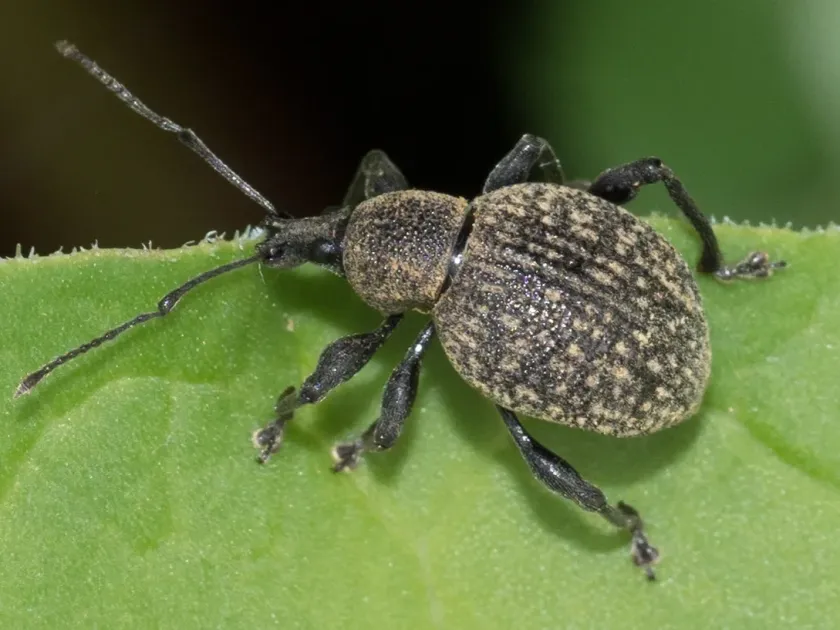
The armadillo snout beetle (Otiorhynchus armadillo) is a member of the Curculionidae family. Adult beetles typically grow to 8–12 mm in length, featuring a dark, granulated exoskeleton that makes them well-camouflaged against soil and bark.
These insects are strictly nocturnal. During the day, they hide in the soil, beneath organic debris, or in the crevices of container pots, which often allows them to go unnoticed until significant damage has already occurred.
The larvae are legless, C-shaped grubs with creamy-white bodies and brown head capsules. They live underground, making them invisible to the casual observer while they feed on the root systems of host plants.
This species reproduces parthenogenetically, meaning that females do not require mating to lay viable eggs. This capability leads to rapid population explosions, as even a single introduced specimen can establish a destructive colony.
The name "armadillo" refers to the hardened, armored appearance of the beetle's wing covers, which provide protection against many environmental stressors and some predators.
What it damages
The armadillo snout beetle is a polyphagous pest, meaning it attacks a wide array of plants. Preferred hosts include shrubs, ornamental perennials like Primula and Cyclamen, as well as fruits like strawberries and grapes.
Adult beetles cause cosmetic damage by chewing characteristic semi-circular notches along the edges of leaves. While this rarely kills the plant directly, it significantly impairs the plant's aesthetic value and physiological health.
Larvae are far more destructive than adults, as they live in the root zone. They consume fine root hairs and eventually girdle larger roots, causing the plant to lose its ability to uptake water and nutrients.
Severe infestations often result in the sudden collapse and death of the host plant. This is particularly common in container-grown plants where the root system is confined, allowing larvae to consume the entire root mass in a short period.
Plants infested with larvae often exhibit symptoms similar to drought stress or root rot, frequently leading to misdiagnosis and the delay of necessary pest management actions.
When it appears
Adult activity usually begins in late spring, around April, as temperatures rise. This is the period when beetles emerge from overwintering sites to feed on leaves and start the egg-laying process.
During the summer months, the focus shifts to reproduction. Females deposit eggs into the soil, often near the base of the stem, ensuring that larvae have an immediate food source upon hatching.
Larval development is most intense during late summer and autumn. As temperatures remain favorable, the larvae feed aggressively to store energy for the winter, causing the most visible decline in plant vitality during this time.
Overwintering occurs primarily in the larval stage deep within the soil profile, though some adults may survive in sheltered, frost-free locations to emerge again in the following spring.
In greenhouses, where climate control is present, the lifecycle of Otiorhynchus armadillo can occur continuously throughout the year, posing a year-round threat to susceptible greenhouse crops.
Signs of infestation
The most recognizable sign of adult activity is the presence of distinctive, semi-circular notches along the leaf margins, which is a classic indicator of snout beetle feeding.
Plants suddenly wilting despite adequate watering is a primary red flag for root-zone infestation. If the plant can be easily pulled from the soil, it is a definitive sign that the root system has been largely consumed.
Checking the soil surface or the underside of leaves at night with a flashlight is an effective way to spot the nocturnal adults as they emerge from their daytime hiding spots.
Accumulation of black, granular frass (insect excrement) on the soil surface or on lower leaves can be a subtle indicator that a beetle population is active in the immediate vicinity.
Stunted growth, yellowing foliage, and failure to thrive, even when nutritional needs are met, often point to subterranean larval feeding, necessitating a closer inspection of the root ball.
Control measures
Controlling adults involves applying contact insecticides, specifically pyrethroids, to the foliage in the evening when the beetles are active and emerged from their daytime shelters.
The most effective biological control for larvae involves the application of entomopathogenic nematodes, such as Heterorhabditis bacteriophora, which actively seek out and infect the grubs within the soil.
Chemical control for soil-dwelling larvae can be achieved through drenching the soil with systemic insecticides that are translocated to the roots, providing protection against further feeding.
Cultural practices, such as autumn cultivation or soil tilling, can expose larvae to natural predators or harsh weather, helping to reduce the overall population pressure for the next season.
For container plants, manual inspection of the root mass during transplanting and the use of physical barrier traps (like burlap strips wrapped around stems) can help monitor and reduce the number of pests.
Taxonomy
- Latin name
- Otiorhynchus armadillo
- Order
- Coleoptera (beetles)
- Family
- Curculionidae
- EPPO code
- OTIOAM
Discussion
No discussions yet — be the first.