
Otina ovata
Otina ovata
Description
How to identify
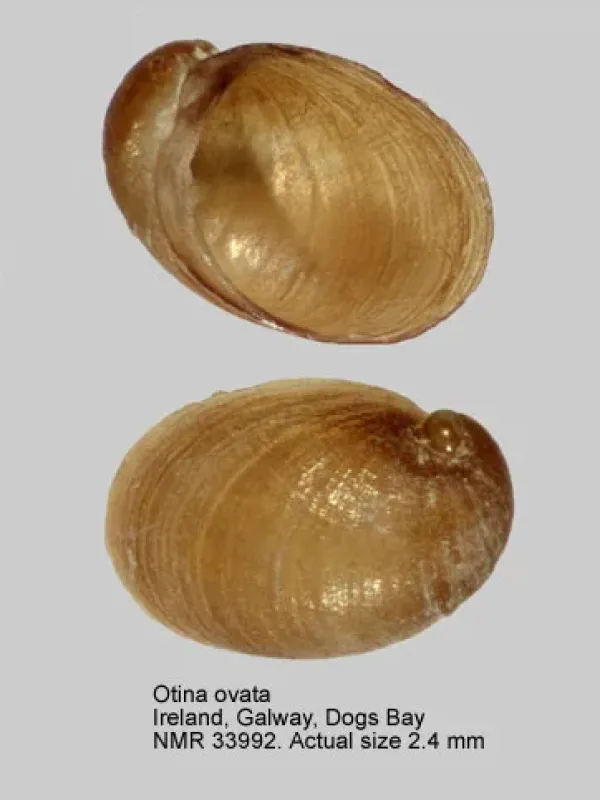
Otina ovata is a small marine gastropod mollusk belonging to the Otinidae family. Unlike typical land slugs, this species has evolved to thrive in intertidal zones, frequently inhabiting crevices in rocks and coastal vegetation.
The mollusk is characterized by a small, slightly flattened oval shell, which enables it to survive periods of low tide and exposure to saline marine conditions.
Its coloration typically ranges from grayish to yellowish, providing excellent camouflage against damp substrates and seaweed in its natural habitat.
Biologically, this species is highly adapted to coastal ecosystems, which restricts its distribution to specific ecological niches where humidity remains high throughout the day.
Systematically, the mollusk is classified within the order Hygrophila, reflecting its evolutionary position and requirement for moisture to maintain its physiological processes.
What it damages
Although Otina ovata typically lives along the shoreline, it can become a pest for plants cultivated in coastal gardens or areas with saline soil conditions.
The pest feeds on organic debris, algae, and tender tissues of plants that are naturally suited for growth in maritime environments.
Damage usually manifests as scraping or minor nibbling on the plant epidermis, which can lead to weakened plant health and reduced aesthetic value.
Nurseries located in coastal regions face the greatest risk, as the high humidity levels often found in such environments favor the rapid expansion of the mollusk population.
The damage caused by the mollusk often serves as an entry point for secondary infections, including fungal pathogens that can lead to stem rot and decay.
When it appears
The mollusk remains active throughout the warm seasons, during which environmental conditions facilitate its metabolism and movement across the substrate.
Peak feeding intensity typically occurs during the spring and summer months, coinciding with the active growth phases of coastal garden flora.
During the autumn, as temperatures drop, the mollusks enter a dormant state, seeking shelter in deep rock crevices or under dense debris.
Activity patterns are closely linked to tidal cycles, as the increased moisture levels during high tide allow the pest to forage effectively across the soil surface.
The species survives the winter in a state of anabiosis, which ensures that the population can recover and thrive once favorable coastal conditions return in spring.
Signs of infestation
The primary indication of an infestation is the presence of small scraping marks on leaves and stems located near the ground or stony surfaces.
As the mollusk travels, it leaves behind characteristic dried mucus trails that appear as shiny, silvery streaks on stems and foliage.
Detecting the pests during daylight is difficult, so inspections should ideally be conducted at dusk or immediately following a high tide when humidity is optimal.
- Small holes or scraping damage on leaf margins.
- Visible shiny mucus trails on plant stems.
- Clusters of mollusks found under stones or wood debris.
- Emergence of secondary rots in damaged tissue areas.
Finding empty or living oval shells near plants is a clear indicator that the local environment supports a population of this specific mollusk.
Control measures
The most effective management strategy involves cultural practices that remove the mollusk's shelter sites in the immediate vicinity of sensitive plants.
Gardeners should prioritize the removal of organic debris, stones, and construction waste from garden beds to reduce protected hideouts for the mollusks.
Mechanical barriers, such as copper tape around flower pots or gravel paths, can effectively deter the mollusks from reaching vulnerable garden plants.
Promoting local populations of natural predators, such as birds that hunt small mollusks, serves as a sustainable biological control measure.
In cases of severe infestation, the application of molluscicides based on iron phosphate is recommended, as they are effective and generally safe for the surrounding ecosystem.
Taxonomy
- Latin name
- Otina ovata
- Order
- Molluscs
- Family
- Otinidae
- EPPO code
- OTINOV
Discussion
No discussions yet — be the first.