
Otina
Otina
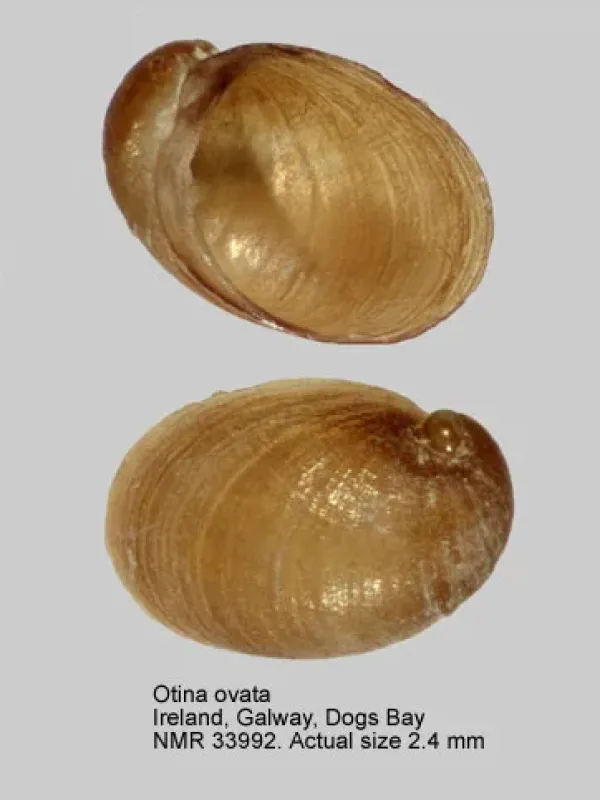
Description
How to identify
Otina is a genus of small sea snails within the family Otinidae. These organisms are highly specialized mollusks found primarily in the intertidal zone of rocky coastlines.
The morphology of these creatures is characterized by a microscopic, thin, and translucent shell with a streamlined shape, designed for survival in harsh tidal conditions.
Taxonomically, they belong to the order Eupulmonata, reflecting their unique evolutionary path to becoming air-breathing mollusks in a marine environment.
Their size is typically measured in millimeters, making them extremely difficult to detect without careful observation of the substrate.
Due to their specific habitat, they have evolved physiological adaptations to cope with periodic immersion in saltwater and exposure to air during low tide.
What it damages
The primary impact of Otina involves feeding on vegetation located in the splash zone, specifically targeting hardy halophytic plants.
They consume leaf tissue, creating minute punctures and eroded areas that can compromise the structural integrity of the affected plant foliage.
While the individual damage caused by a single mollusk is negligible, large populations can significantly weaken coastal plant communities over time.
The feeding lesions created by the radula of the mollusk serve as entry points for pathogens, potentially leading to secondary infections in the plant tissue.
Economically, their impact is limited to niche coastal areas and does not pose a threat to standard agricultural crops located inland.
When it appears
The activity patterns of Otina are strictly synchronized with the temperature of coastal waters and the rhythmic nature of tidal cycles.
Peak population activity occurs during spring and summer months when environmental conditions favor reproductive cycles and active foraging.
During the colder winter months, these snails enter a state of dormancy, seeking refuge in rock crevices or among layers of accumulated organic debris.
Extreme weather events, such as storm surges or unusual tidal shifts, can drastically alter their local distribution and population density.
Consistent moisture levels are critical for their survival, and they tend to migrate to more sheltered areas when environmental stress increases.
Signs of infestation
Common signs of Otina presence include characteristic micro-abrasions on the leaf surfaces of coastal flora within the intertidal zone.
Visual inspection may reveal tiny, pin-prick holes or skeletal patterns on leaves where the upper epidermis has been removed by feeding.
Traces of dried mucus on plant stems or adjacent rocks are reliable indicators that these mollusks have been active in the vicinity.
In cases of high infestation, plant health may decline, showing signs of chlorosis or localized wilting due to the loss of functional leaf surface.
Finding the mollusks themselves is best accomplished during low tide by examining moist, shaded pockets at the base of the vegetation.
Control measures
Direct management of Otina is rarely required in standard agronomy, as their habitat is restricted to non-agricultural coastal environments.
In managed landscapes, sanitation is the most effective approach; removing decaying seaweed and organic debris reduces shelter for the mollusks.
Chemical control measures are strongly discouraged due to the extreme sensitivity of marine ecosystems and the risk of harming non-target organisms.
Preventive physical barriers, such as raised beds or drainage systems that reduce seawater intrusion, can limit the snails' access to sensitive plants.
Promoting natural predator populations, such as specific coastal birds or predatory invertebrates, helps maintain a balance and suppresses outbreaks naturally.
Taxonomy
- Latin name
- Otina
- Order
- Molluscs
- Family
- Otinidae
- EPPO code
- OTINSP
Discussion
No discussions yet — be the first.