
Rice rat
Oryzomys
Description
How to identify
The rice rat (genus Oryzomys) belongs to the family Cricetidae. These rodents are well-adapted to semi-aquatic habitats, making them significant pests in regions where rice is cultivated under irrigation.
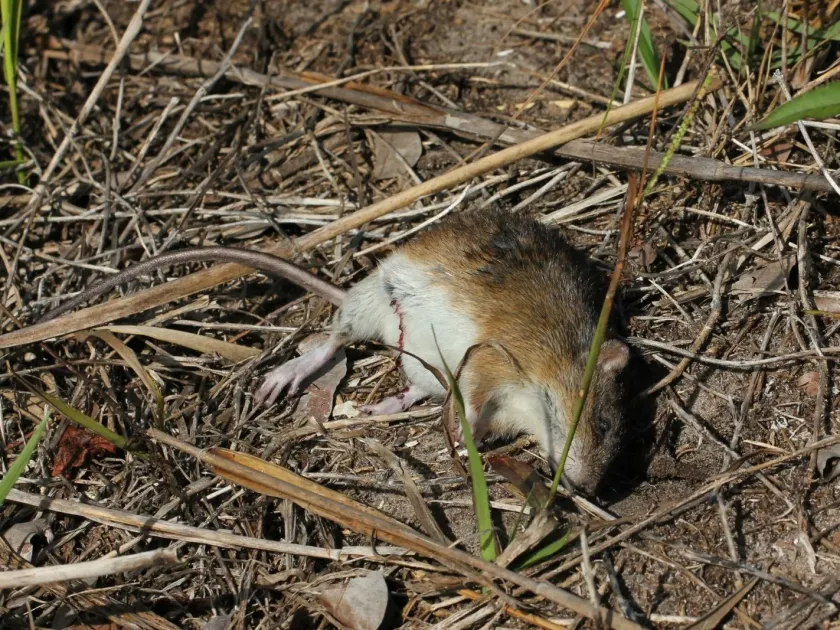
They are characterized by a sleek, slender body, typically reaching a length of about 15 cm. Their fur is dense and usually brown to greyish-brown, providing camouflage in the wetland environment.
Rice rats are primarily nocturnal animals, which makes them difficult to spot during daylight hours. They are excellent swimmers and have strong hind feet that help them navigate flooded rice fields with ease.
The biology of Oryzomys is marked by high reproductive potential. Under favorable environmental conditions, these rodents can multiply rapidly, creating large populations within a single growing season.
Their stealthy nature allows them to inhabit agricultural areas for a long time before the farmer notices any significant damage to the crop. Monitoring for their presence is therefore essential for early intervention.
What it damages
Rice rats feed on various parts of the rice plant throughout its developmental stages. They consume seedlings, leaves, and, most destructively, the grain itself as it develops.
During the milk and dough stages of grain development, these rodents bite through the stalks to reach the panicles. This leads to substantial yield losses and the collapse of sections of the rice stand.
Beyond feeding, rice rats cause damage by constructing nests inside the rice canopy. Their activity results in trampling and crushing the plants, making them prone to lodging.
Damaged tissue in the stalks and panicles acts as an entry point for various plant diseases, including fungal infections, which further decrease the quality and quantity of the harvest.
The economic impact of Oryzomys is significant, as they can ruin large portions of a rice field in a short period, directly affecting the profitability of the agricultural operation.
When it appears
The peak activity of rice rats coincides with the rice growing season. As rice fields are flooded and the plants begin to grow, these rodents move in to establish their habitats.
Summer months provide the most stable environment for these animals, allowing for intensive foraging and breeding. This is when the risk to the rice crop is highest.
As the season ends and the rice is harvested, the water in the fields is drained. The rats are then forced to migrate to nearby irrigation ditches, levees, and surrounding wild vegetation.
Spring is a critical time when young rice rats actively colonize new fields. Early scouting during the initial phase of crop growth is vital to prevent long-term population spikes.
Climate plays a major role; in tropical regions, breeding can occur throughout the year, necessitating consistent monitoring and pest management efforts across all seasons.
Signs of infestation
The presence of rice rats is indicated by distinct narrow paths or trails through the rice foliage leading toward feeding sites or water sources.
Finding stalks that have been cleanly cut with visible teeth marks is a reliable sign that Oryzomys is active in the field.
Nests made of shredded rice leaves and woven plant stems, typically located near the base of the plant or slightly above the water line, are clear indicators of a resident population.
The accumulation of droppings near feeding areas and trampled sections of the crop are other common signs of heavy infestation.
Areas of the field that appear suddenly sparse or flattened, without any connection to disease outbreaks or mechanical failure, are frequently caused by nocturnal foraging of rice rat families.
Control measures
Effective pest management for rice rats involves an integrated approach combining mechanical, chemical, and cultural control strategies.
- Regular weeding and clearing of irrigation channels to remove cover.
- Strategic water management in rice paddies to limit rodent accessibility.
- Deployment of water-resistant rodenticide baits in controlled settings.
- Installation of perimeter traps during periods of migration.
- Encouraging natural predators by installing nesting boxes for owls and birds of prey.
Chemical applications should be handled with extreme care to prevent harm to non-target aquatic organisms that are often found in rice ecosystems.
Cultural control, such as maintaining clean field edges, is arguably the most sustainable way to reduce the population density of these pests over the long term.
By monitoring the density of nests and foraging signs early, farmers can apply targeted controls, preventing the need for broad-spectrum intervention later in the season.
Taxonomy
- Latin name
- Oryzomys
- Order
- Rodents
- Family
- Muridae
- EPPO code
- ORYOSP
Discussion
No discussions yet — be the first.