
Aardvark
Orycteropus afer
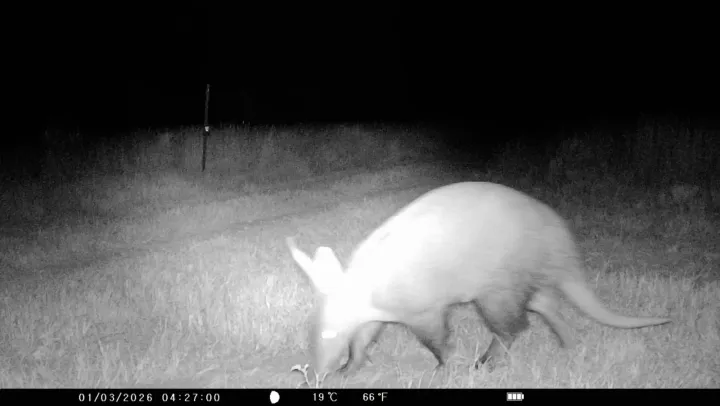
Description
How to identify
The Aardvark (scientific name Orycteropus afer) is the only living species in the order Tubulidentata. It is a robust, nocturnal mammal native to Africa, characterized by its long, tubular snout, strong tail, and powerful claws designed for digging into hard, compacted earth.
While the animal possesses a somewhat pig-like appearance, it is biologically distinct from suids. It is a specialized insectivore, focusing its diet almost exclusively on ants and termites, which it locates using its acute sense of smell and hearing.
In an agricultural context, the Aardvark is often misidentified as a pest due to its large burrows and mounds. However, it does not possess the dentition or digestive system required to consume plant matter, meaning it cannot feed on crops.
The species plays a critical ecological role as an ecosystem engineer. By consuming vast quantities of termites, it protects both wild vegetation and crops from the destructive feeding habits of termite colonies.
Agronomists classify the Aardvark as a non-pest species. Their presence is generally a sign of a healthy, insect-rich environment, rather than a threat to agricultural productivity.
What it damages
The Aardvark does not inflict direct damage on agricultural plants. There is no evidence of these animals eating roots, stems, leaves, or fruit, as their nutritional requirements are met entirely by insect protein.
The primary concern for farmers is the physical disruption of soil. Aardvarks can dig extensive systems of burrows that create significant surface hazards for heavy agricultural machinery, leading to potential equipment damage or operator injury.
Secondary damage can occur when the abandoned burrows of an Aardvark are occupied by other species, such as rodents or reptiles, which are known to feed on crops. In these cases, the Aardvark is unfairly blamed for the damage caused by subsequent inhabitants.
In rare instances, localized root damage may occur if an Aardvark digs near a crop while pursuing a large termite mound located directly beneath the plants. However, such instances are infrequent and localized.
Overall, the economic impact of Aardvark activity on commercial farming is considered minimal compared to the benefits of natural pest control provided by their predation on termites.
Control measures
As the Aardvark is not a pest, eradication or lethal control is discouraged and often illegal. Instead, farm management should focus on site safety and the prevention of burrowing in critical operational zones.
The most effective strategy is the timely infilling of abandoned burrows. Leveling the terrain after the animal has vacated an area prevents soil erosion and eliminates hazards for tractors and other machinery.
For areas where Aardvark activity must be deterred, motion-activated lights or acoustic deterrents can be employed. Since these animals are strictly nocturnal, disrupting their comfort during night-time foraging can encourage them to move elsewhere.
Maintaining buffer zones of natural savanna or grasslands around cultivated fields provides the Aardvark with sufficient space to feed, reducing the likelihood that they will enter agricultural plots.
- Fill in all inactive burrows to ensure safe machine passage.
- Use motion-activated lighting to discourage nocturnal visits.
- Monitor for termite activity, which is the primary attractant for the species.
- Implement land-leveling practices in fields prone to seasonal burrowing.
Taxonomy
- Latin name
- Orycteropus afer
- Family
- Orycteropidae
- EPPO code
- ORYKAF
Discussion
No discussions yet — be the first.